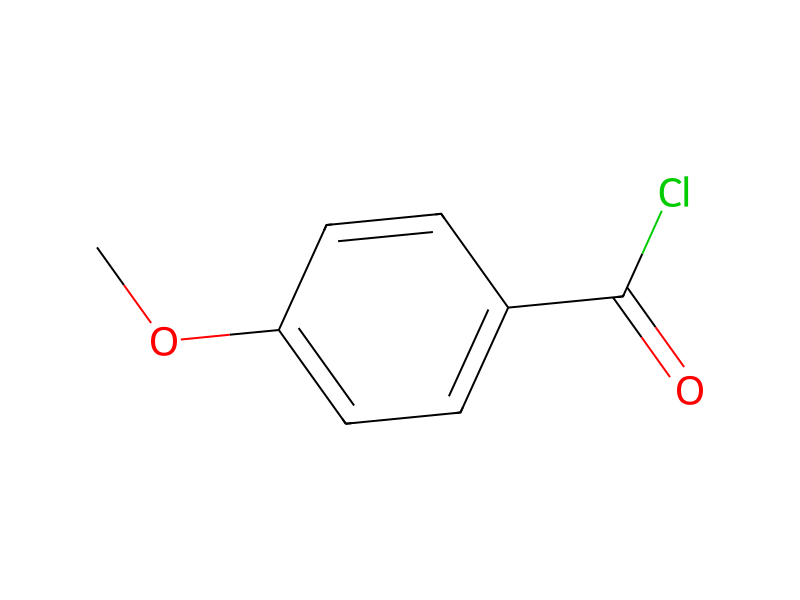
p-Anisoyl chloride → HCID 72550408, compound
Reaction equation

[C:1](Cl)(=[O:10])[C:2]1[CH:7]=[CH:6][C:5]([O:8][CH3:9])=[CH:4][CH:3]=1.[NH2:12][C:13]1[S:17][C:16]([NH:18][C:19]2[N:20]=[CH:21][C:22]3[C:27]([CH:28]=2)=[CH:26][CH:25]=[CH:24][CH:23]=3)=[N:15][C:14]=1[C:29]([NH2:31])=[O:30]>N1C=CC=CC=1>[CH:21]1[C:22]2[C:27](=[CH:26][CH:25]=[CH:24][CH:23]=2)[CH:28]=[C:19]([NH:18][C:16]2[S:17][C:13]([NH:12][C:1](=[O:10])[C:2]3[CH:7]=[CH:6][C:5]([O:8][CH3:9])=[CH:4][CH:3]=3)=[C:14]([C:29]([NH2:31])=[O:30])[N:15]=2)[N:20]=1Participants
4
Reactant 2

Product 1

Reagents, catalysts & solvents 1

Procedure
To a mixture of p-anisoyl chloride (0.4 mL, 3.0 mmol) in pyridine (2 mL) was added dropwise a solution of 5-amino-2-(isoquinolin-3-ylamino)-thiazole-4-carboxamide (0.20 g, 0.70 mmol) in pyridine (3 mL), and the mixture was stirred overnight at rt. The solvent was evaporated. The residue was triturated with MeOH, and the resulting solids were collected to give 42 mg (28% yield) of the titled compound.
Workup
- customThe solvent was evaporated
- customThe residue was triturated with MeOH
- customthe resulting solids were collected
Sources & evidence
- ORD record
- ord-fe3a5bd10b844906b9f2efda4721c7f1
- Source dataset
- uspto-grants-2015_08
- Patent number
- US09102637B2
Reaction notes
Loading…