4-Methoxybenzaldehyde → (2R)-1-[(4-Methoxybenzyl)amino]-2-propanol
Reaktionsgleichung

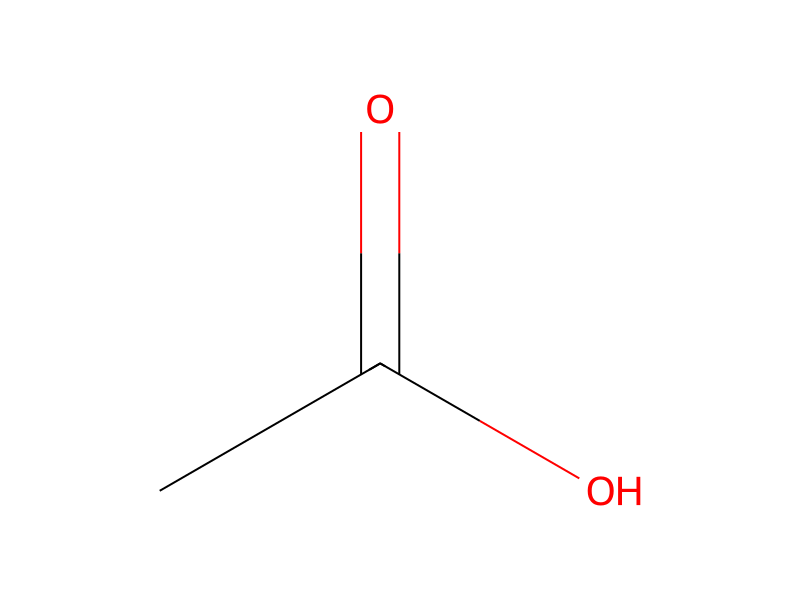
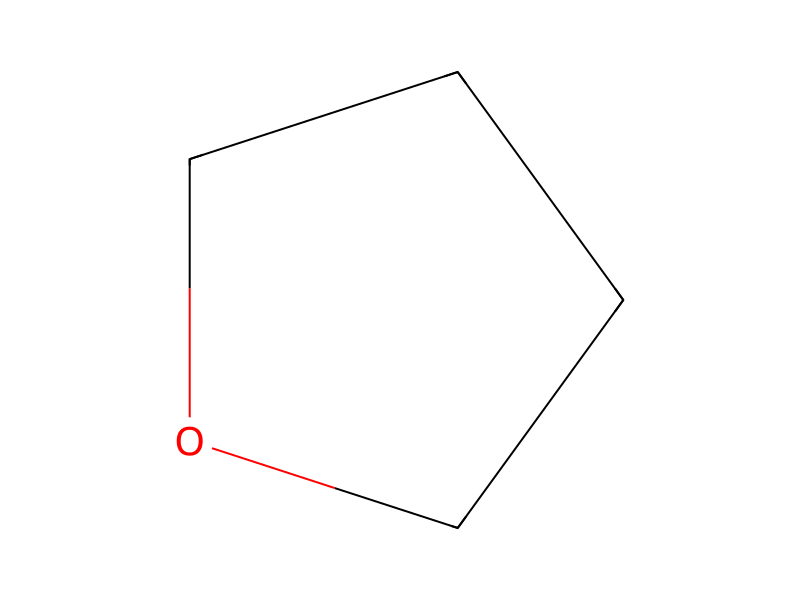
[NH2:1][CH2:2][C@H:3]([OH:5])[CH3:4].[CH:6](=O)[C:7]1[CH:12]=[CH:11][C:10]([O:13][CH3:14])=[CH:9][CH:8]=1.C(O[BH-](OC(=O)C)OC(=O)C)(=O)C.[Na+]>O1CCCC1.C(O)(=O)C>[CH3:14][O:13][C:10]1[CH:11]=[CH:12][C:7]([CH2:6][NH:1][CH2:2][C@H:3]([OH:5])[CH3:4])=[CH:8][CH:9]=1Komponenten
Edukt 3
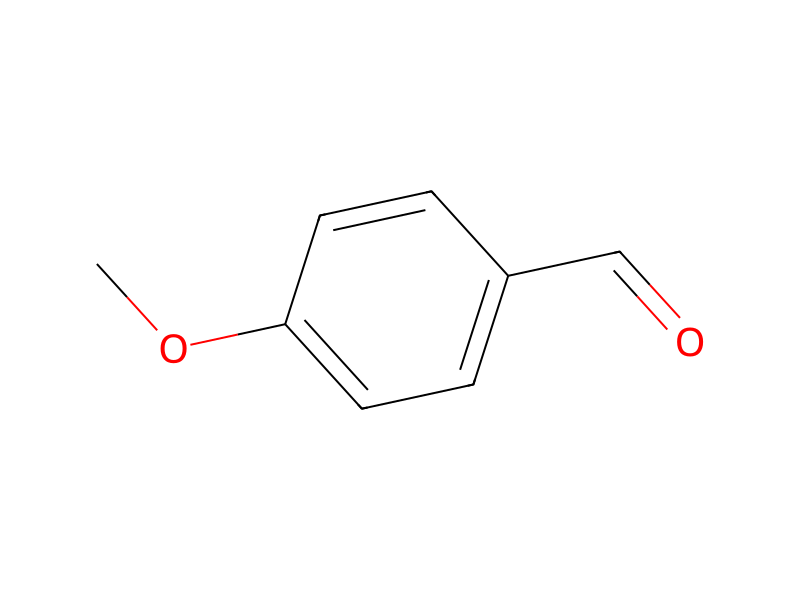

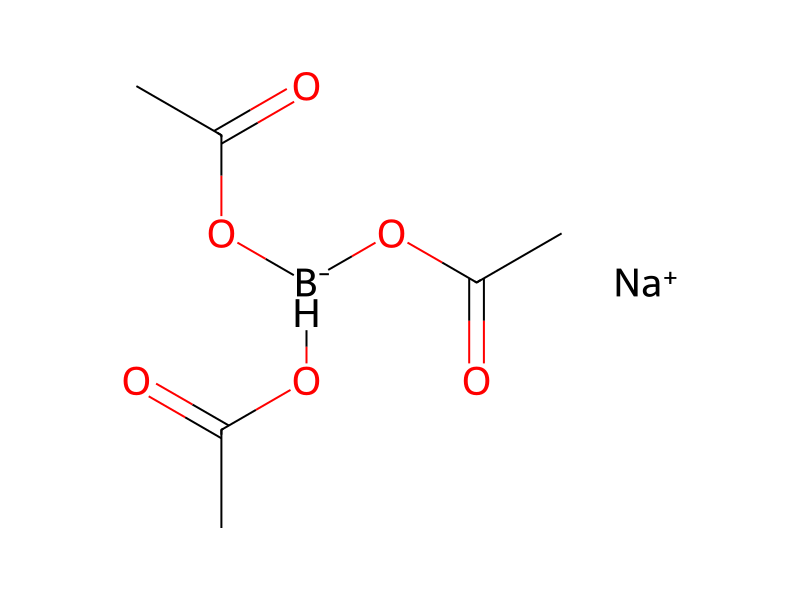
Produkt 1

Reagenzien, Katalysatoren, Lösungsmittel 2
Versuchsvorschrift
A solution of (R)-(−)-1-amino-2-propanol (9.00 g, 0.12 mol) in tetrahydrofuran (40 ml) and acetic acid (5 ml) was added dropwise to a solution of p-anisaldehyde (5.45 g, 0.04 mol) in tetrahydrofuran (40 ml), and once addition was complete, the solution was stirred at room temperature for 2 hours. The solution was cooled in an ice-bath, and sodium triacetoxyborohydride (9.50 g, 0.0.045 mol) was added portionwise, and then the mixture was stirred at room temperature for 18 hours. The reaction mixture was concentrated under reduced pressure and the residue was partitioned between dichloromethane (150 ml) and sodium hydroxide solution (150 ml, 0.5N). The layers were separated and the aqueous phase was saturated with sodium chloride, then extracted with further dichloromethane (3×30 ml). The combined organic solutions were dried (MgSO4) and evaporated under reduced pressure. The residue was purified by chromatography on silica gel (gradient elution 98:2:0.2 to 97:3:0.3 dichloromethane:methanol:0.88 NH3) to afford an orange oil (4.9 g). 1H-NMR (CDCl3, 400 MHz) δ: 1.12 (d, 3H), 2.39 (dd, 1H), 2.70 (dd, 1H), 3.62-3.79 (m, 6H), 6.82 (d, 2H), 7.19 (d, 2H). LRMS: m/z (ES+) 196 [MH+].
Aufarbeitung
- temperatureThe solution was cooled in an ice-bath
- stirringthe mixture was stirred at room temperature for 18 hours
- concentrationThe reaction mixture was concentrated under reduced pressure
- customthe residue was partitioned between dichloromethane (150 ml) and sodium hydroxide solution (150 ml, 0.5N)
- customThe layers were separated
- extractionextracted with further dichloromethane (3×30 ml)
- dry with materialThe combined organic solutions were dried (MgSO4)
- customevaporated under reduced pressure
- customThe residue was purified by chromatography on silica gel (gradient elution 98:2:0.2 to 97:3:0.3 dichloromethane:methanol:0.88 NH3)
Quellen und Nachweise
- ORD-Eintrag
- ord-74c8f6b4c9fc4a698743832bc6f1b3db
- Quelldatensatz
- uspto-grants-2004_03
- Patentnummer
- US06713496B2
Notizen zur Reaktion
Wird geladen…