Triethyl phosphite → 8-Methoxy-1,6-dihydrocyclopenta[c]carbazol-3(2H)-one
Reaction equation

[CH3:1][O:2][C:3]1[CH:8]=[CH:7][C:6]([C:9]2[CH:17]=[CH:16][CH:15]=[C:14]3[C:10]=2[CH2:11][CH2:12][C:13]3=[O:18])=[C:5]([N+:19]([O-])=O)[CH:4]=1.P(OCC)(OCC)OCC>>[CH3:1][O:2][C:3]1[CH:8]=[CH:7][C:6]2[C:9]3[C:10]4[CH2:11][CH2:12][C:13](=[O:18])[C:14]=4[CH:15]=[CH:16][C:17]=3[NH:19][C:5]=2[CH:4]=1Participants
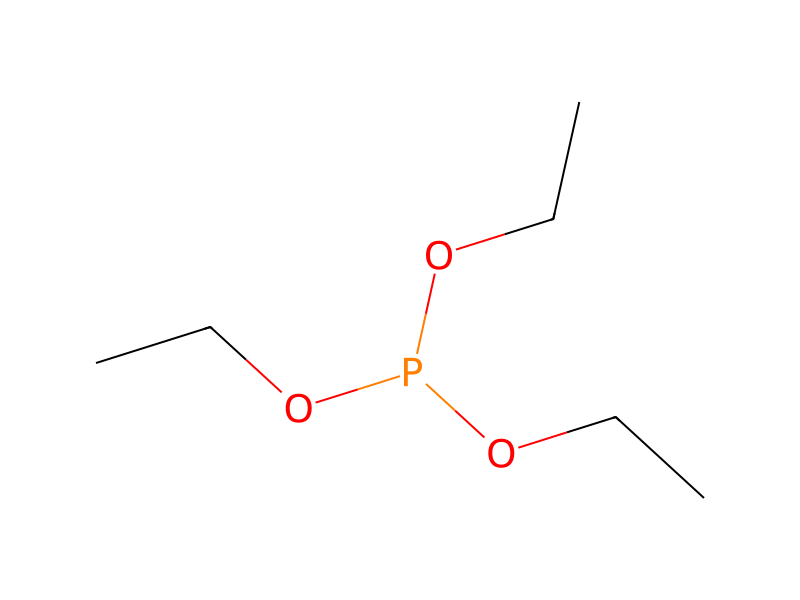


Conditions
- Temperature
- 90 °C
Procedure
Biphenyl 35 obtained (5.59 g) was divided into five portions (1.11 g each); then P(OEt)3 (per 7 mL) was added to each portion. The resulting mixture was subjected to argon blow in a flask, heated up to 90° C., kept at this temperature for 3 days, and cooled down. Carbazole was precipitated. Then the reaction mixture was diluted with ether; the precipitate was filtered off and washed with CH2Cl2. If the initial biphenyl remained in the filtrate (TLC monitoring, eluent: hexane-ethyl acetate, 1:1), this filtrate was evaporated and P(OEt)3 (per 1 mL into each flask) was added. The mixture was subjected to repeated cyclization for a day. The procedure repeated until the precipitation ceased and TLC data showed the absence of the initial biphenyl. Total yield of carbazole 36: 2.16 g.
Workup
- customThe resulting mixture was subjected to argon blow in a flask
- temperaturecooled down
- customCarbazole was precipitated
- additionThen the reaction mixture was diluted with ether
- filtrationthe precipitate was filtered off
- washwashed with CH2Cl2
- customthis filtrate was evaporated
- additionP(OEt)3 (per 1 mL into each flask) was added
- customfor a day
- customThe procedure repeated until the precipitation
Sources & evidence
- ORD record
- ord-a71348c1494549759733eaf489b7e862
- Source dataset
- uspto-grants-2015_08
- Patent number
- US09108916B2
Reaction notes
Loading…