Triethyl phosphite → Diethyl 3-Nitrobenzylphosphonate
Reaction equation

Br[CH2:2][C:3]1[CH:8]=[CH:7][CH:6]=[C:5]([N+:9]([O-:11])=[O:10])[CH:4]=1.[P:12]([O:19]CC)([O:16][CH2:17][CH3:18])[O:13][CH2:14][CH3:15]>>[N+:9]([C:5]1[CH:4]=[C:3]([CH:8]=[CH:7][CH:6]=1)[CH2:2][P:12](=[O:19])([O:16][CH2:17][CH3:18])[O:13][CH2:14][CH3:15])([O-:11])=[O:10]Participants
3
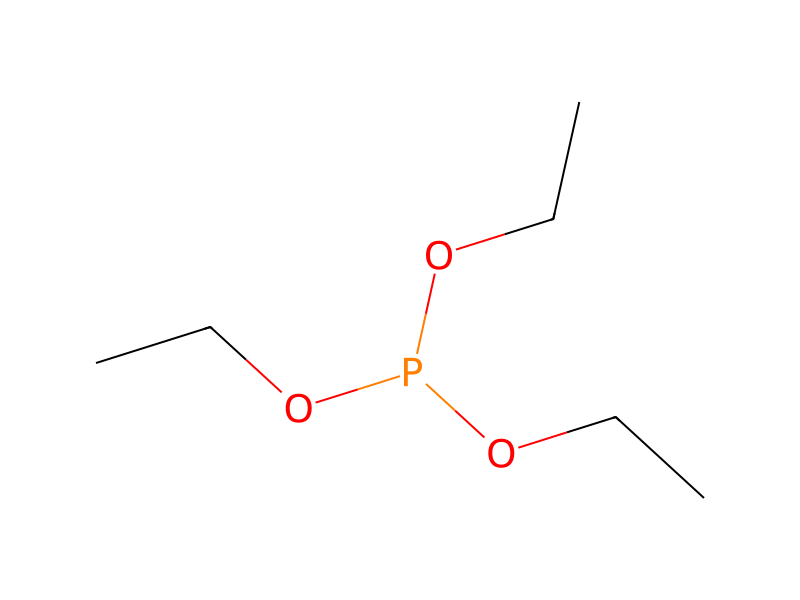


Conditions
- Temperature
- 100 °C
Procedure
A stirring suspension of 1-(bromomethyl)-3-nitrobenzene (46.3 mmol, 10 g) in triethyl phosphite (69.4 mmol, 12.08 mL, 11.54 g) was heated at 100° C. for 4 hours. The reaction mixture was cooled to room temperature and partitioned between water and dichloromethane. The organic layer was separated, dried and concentrated under vacuum. The residue was purified by silica column chromatography (eluent: 0-5% methanol in dichloromethane) to afford the title compound (8 g).
Workup
- temperatureThe reaction mixture was cooled to room temperature
- custompartitioned between water and dichloromethane
- customThe organic layer was separated
- customdried
- concentrationconcentrated under vacuum
- customThe residue was purified by silica column chromatography (eluent: 0-5% methanol in dichloromethane)
Sources & evidence
- ORD record
- ord-f5d4e3ab923b4cd2894c8198177f9663
- Source dataset
- uspto-grants-2015_08
- Patent number
- US09108939B2
Reaction notes
Loading…