Hydrogen Sulfide → 4,4'-Diaminodeoxybenzoin
Reaction equation

[NH2:1][C:2]1[CH:7]=[CH:6][C:5]([C:8]([C:10]([C:12]2[CH:17]=[CH:16][C:15]([NH2:18])=[CH:14][CH:13]=2)=O)=[O:9])=[CH:4][CH:3]=1.S>N1C=CC=CC=1>[NH2:1][C:2]1[CH:7]=[CH:6][C:5]([C:8]([CH2:10][C:12]2[CH:13]=[CH:14][C:15]([NH2:18])=[CH:16][CH:17]=2)=[O:9])=[CH:4][CH:3]=1Participants
Reactant 2

Product 1

Reagents, catalysts & solvents 1

Procedure
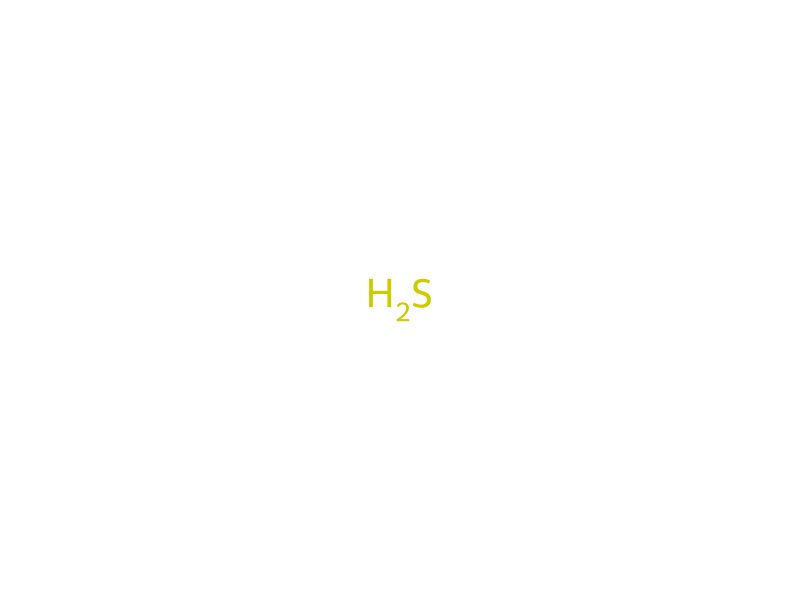
In a two-neck round bottom flask were taken t-Boc-protected 4,4′-diaminobenzil, 2 (17.5 g, 40 mmol) and 200 mL of pyridine. Hydrogen sulfide gas was bubbled through a septum and the outlet of the reaction vessel was connected to a trap containing aqueous sodium hydroxide solution (10%) to quench the unreacted H2S gas. As the reaction progressed, the solution changes from pale yellow to deep red in color and a separation of yellow solid (sulfur) was observed. As the Rf values of both starting material and product were very similar, it was difficult to follow the reaction progress by TLC. Monitoring the reaction by 1H NMR indicated that the reaction was complete after 8 h of H2S-bubbling. After removing the excess pyridine under reduced pressure, the residue was poured into dilute hydrochloric acid (5%) and the resulting off-white solid was filtered. Further washing with water, drying under vacuum, and then purification by column chromatography (1:5 mixtures of ethyl acetate and hexane) afforded the product as white fluffy solid. Yield: 16 g (94%). Mp. 203° C. 1H NMR (acetone-d6, 400 MHz): 1.49 (s, 9H), 1.46 (s, 9H), 4.23 (s, 2H), 7.21 (m, 2H), 7.48 (m, 2H), 7.66 (m, 2H), 8.02 (m, 2H), 8.34 (bs, 1H), 8.79 (bs, 1H). 13C NMR (acetone-d6, 100 MHz): 196.6, 153.7, 153.4, 145.1, 139.1, 131.7, 130.7, 130.6, 130.2, 119.1, 118.1, 80.7, 79.8, 44.9, 28.5, 28.4. FT-IR (cm−1): ν 3371, 2977, 1705, 1682, 1605, 1525, 1502, 1409, 1392, 1368, 1319, 1235, 1121, 1155, 1057, 996, 904, 826, 772. HRMS-FAB: m/z M+ calcd 426.2155. found 426.2136.
Workup
- customIn a two-neck round bottom flask were taken
- customHydrogen sulfide gas was bubbled through a septum
- customthe outlet of the reaction vessel was connected to a trap
- additioncontaining aqueous sodium hydroxide solution (10%)
- customto quench the unreacted H2S gas
- customthe solution changes from pale yellow to deep red in color and a separation of yellow solid (sulfur)
- customMonitoring the reaction by 1H NMR
- custombubbling
- customAfter removing the excess pyridine under reduced pressure
- additionthe residue was poured into dilute hydrochloric acid (5%)
- filtrationthe resulting off-white solid was filtered
- washFurther washing with water
- customdrying under vacuum
- custompurification by column chromatography (1:5 mixtures of ethyl acetate and hexane)
Sources & evidence
- ORD record
- ord-0a0d23fa7c0843879253ca81d91fbca5
- Source dataset
- uspto-grants-2016_05
- Patent number
- US09340635B2
Reaction notes
Loading…