Triethylamine → 2-Amino-5-(2-phenylethynyl)benzonitrile
Reaktionsgleichung
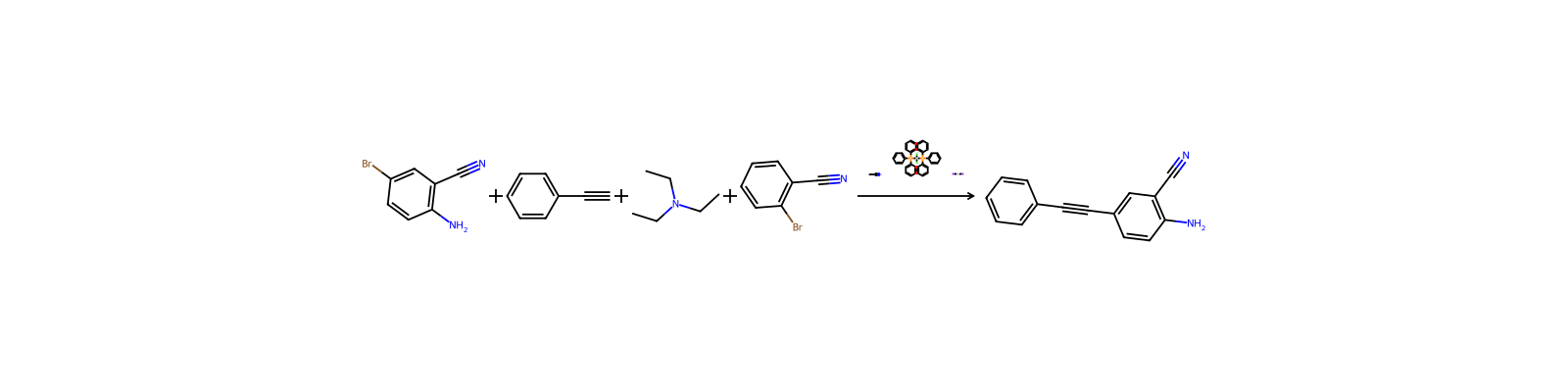
[NH2:1][C:2]1[CH:9]=[CH:8][C:7](Br)=[CH:6][C:3]=1[C:4]#[N:5].[C:11]1([C:17]#[CH:18])[CH:16]=[CH:15][CH:14]=[CH:13][CH:12]=1.C(N(CC)CC)C.BrC1C=CC=CC=1C#N>C(#N)C.Cl[Pd](Cl)([P](C1C=CC=CC=1)(C1C=CC=CC=1)C1C=CC=CC=1)[P](C1C=CC=CC=1)(C1C=CC=CC=1)C1C=CC=CC=1.[Cu](I)I>[NH2:1][C:2]1[CH:9]=[CH:8][C:7]([C:18]#[C:17][C:11]2[CH:16]=[CH:15][CH:14]=[CH:13][CH:12]=2)=[CH:6][C:3]=1[C:4]#[N:5]Komponenten
Edukt 4


Produkt 1

Reagenzien, Katalysatoren, Lösungsmittel 3
Versuchsvorschrift
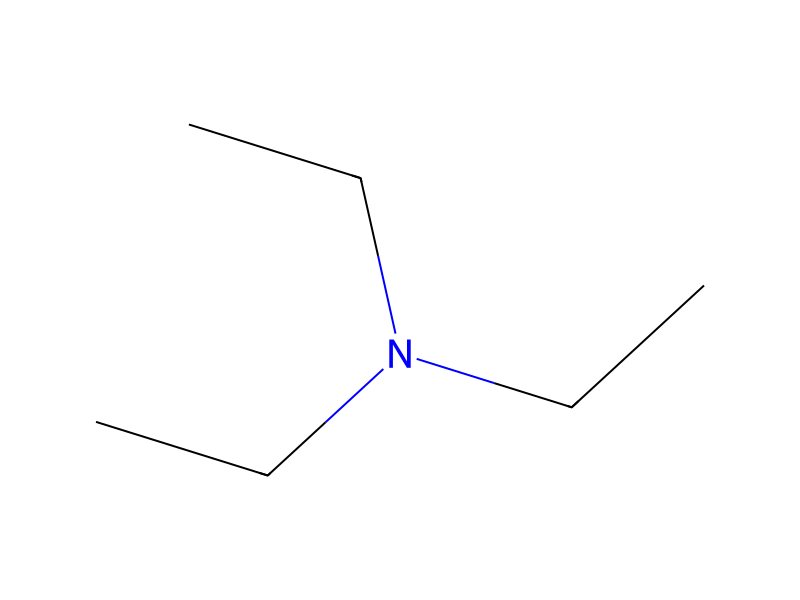
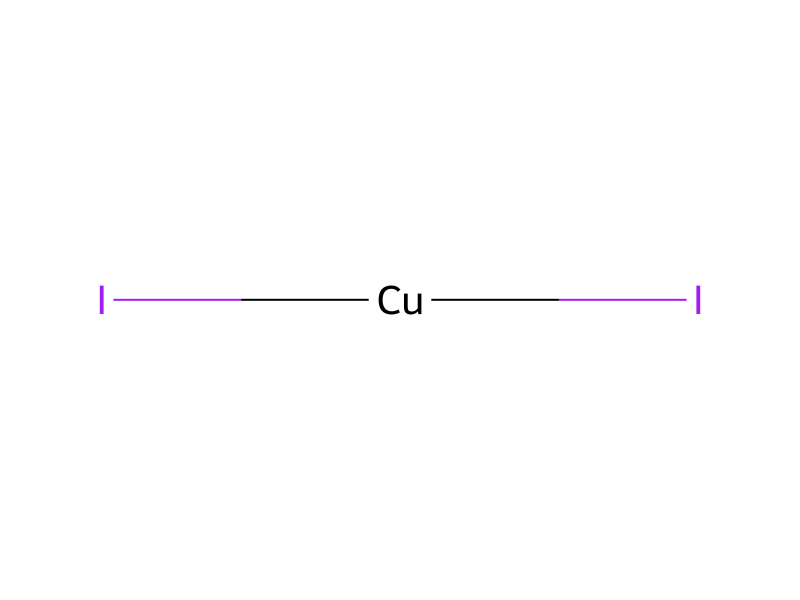
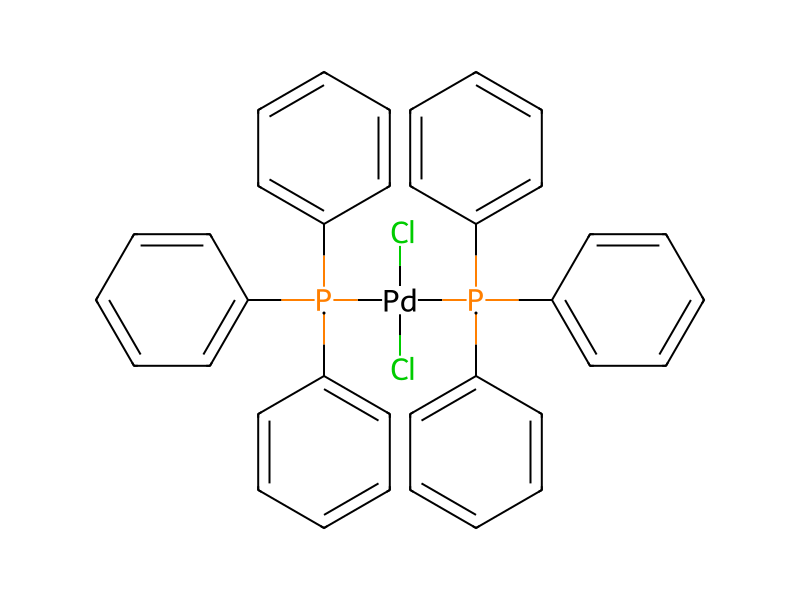
A solution of 3.00 grams (0.015 mole) of 2-amino-5-bromobenzonitrile and 2.3 mL (0.021 mole) of phenylacetylene in 50 mL of acetonitrile was stirred, and 10.6 mL of triethylamine, 0.13 gram of copper iodide, and 0.29 gram of bis(triphenylphosphine)palladium(II) chloride were added in order. Upon completion of addition, the reaction mixture was stirred at ambient temperature for about 20 hours. After this time, thin layer chromatographic (TLC) analysis of the reaction mixture indicated that no reaction had taken place. The reaction mixture was warmed to 70° C., where it was stirred for about 7.5 hours. An additional 0.38 gram of phenylacetylene was added, and the reaction mixture was warmed to reflux temperature where it was stirred during about an additional 16.5 hour period. After this time, TLC analysis of the reaction mixture indicated that it contained about a 1 to 1 mixture of starting bromobenzonitrile and product. An additional 5.0 mL of triethylamine and 0.09 gram of bis(triphenylphosphine)palladium(II) chloride catalyst was added to the reaction mixture, and the heating at reflux was continued during an additional 24 hour period. After this time, the reaction mixture was concentrated under reduced pressure to a residue. The residue was dissolved in ethyl acetate, and the solution was washed with 50 mL of aqueous, dilute hydrochloric acid. The organic layer was dried with magnesium sulfate and filtered. The filtrate was concentrated under reduced pressure to a residue. The residue was subjected to column chromatography on silica gel. Elution was accomplished using 15/10/75 tetrahydrofuran/methylene chloride/petroleum ether. The product-containing fractions were combined and concentrated under reduced pressure, yielding 0.85 gram of 2-amino-5-(2-phenylethynyl)benzonitrile. The NMR spectrum was consistent with the proposed structure.
Aufarbeitung
- additionUpon completion of addition
- temperatureThe reaction mixture was warmed to 70° C.
- stirringwhere it was stirred for about 7.5 hours
- temperaturethe reaction mixture was warmed
- temperatureto reflux temperature where it
- stirringwas stirred during about an additional 16.5 hour period
- temperaturethe heating at reflux
- waitwas continued during an additional 24 hour period
- concentrationAfter this time, the reaction mixture was concentrated under reduced pressure to a residue
- dissolutionThe residue was dissolved in ethyl acetate
- washthe solution was washed with 50 mL of aqueous, dilute hydrochloric acid
- dry with materialThe organic layer was dried with magnesium sulfate
- filtrationfiltered
- concentrationThe filtrate was concentrated under reduced pressure to a residue
- washElution
- concentrationconcentrated under reduced pressure
Quellen und Nachweise
- ORD-Eintrag
- ord-0a1947d803604e5ab99f6013dfb70fc1
- Quelldatensatz
- uspto-grants-1997_04
- Patentnummer
- US05616718
Notizen zur Reaktion
Wird geladen…