Potassium Phosphate, Tribasic → 3-Cyclopropyl-2-(5-fluoropyridin-3-yl) pyrazolo[1,5-a]pyridine
Reaction equation

Cl[C:2]1[C:10]([CH:11]2[CH2:13][CH2:12]2)=[C:5]2[CH:6]=[CH:7][CH:8]=[CH:9][N:4]2[N:3]=1.[F:14][C:15]1[CH:16]=[C:17](B(O)O)[CH:18]=[N:19][CH:20]=1.[O-]P([O-])([O-])=O.[K+].[K+].[K+].C1(P(C2CCCCC2)C2C=CC=CC=2C2C(OC)=CC=CC=2OC)CCCCC1>O1CCCC1.C([O-])(=O)C.[Pd+2].C([O-])(=O)C>[CH:11]1([C:10]2[C:2]([C:17]3[CH:18]=[N:19][CH:20]=[C:15]([F:14])[CH:16]=3)=[N:3][N:4]3[CH:9]=[CH:8][CH:7]=[CH:6][C:5]=23)[CH2:13][CH2:12]1Participants
Reactant 4



Product 1

Reagents, catalysts & solvents 2


Conditions
- Temperature
- 100 °C
Procedure
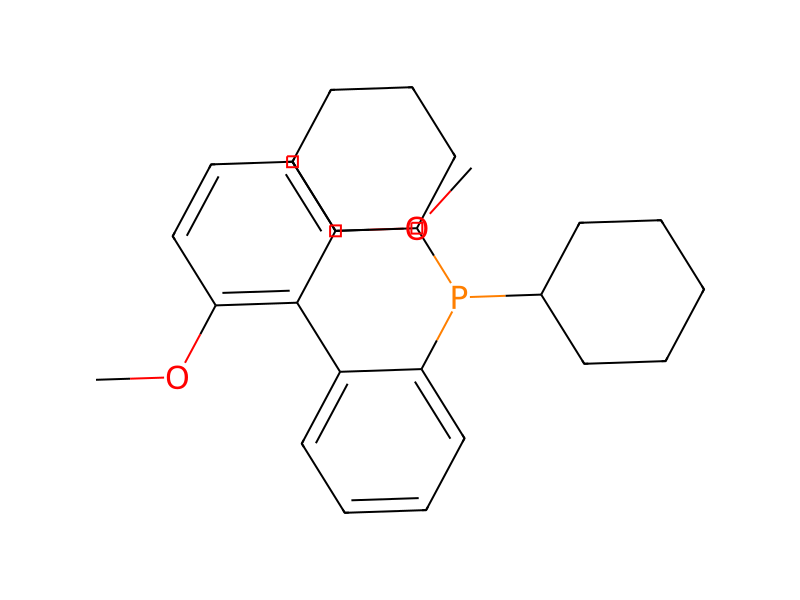
A solution of 2-chloro-3-cyclopropylpyrazolo-[1,5-a]pyridine (27-4; 0.2 g, 1.042 mmol), (5-fluoropyridin-3-yl)boronic acid (0.147 g, 1.042 mmol), and potassium phosphate tribasic (0.66 g, 3.126 mmol) in tetrahydrofuran (15 mL) was degassed for 10 min. Next 2-dicyclohexylphosphino-2′,6′-dimethoxy-1,1′-biphenyl (0.085 g, 0.208 mmol) and palladium acetate (0.023 g, 0.104 mmol) were added and heated in a sealed tube at 100° C. for 18 h. The reaction mixture was then cooled to room temperature, filtered and concentrated under reduced pressure. Purification of the resulting residue by prep HPLC provided 3-cyclopropyl-2-(5-fluoropyridin-3-yl) pyrazolo[1,5-a]pyridine. 1H NMR (400 MHz, DMSO-d6) δ 9.07 (s, 1 H), 8.67-8.65 (d, J=8.0 Hz, 1 H), 8.62-8.61 (d, J=2.4 Hz, 1 H), 8.19-8.17 (d, J=8.0 Hz, 1 H), 7.74-7.72 (d, J=8.0 Hz, 1 H), 7.26-7.22 (t, J=8.0 Hz, 1 H), 6.93-6.90 (t, J=8.0 Hz, 1 H), 2.10-2.05 (m, 1 H), 1.02-1.01 (d, J=4.0 Hz, 2 H), 0.43-0.42 (d, J=4.0 Hz, 2 H), MS (M+1): 254.1.
Workup
- temperatureThe reaction mixture was then cooled to room temperature
- filtrationfiltered
- concentrationconcentrated under reduced pressure
- customPurification of the resulting residue by prep HPLC
Sources & evidence
- ORD record
- ord-84cc2c904f2b415ca28af2c8dc2761fa
- Source dataset
- uspto-grants-2016_05
- Patent number
- US09351973B2
Reaction notes
Loading…