4-Chlorophenyl Isocyanate → HCID 131735647, compound
Reaction equation

[F:1][C:2]([F:20])([F:19])[C@@H:3]([OH:18])[CH2:4][N:5]1[CH2:10][CH2:9][O:8][CH:7]([C:11]2[CH:16]=[CH:15][C:14]([F:17])=[CH:13][CH:12]=2)[CH2:6]1.[Cl:21][C:22]1[CH:27]=[CH:26][C:25]([N:28]=[C:29]=[O:30])=[CH:24][CH:23]=1>C(#N)C.CS(C)=O>[ClH:21].[F:20][C:2]([F:1])([F:19])[C@@H:3]([O:18][C:29](=[O:30])[NH:28][C:25]1[CH:26]=[CH:27][C:22]([Cl:21])=[CH:23][CH:24]=1)[CH2:4][N:5]1[CH2:10][CH2:9][O:8][CH:7]([C:11]2[CH:16]=[CH:15][C:14]([F:17])=[CH:13][CH:12]=2)[CH2:6]1Participants
5
Reactant 2
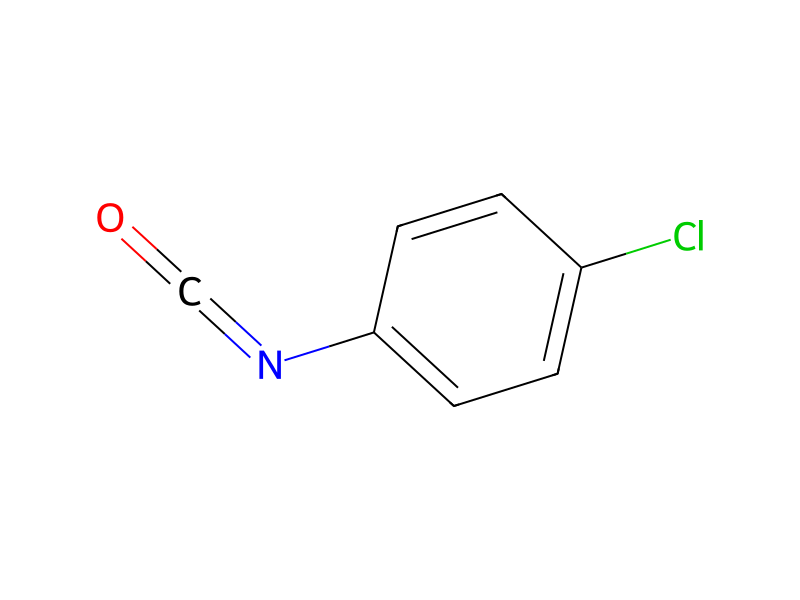

Product 1

Reagents, catalysts & solvents 2


Procedure
(2 S)-1,1,1-trifluoro-3-(2-(4-fluorophenyl)morpholino)propan-2-ol (39 mg, 133 μmol), TEA (92.7 μL, 665 μmol) and 1-chloro-4-isocyanatobenzene (20.4 mg, 133 μmol) were combined in 2 mL of acetonitrile and stirred at room temperature overnight. Several drops of DMSO were added to the mixture to make a clear solution. The solution was separated by reverse phase column chromatography (50-100% acetonitrile in water). The desired fractions were pooled, treated with 5 drops of conc. HCl and the solution lyophilized to afford the title compound (38 mg, 59%) as a white solid. (M+H)+=447 m/e.
Workup
- customThe solution was separated by reverse phase column chromatography (50-100% acetonitrile in water)
- additiontreated with 5 drops of conc. HCl
Sources & evidence
- ORD record
- ord-836a1ef359f341bcb2033709b184366e
- Source dataset
- uspto-grants-2016_05
- Patent number
- US09353096B2
Reaction notes
Loading…