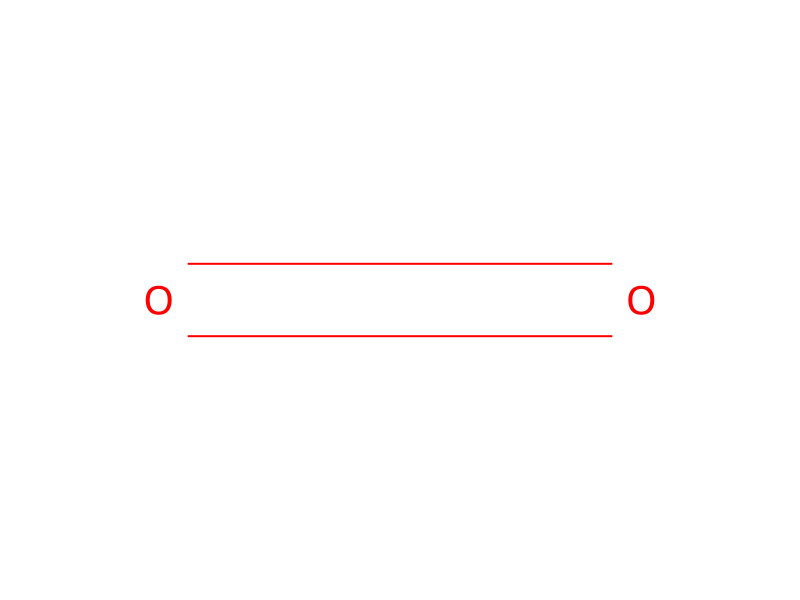
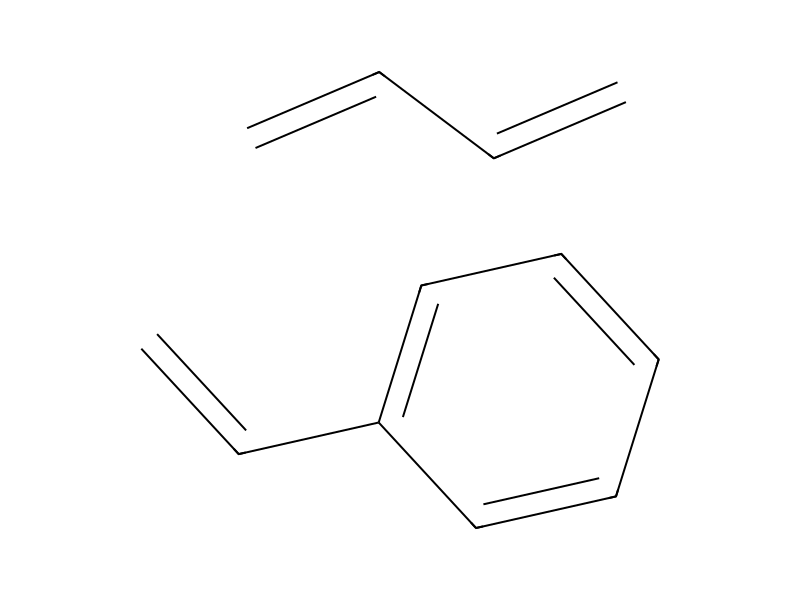
Oxygen → Benzene, ethenyl-, polymer with 1,3-butadiene
Reaction equation

O=O.[C:3]([C:7]1[CH:8]=[C:9](O)[C:10](=[CH:12][CH:13]=1)O)(C)(C)[CH3:4].[CH2:15]=[CH:16][CH:17]=[CH2:18]>O>[CH2:4]=[CH:3][C:7]1[CH:8]=[CH:9][CH:10]=[CH:12][CH:13]=1.[CH2:15]=[CH:16][CH:17]=[CH2:18]Participants
Reactant 3


Product 1
Reagents, catalysts & solvents 1
Procedure
A pressure-resistant glass bottle, specifically an empty bottle for carbonated drink was used as a reactor; 60 g of ion-exchanged water was charged in this glass bottle; and dissolved oxygen was removed with a nitrogen gas. This glass bottle was cooled in an iced water bath; the emulsifier that is the invention product or comparative product and polyfunctional monomers shown in Table 4 were added; 0.12 g of a naphthalenesulfonic acid formalin condensate, 0.12 g of sodium carbonate, and 0.12 g of dodecyl mercaptan were added; and the glass bottle was temporarily plugged with a rubber stopper. This glass bottle was lightly manually shaken to make the contents uniform and then opened; 20 g of styrene and 0.12 g of potassium persulfate were charged; and the glass bottle was again temporarily plugged with a rubber stopper and allowed to stand for cooling in an iced water bath. Subsequently, butadiene was introduced from a butadiene cylinder into a graduated sample collecting tube in a methanol dry ice bath and liquefied. And 20 g of the liquefied butadiene was weighed out and charged in the glass bottle by using a stop cock-equipped syringe; and immediately after charging, a prescribed metal-made crown was covered and capped, thereby preparing a bottle polymerization reactor. Subsequently, the capped glass bottle was vigorously shaken, thereby making the content liquid in the glass bottle in an emulsified state. Subsequently, the glass bottle was set in a holder within a rotary polymerization tank for bottle polymerization adjusted at a water temperature of 50° C., polymerization was conducted for 20 hours at a rotation number of 50 rpm, thereby conducting emulsion polymerization by the bottle polymerization method. The glass bottle was then put in an iced water bath and cooled. Then, after opening the glass bottle, 0.12 g of p-tert-butyl catechol was added, and unreacted butadiene was vaporized and distilled off by means of bubbling of a nitrogen gas within a draft, thereby obtaining a polymer dispersion.
Workup
- customA pressure-resistant glass bottle, specifically an empty bottle for carbonated drink was used as a reactor
- customwas removed with a nitrogen gas
- temperatureThis glass bottle was cooled in an iced water bath
- additionwere added
- addition0.12 g of a naphthalenesulfonic acid formalin condensate, 0.12 g of sodium carbonate, and 0.12 g of dodecyl mercaptan were added
- addition20 g of styrene and 0.12 g of potassium persulfate were charged
- temperaturefor cooling in an iced water bath
- additionSubsequently, butadiene was introduced from a butadiene cylinder into a graduated sample
- customcollecting tube in a methanol dry ice bath
- additioncharged in the glass bottle
- customcock-equipped syringe
- customcapped
- custompreparing
- customa bottle polymerization reactor
- stirringSubsequently, the capped glass bottle was vigorously shaken
- customSubsequently, the glass bottle was set in a holder within a rotary polymerization tank for bottle polymerization
- customemulsion polymerization
- customby the bottle polymerization method
- customThe glass bottle was then put in an iced water bath
- temperaturecooled
- additionwas added
- distillationdistilled off by means
- customof bubbling of a nitrogen gas within a draft
- customobtaining a polymer dispersion
Sources & evidence
- ORD record
- ord-ba5af217e33b4adeb30ed139d1f11d9c
- Source dataset
- uspto-grants-2016_05
- Patent number
- US09353195B2
Reaction notes
Loading…