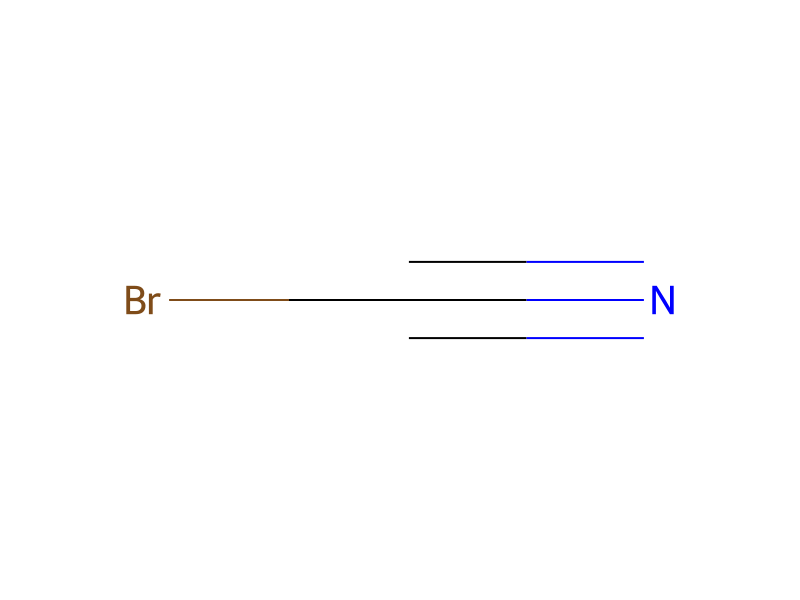
Cyanogen Bromide → HCID 58136866, compound
Reaction equation

Cl.[CH2:2]([C:4]1[N:9]=[N:8][C:7]([NH:10][NH2:11])=[CH:6][CH:5]=1)[CH3:3].[N:12]#[C:13]Br>C(O)C.O>[CH2:2]([C:4]1[CH:5]=[CH:6][C:7]2[N:8]([C:13]([NH2:12])=[N:11][N:10]=2)[N:9]=1)[CH3:3]Participants
Reactant 2

Product 1

Reagents, catalysts & solvents 2


Procedure
(6-Ethylpyridazin-3-yl)hydrazine hydrochloride (2 g) was initially charged in a mixture of ethanol (30 ml) and water (6 ml) while stirring at RT. Thereafter, cyanogen bromide was cautiously added dropwise (2.4 g dissolved in 7.5 ml of ethanol and 1.5 ml of water). After stirring at RT for one hour, the mixture was left to stand overnight and, the next day, stirred for 4 further hours. The solvent was then drawn off and the residue was purified by means of preparative HPLC (met. C). The clean product fractions were combined, freed of the acetonitrile under reduced pressure, alkalized with saturated potassium carbonate solution and extracted repeatedly with dichloromethane. The combined organic phases were dried over sodium sulfate, filtered and concentrated. 830 mg of the title compound were obtained. The aqueous potassium carbonate phase was likewise freeze-dried, then taken up with a little water and extracted five times with dichloromethane. The combined organic phases were dried over sodium sulfate, filtered and concentrated. A further 180 mg of the title compound were obtained.
Workup
- stirringAfter stirring at RT for one hour
- waitthe mixture was left
- stirringthe next day, stirred for 4 further hours
- customthe residue was purified by means of preparative HPLC (met. C)
- extractionextracted repeatedly with dichloromethane
- dry with materialThe combined organic phases were dried over sodium sulfate
- filtrationfiltered
- concentrationconcentrated
Sources & evidence
- ORD record
- ord-8ef5f2d7954a4af699871cf14a98cc24
- Source dataset
- uspto-grants-2014_10
- Patent number
- US08853206B2
Reaction notes
Loading…