Phthalic Anhydride → 2,6-Dimethoxy-3-phthalimidopyridine
Reaction equation

[C:1]1(=[O:11])[O:6][C:4](=O)[C:3]2=[CH:7][CH:8]=[CH:9][CH:10]=[C:2]12.Cl.[NH2:13][C:14]1[C:15]([O:22][CH3:23])=[N:16][C:17]([O:20][CH3:21])=[CH:18][CH:19]=1.C([O-])(=O)C.[Na+]>C(O)(=O)C>[O:11]=[C:1]1[C:2]2[C:3](=[CH:7][CH:8]=[CH:9][CH:10]=2)[C:4](=[O:6])[N:13]1[C:14]1[C:15]([O:22][CH3:23])=[N:16][C:17]([O:20][CH3:21])=[CH:18][CH:19]=1Participants
Reactant 3
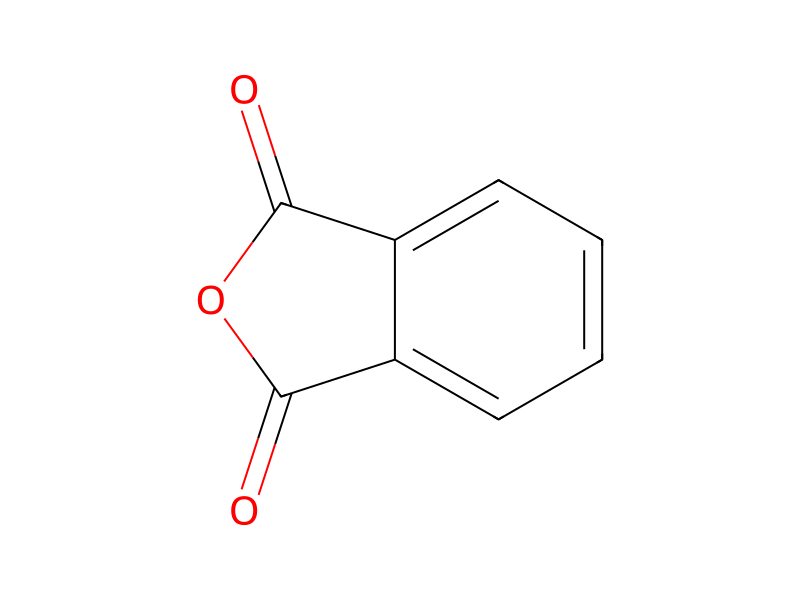


Product 1

Reagents, catalysts & solvents 1

Procedure
1,3-Dioxo-2-(2,6-dimethoxypyridin-3-yl)-isoindoline (5) was prepared and isolated as follows. A mixture of phthalic anhydride (0.89 g, 6 mmol), 3-amino-2,6-dimethoxypyridine monohydrochloride (95%, 1 g, 5 mmol) and sodium acetate (0.49 g, 6 mmol) in glacial acetic acid (50 ml) was refluxed for 3 h. The solvent was removed under vacuum. The residue was dissolved in dichloromethane (200 ml) and washed with water (100 ml×3), dried over Na2SO4 and concentrated to give the crude product. The crude product was recrystallized with ethyl acetate to give 5 (1.345 g, 90%) as a pale pink crystals: nip 182-183° C.; 1H NMR (CDCl3) δ 7.96-7.90 (m, 2H), 7.80-7.76 (m, 2H), 7.44 (d, J=8.1 Hz, 1H), 6.42 (d, J=8.1 Hz, 1H, 3.95 (s, 3H), 3.91 (s, 3H); 13C NMR (DMSO-d6) δ 166.5, 160.6, 156.1, 140.1, 132.8, 129.4, 121.4, 104.6, 99.3, 51.7, 51.5; MS (CI/CH4) 285 [M+1]+. Anal. Calcd for C15H12N2O4: C, 63.38; H, 4.25; N, 9.85. Found: C, 63.57; H, 4.18; N, 9.65.
Workup
- customisolated
- temperaturewas refluxed for 3 h
- customThe solvent was removed under vacuum
- dissolutionThe residue was dissolved in dichloromethane (200 ml)
- washwashed with water (100 ml×3)
- dry with materialdried over Na2SO4
- concentrationconcentrated
- customto give the crude product
Sources & evidence
- ORD record
- ord-e0887e6729214be497439d16ddeb4f7c
- Source dataset
- uspto-grants-2014_10
- Patent number
- US08853253B2
Reaction notes
Loading…