3,5-Difluoropyridine → HCID 67774589, compound
Reaction equation

C([Li])CCC.[F:6][C:7]1[CH:8]=[N:9][CH:10]=[C:11]([F:13])[CH:12]=1.C1(P(C2CCCCC2)C2C=CC=CC=2C2C(OC(C)C)=CC=CC=2OC(C)C)CCCCC1.[CH3:47][C:48]1[C:57]([CH3:58])=[C:56](OS(C(F)(F)F)(=O)=O)[C:55]2[C:50](=[CH:51][CH:52]=[C:53]([C:67]([O:69][CH2:70][CH3:71])=[O:68])[CH:54]=2)[N:49]=1>[Cl-].[Zn+2].[Cl-].C1C=CC(/C=C/C(/C=C/C2C=CC=CC=2)=O)=CC=1.C1C=CC(/C=C/C(/C=C/C2C=CC=CC=2)=O)=CC=1.C1C=CC(/C=C/C(/C=C/C2C=CC=CC=2)=O)=CC=1.[Pd].[Pd].C1COCC1>[F:6][C:7]1[CH:8]=[N:9][CH:10]=[C:11]([F:13])[C:12]=1[C:56]1[C:55]2[C:50](=[CH:51][CH:52]=[C:53]([C:67]([O:69][CH2:70][CH3:71])=[O:68])[CH:54]=2)[N:49]=[C:48]([CH3:47])[C:57]=1[CH3:58]Participants
Reactant 4



Product 1

Reagents, catalysts & solvents 3



Procedure
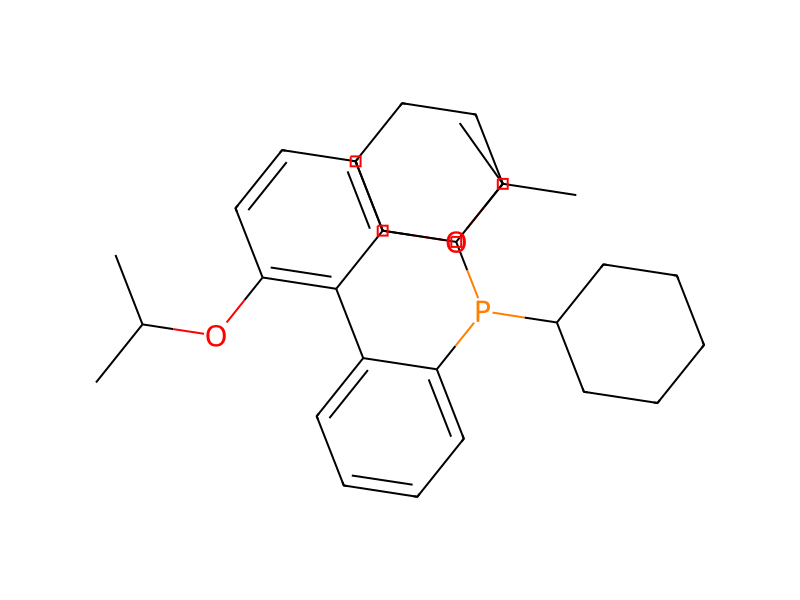
Under argon gas atmosphere, n-butyllithium (1.6 M THF solution, 1.3 mL) was added dropwise to a mixture of 3,5-difluoropyridine (238 mg) and THF (4 mL) at −78° C., followed by stirring at the same temperature for one hour. Then, zinc chloride (0.5 M THF solution, 3.8 mL) was slowly added stirried at the same temperature for 30 minutes and further for an additional hour at room temperature. Tris(dibenzylideneacetone)dipalladium (73 mg), 2-dicyclohexylphosphino-2′,6′-diisopropoxybiphenyl (148 mg), and ethyl 2,3-dimethyl-4-{[(trifluoromethyl)sulfonyl]oxy}quinoline-6-carboxylate (300 mg), were added to the reaction mixture and heated under stirring in an oil bath at 70° C. for 15 hours. The reaction mixture was returned to room temperature, and the insoluble materials were separated by filtration. Then, the precipitate was concentrated under reduced pressure, and the resulting residue was purified under silica gel column chromatography (hexane/ethyl acetate) to obtain ethyl 4-(3,5-difluoropyridin-4-yl)-2,3-dimethylquinoline-6-carboxylate (51 mg).
Workup
- waitstirried at the same temperature for 30 minutes and further for an additional hour at room temperature
- temperatureheated
- stirringunder stirring in an oil bath at 70° C. for 15 hours
- customwas returned to room temperature
- customthe insoluble materials were separated by filtration
- concentrationThen, the precipitate was concentrated under reduced pressure
- customthe resulting residue was purified under silica gel column chromatography (hexane/ethyl acetate)
Sources & evidence
- ORD record
- ord-c3cc5c65d471495c9c6e1bb6a857f58d
- Source dataset
- uspto-grants-2014_10
- Patent number
- US08853242B2
Reaction notes
Loading…