4-Hydroxybenzaldehyde → 4-Hydroxystilbene
Reaction equation

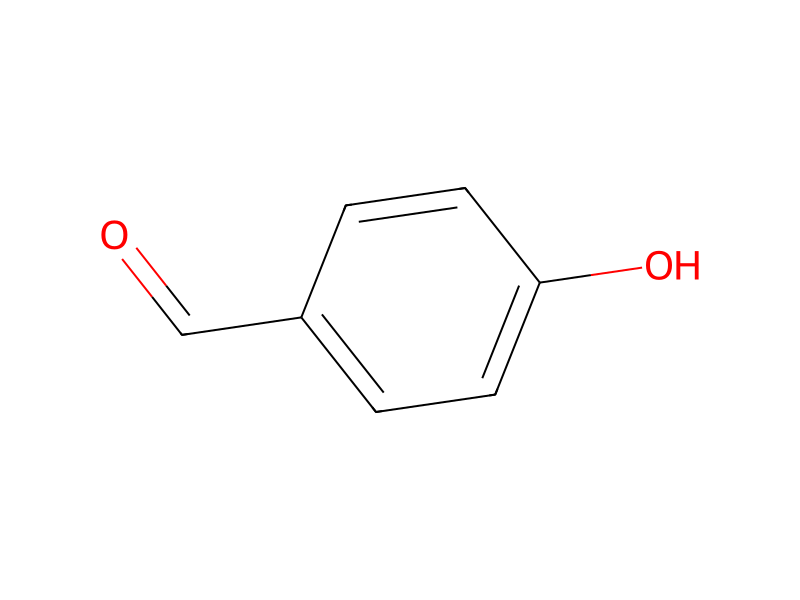
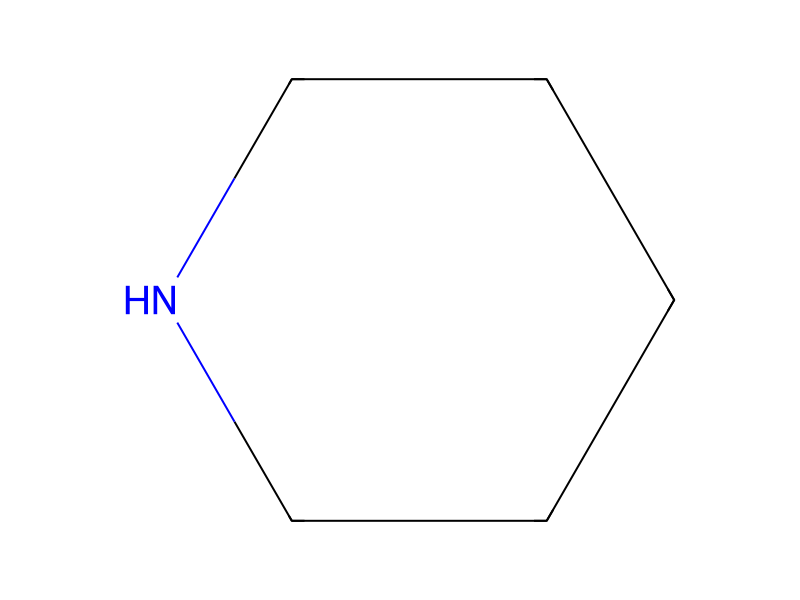
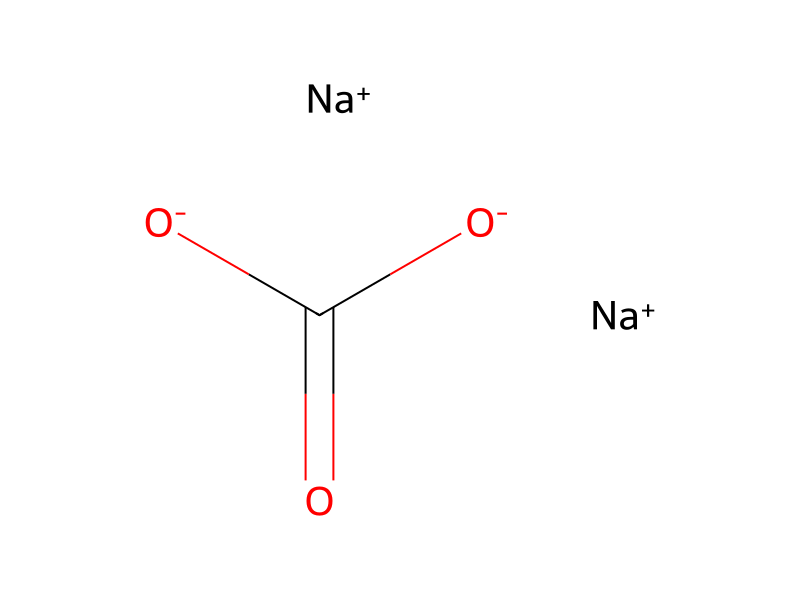
[OH:1][C:2]1[CH:9]=[CH:8][C:5]([CH:6]=O)=[CH:4][CH:3]=1.[C:10]1([CH2:16]C(O)=O)[CH:15]=[CH:14][CH:13]=[CH:12][CH:11]=1.N1CCCCC1.C(=O)([O-])[O-].[Na+].[Na+]>O>[OH:1][C:2]1[CH:9]=[CH:8][C:5]([CH:6]=[CH:16][C:10]2[CH:15]=[CH:14][CH:13]=[CH:12][CH:11]=2)=[CH:4][CH:3]=1Participants
Reactant 4

Product 1

Reagents, catalysts & solvents 1
Conditions
- Temperature
- 90 °C
Procedure
A portion (244.24 grams, 2.0 moles) of 4-hydroxybenzaldehyde, phenylacetic acid (272.30 grams, 2.0 moles) and piperidine (51.6 milliliters) are added to a reactor equipped with a reflux condenser and stirred under a nitrogen atmosphere. Heating commences and after 12 minutes and at 93° C., a solution forms. After a total of 27 minutes, the reaction temperature reaches 150° C. and is held therein. After 2 hours at the 150° C. temperature, a solution of sodium carbonate (40.0 grams) in deionized water (800 milliliters) is added to the reactor over a 3 minute period while stirring and heating are maintained. After 10 minutes of mixing with heating, stirring ceases and the aqueous layer is decanted from the reactor. The solid product remaining in the reactor is recovered and dissolved in a solution of sodium hydroxide (100.0 grams) in deionized water (2400 milliliters) which has been heated to 90° C. The resultant solution is held for 16 hours at 4° C. and the resultant crystalline precipitate which forms is recovered by filtration. The crystals are suspended in deionized water (1600 milliliters) which is stirred and then acidified to a pH of one by addition of aqueous concentrated hydrochloric acid. The resultant crystalline product is recovered by filtration, then washed on the filter with deionized water (two 250 milliliter portions). The product recovered on the filter is dried at 80° C. under a vacuum of 2 mm Hg to a constant weight of 87.1 grams of white crystalline powder. Fourier transform infrared spectrophotometric analysis of a potassium chloride pellet of the product reveals the presence of the expected hydroxyl group O--H stretching absorbance centered at 3416 cm-1 (broad), the ethylene C--H out-of-plane deformation at 965 cm-1, the C--H out-of-plane vibration at 819 cm-1 for the para substituted aromatic ring and the C--H out-of-plane vibration at 746 and 686 cm-1 for the monosubstituted aromatic ring. High pressure liquid chromatographic analysis of the 4-hydroxystilbene product using a uv detector set at 254 nm reveals a single sharp peak. Proton magnetic resonance spectroscopy further confirms the product structure.
Workup
- customequipped with a reflux condenser
- customat 93° C.
- customAfter a total of 27 minutes
- customreaches 150° C.
- waitAfter 2 hours at the 150° C. temperature
- stirringwhile stirring
- temperatureheating
- temperatureare maintained
- additionAfter 10 minutes of mixing
- temperaturewith heating
- stirringstirring ceases
- customthe aqueous layer is decanted from the reactor
- customis recovered
- dissolutiondissolved in a solution of sodium hydroxide (100.0 grams) in deionized water (2400 milliliters) which
- waitThe resultant solution is held for 16 hours at 4° C.
- filtrationthe resultant crystalline precipitate which forms is recovered by filtration
- stirringis stirred
- additionacidified to a pH of one by addition of aqueous concentrated hydrochloric acid
- filtrationThe resultant crystalline product is recovered by filtration
- washwashed on the
- filtrationfilter with deionized water (two 250 milliliter portions)
- customThe product recovered on the filter
- dry with materialis dried at 80° C. under a vacuum of 2 mm Hg to a constant weight of 87.1 grams of white crystalline powder
Sources & evidence
- ORD record
- ord-6c3aff95e32b42828a080f8789dc7ee9
- Source dataset
- uspto-grants-1997_04
- Patent number
- US05621071
Reaction notes
Loading…