Bisphenol A → Carbonic acid;4-[2-(4-hydroxyphenyl)propan-2-yl]phenol
Reaction equation

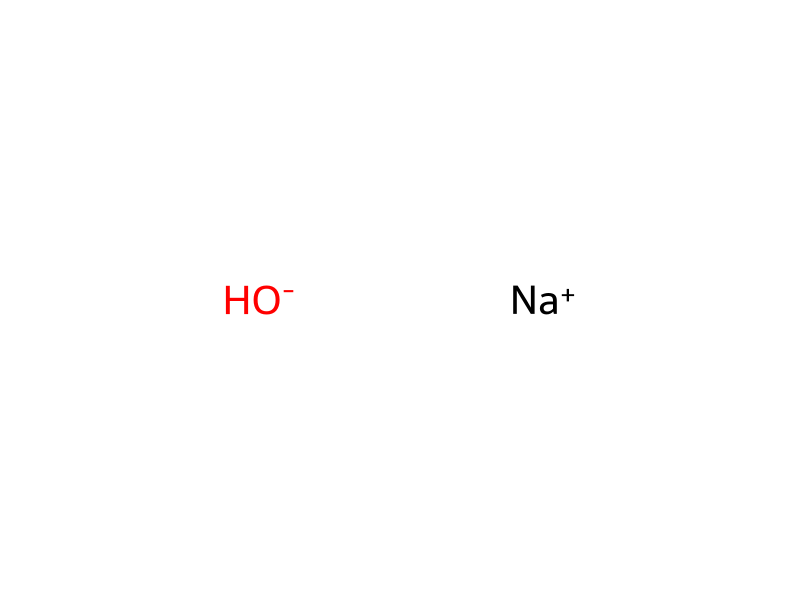
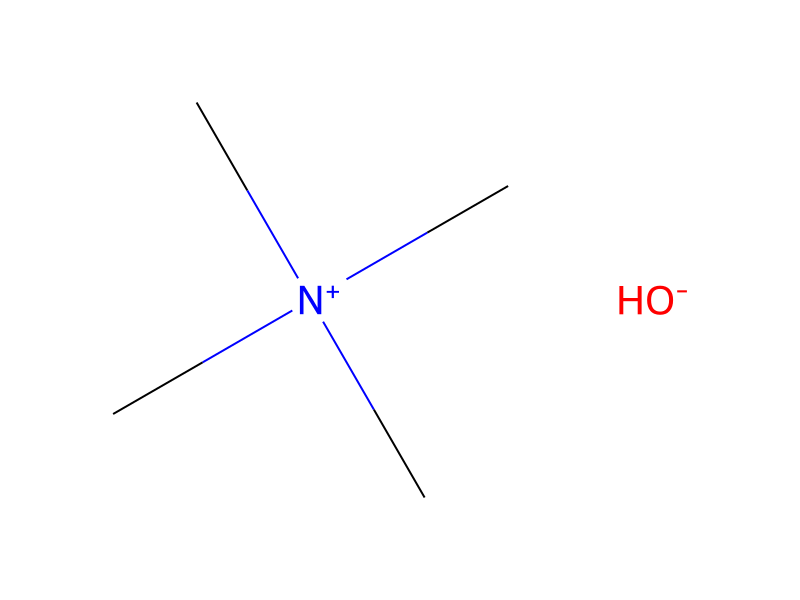
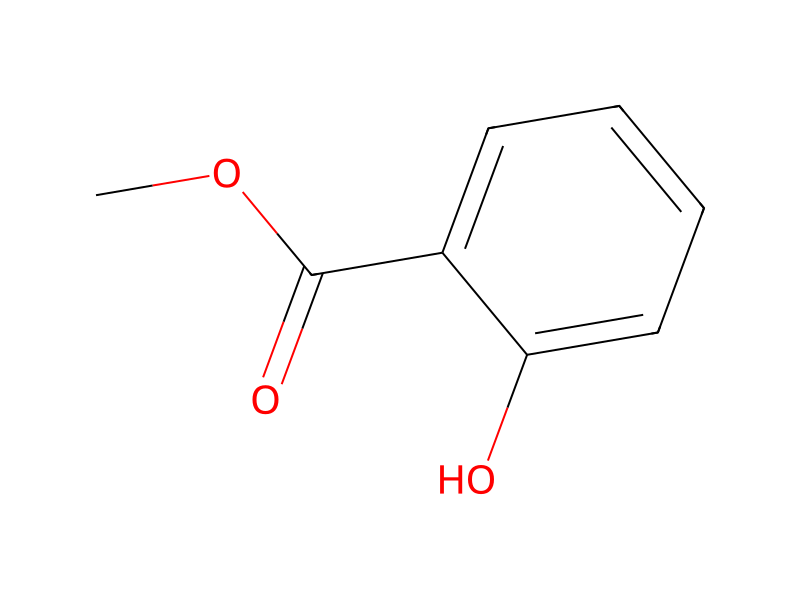
[C:1](=[O:4])([O-:3])[O-:2].[OH:5][C:6]1[CH:11]=[CH:10][C:9]([C:12]([C:15]2[CH:20]=[CH:19][C:18]([OH:21])=[CH:17][CH:16]=2)([CH3:14])[CH3:13])=[CH:8][CH:7]=1.COC1C(=CC=CC=1)COC(=O)OCC1C(=CC=CC=1)OC.[OH-].C[N+](C)(C)C.[OH-].[Na+]>C(OC)(=O)C1C(=CC=CC=1)O>[CH3:14][C:12]([C:9]1[CH:10]=[CH:11][C:6]([OH:5])=[CH:7][CH:8]=1)([C:15]1[CH:16]=[CH:17][C:18]([OH:21])=[CH:19][CH:20]=1)[CH3:13].[C:1]([OH:4])([OH:3])=[O:2]Participants
Reactant 5



Product 1

Reagents, catalysts & solvents 1
Conditions
- Temperature
- 180 °C
Procedure
Example 5 provides a general method for preparing a polycarbonate nanocomposite by in-situ polymerization of a dihydroxy compound (bisphenol A) and an activated carbonate (bis(methylsalicyl)carbonate (BMSC)) in the presence of methyl salicylate as the solvent and nanoparticles (the functionalized nanosilica of Sample A). See Table 2 for an overview of the materials used. In a round bottom flask, 1.5 ml of the functionalized nanosilica dispersion of Sample A was diluted with 20 ml of methyl salicylate. The diluted dispersion was then placed in an ultrasound bath (Transonic T 890/H sonicator) for about 30 minutes at a power of 470 Watts. The dispersion was transferred to a glass tube reactor containing bisphenol A (24 g) and BMSC (35.73 g) and mixed to obtain a homogeneous dispersion. 400 microliters of an aqueous catalyst solution containing tetramethylammonium hydroxide (2.6 milligrams (mg)) and sodium hydroxide (9.58 mg) were added, and the reactor was purged with nitrogen to remove oxygen. The mixture was heated to a temperature of 180° C. under stirring at a speed of 90 rotations per minute (rpm). After 15 minutes the pressure in the tube reactor reached 910 millibar (mbar). The temperature was increased to 220° C., and the pressure was slowly reduced from 910 mbar to 100 mbar over a period of 4 to 5 minutes at a rate of 75 to 100 mbar per 30 seconds. After holding at 100 mbar and 220° C. for 10 minutes, the temperature was increased to 280° C. The reaction mixture was then maintained at 280° C. and 100 mbar for 15 minutes to provide a bisphenol A polycarbonate nanocomposite.
Workup
- customExample 5 provides a general method
- customThe diluted dispersion was then placed in an ultrasound bath
- customThe dispersion was transferred to a glass tube reactor
- additionmixed
- customto obtain a homogeneous dispersion
- additionwere added
- customthe reactor was purged with nitrogen
- customto remove oxygen
- waitAfter 15 minutes the pressure in the tube reactor reached
- temperatureThe temperature was increased to 220° C.
- waitthe pressure was slowly reduced from 910 mbar to 100 mbar over a period of 4 to 5 minutes at a rate of 75 to 100 mbar per 30 seconds
- waitAfter holding at 100 mbar and 220° C. for 10 minutes
- temperaturethe temperature was increased to 280° C
- temperatureThe reaction mixture was then maintained at 280° C.
Sources & evidence
- ORD record
- ord-6c3ea5f3d18646838c45e1e8a5f10809
- Source dataset
- uspto-grants-2014_10
- Patent number
- US08865833B2
Reaction notes
Loading…