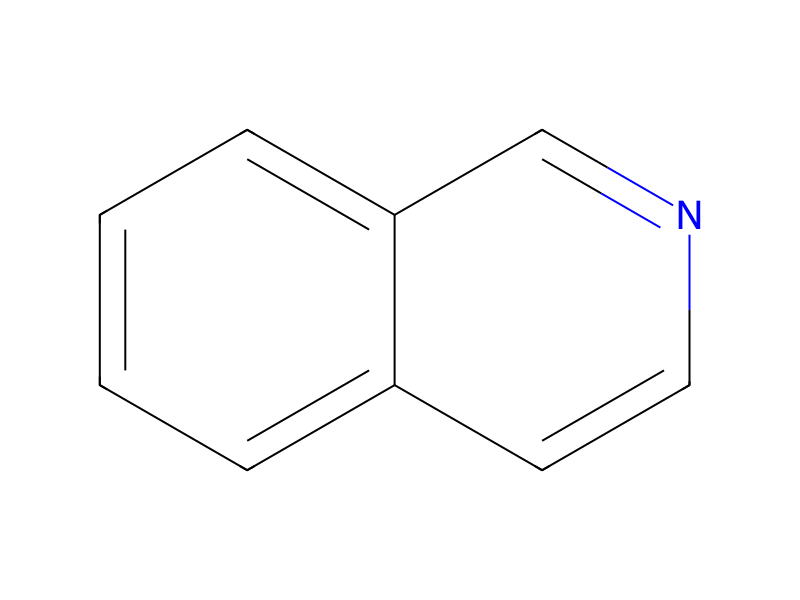
Potassium Carbonate → Isoquinoline
Reaction equation

[C:1]1(C2C=C(O)C=CC=2)[C:10]2[C:5](=[CH:6][CH:7]=[CH:8][CH:9]=2)[CH:4]=[CH:3][N:2]=1.C(=O)([O-])[O-].[K+].[K+].BrC1C=C(C2N(C3C(C(C)C)=CC=CC=3C(C)C)C=CN=2)C=CC=1>[Cu]I.CN(C=O)C>[CH:1]1[C:10]2[C:5](=[CH:6][CH:7]=[CH:8][CH:9]=2)[CH:4]=[CH:3][N:2]=1Participants
Reactant 3



Product 1
Reagents, catalysts & solvents 2


Conditions
- Temperature
- 137.5 °C
Procedure
3-(isoquinolin-1-yl)phenol (1.5 g, 6.78 mmol), potassium carbonate (2.5 g, 18.12 mmol), 2-(3-bromophenyl)-1-(2,6-diisopropylphenyl)-1H-imidazole (2.60 g, 6.78 mmol), copper(I) iodide (0.039 g, 0.203 mmol) and ferric acetylacetonate (0.144 g, 0.407 mmol) were charged into the reaction flask with 45 mL of DMF. This heterogeneous mixture was degassed with nitrogen then was heated at 135-140° C. for 2½ days. The reaction mixtures were filtered through a pad of Celite® and the pad was rinsed with ethyl acetate. The filtrate was diluted with 300 mL of water. This mixture was then extracted 2×200 mL ethyl acetate. These extracts were dried over magnesium sulfate then were filtered and stripped under vacuum. The crude residue was passed through a silica gel column using 7-15% acetone/DCM. The cleaniest fractions were combined and stripped under vacuum yielding 1-(3-(3-(2,6-diisopropylphenyl)-1H-imidazol-2-yl)phenoxy)phenyl)isoquinoline (1.45 g, 40.8% yield) as a light tan solid.
Workup
- customThis heterogeneous mixture was degassed with nitrogen
- customThe reaction mixtures
- filtrationwere filtered through a pad of Celite®
- washthe pad was rinsed with ethyl acetate
- additionThe filtrate was diluted with 300 mL of water
- extractionThis mixture was then extracted 2×200 mL ethyl acetate
- dry with materialThese extracts were dried over magnesium sulfate
- filtrationthen were filtered
Sources & evidence
- ORD record
- ord-e43b1969d18b4152844a84c737ef8af7
- Source dataset
- uspto-grants-2014_10
- Patent number
- US08871361B2
Reaction notes
Loading…