2,6-Dichloropyrazine → 2-Chloro-6-(4-fluorophenyl)pyrazine(WXFC0484)
Reaction equation

Cl[C:2]1[CH:7]=[N:6][CH:5]=[C:4]([Cl:8])[N:3]=1.[F:9][C:10]1[CH:15]=[CH:14][C:13](B(O)O)=[CH:12][CH:11]=1>O1CCOCC1>[Cl:8][C:4]1[CH:5]=[N:6][CH:7]=[C:2]([C:13]2[CH:14]=[CH:15][C:10]([F:9])=[CH:11][CH:12]=2)[N:3]=1Participants
4
Reactant 2

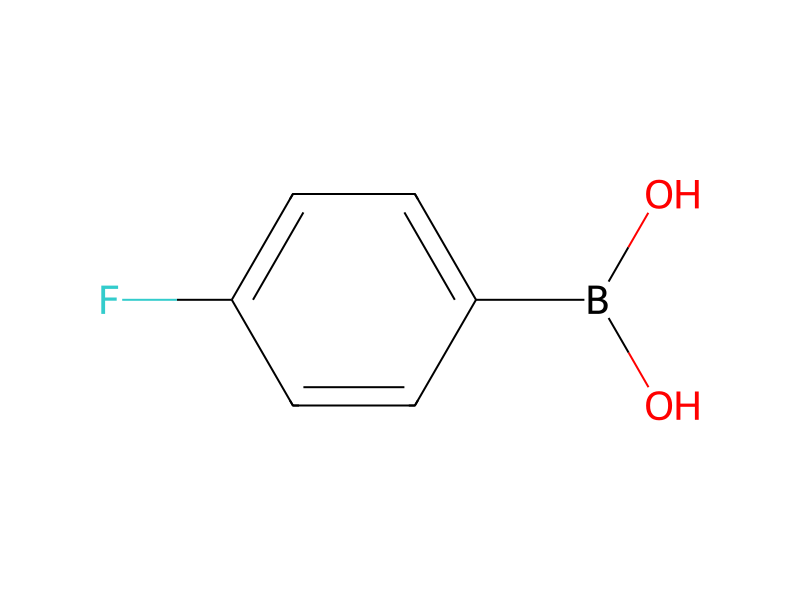
Product 1

Reagents, catalysts & solvents 1

Conditions
- Temperature
- 60 °C
Procedure
A mixture of 2,6-dichloropyrazine (2.75 g, 18.3 mmol), 4-fluorophenyl boronic acid (2.3 g, 16.5 mmol) and palladium tetrakis triphenylphosphine (0.1 g) in dioxane (50 mL) was stirred at 60° C. for one hour. The mixture was cooled and partitioned between water and diethyl ether. The organic layer was separated, dried over MgSO4, filtered and concentrated under reduced pressure. The residue was recrystallized from diethyl ether and methanol to give 1.2 g of 2-chloro-6-(4-fluoro-phenyl)-pyrazine.
Workup
- temperatureThe mixture was cooled
- custompartitioned between water and diethyl ether
- customThe organic layer was separated
- dry with materialdried over MgSO4
- filtrationfiltered
- concentrationconcentrated under reduced pressure
- customThe residue was recrystallized from diethyl ether and methanol
Sources & evidence
- ORD record
- ord-1ac7e4c608414598afaeee6cb842f96b
- Source dataset
- uspto-grants-2014_10
- Patent number
- US08871760B2
Reaction notes
Loading…