2,5-Dibromopyridine → HCID 68289059, compound
Reaction equation

Br[C:2]1[CH:7]=[CH:6][C:5]([Br:8])=[CH:4][N:3]=1.[Li]CCCC.[O:14]=[C:15]1[CH2:20][CH2:19][N:18]([C:21]([O:23][C:24]([CH3:27])([CH3:26])[CH3:25])=[O:22])[CH2:17][CH2:16]1>C1(C)C=CC=CC=1>[Br:8][C:5]1[CH:6]=[CH:7][C:2]([C:15]2([OH:14])[CH2:16][CH2:17][N:18]([C:21]([O:23][C:24]([CH3:26])([CH3:25])[CH3:27])=[O:22])[CH2:19][CH2:20]2)=[N:3][CH:4]=1Participants
Reactant 3

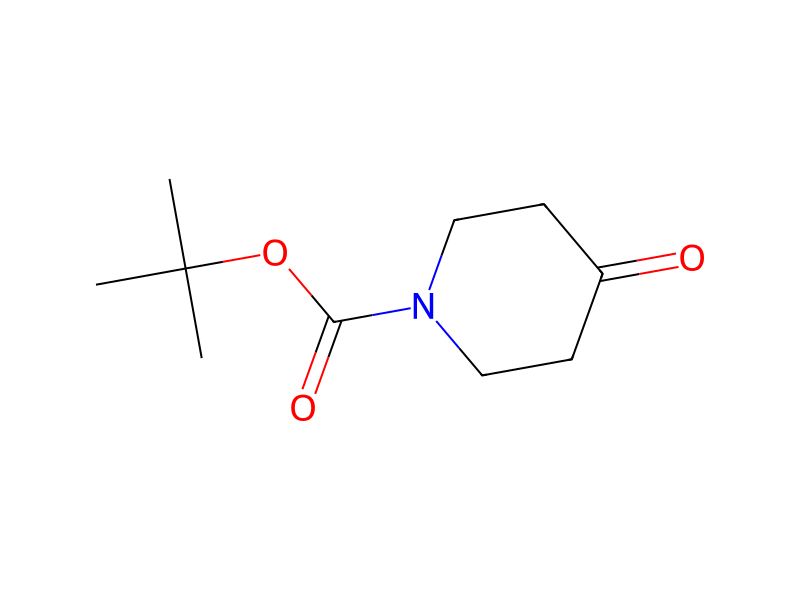

Product 1

Reagents, catalysts & solvents 1

Procedure
To a stiffed solution of 2,5-dibromopyridine (10 g, 42.19 mmol, 1.00 equiv) in toluene (1000 mL) under nitrogen at −78° C. was added dropwise n-BuLi (18 mL, 2.5 M in toluene). After 1 h at −78° C., a solution of tert-butyl 4-oxopiperidine-1-carboxylate (10 g, 50.25 mmol, 1.19 equiv) in toluene (200 mL) was added dropwise while stirring. After an additional 2 h of stirring at −78° C., the reaction was then carefully quenched by the addition of 300 mL of water. The resulting mixture was extracted with 3×500 mL of ethyl acetate. The combined organic layers were washed with 1×300 mL of brine, dried over anhydrous sodium sulfate, and concentrated under reduced pressure. The residue was purified using silica gel column chromatography with ethyl acetate/petroleum ether (1:100-1:5) to yield 6.5 g (42%) of the title compound as a yellow oil.
Workup
- stirringAfter an additional 2 h of stirring at −78° C.
- customthe reaction was then carefully quenched by the addition of 300 mL of water
- extractionThe resulting mixture was extracted with 3×500 mL of ethyl acetate
- washThe combined organic layers were washed with 1×300 mL of brine
- dry with materialdried over anhydrous sodium sulfate
- concentrationconcentrated under reduced pressure
- customThe residue was purified
Sources & evidence
- ORD record
- ord-bdb9a201a6854c9dbcf745c27cfa2252
- Source dataset
- uspto-grants-2014_10
- Patent number
- US08871790B2
Reaction notes
Loading…