Phosphorus tribromide → 2-Bromo-6-(bromomethyl)naphthalene
Reaction equation

[Br:1][C:2]1[CH:3]=[C:4]2[C:9](=[CH:10][CH:11]=1)[CH:8]=[C:7]([CH2:12]O)[CH:6]=[CH:5]2.P(Br)(Br)[Br:15]>C(Cl)(Cl)Cl>[Br:1][C:2]1[CH:11]=[CH:10][C:9]2[C:4](=[CH:5][CH:6]=[C:7]([CH2:12][Br:15])[CH:8]=2)[CH:3]=1Participants
Reactant 2
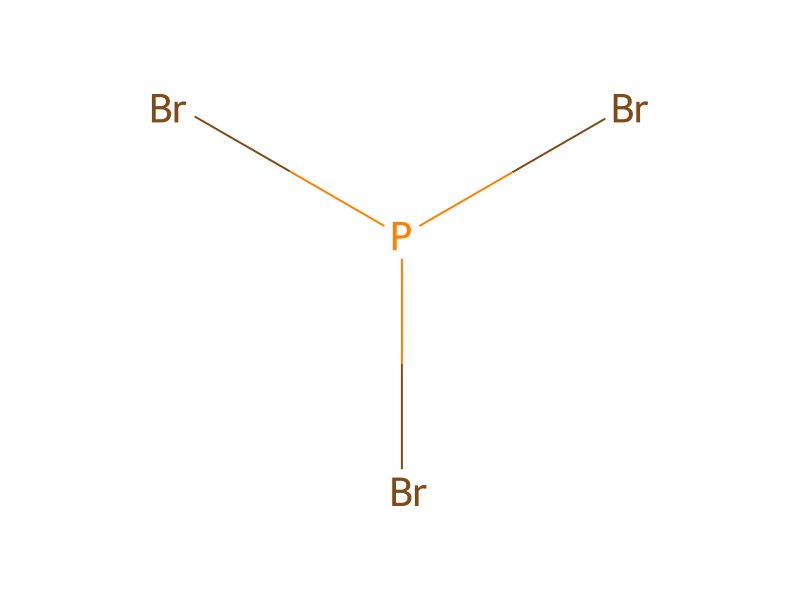

Product 1

Reagents, catalysts & solvents 1

Procedure
To a three-necked flask (2 L) was added (6-bromonaphthalen-2-yl)methanol (47.7 g, 0.201 mol) and chloroform (600 ml). The mixture was then cooled with an ethanol-liquid nitrogen bath to −35□. To the suspension was added phosphorus tribromide (28.6 ml, 0.603 mol) dropwise slowly over 25 minutes. The cooling bath was removed and the reaction mixture was kept under stirring for additional 2.5 hours at room temperature. The mixture was cooled again and to it was added methanol (250 mL) dropwise slowly and released quickly was hydrogen bromide, which was absorbed with a potassium hydrate solution. The mixture was warmed to room temperature and the resulting precipitate was collected by filtering under reduced pressure. The filter cake was washed with ethanol and dried to afford a white solid, 2-bromo-6-(bromomethyl)naphthalene (35 g).
Workup
- temperatureThe mixture was then cooled with an ethanol-liquid nitrogen bath to −35□
- customThe cooling bath was removed
- temperatureThe mixture was cooled again and to it
- additionwas added methanol (250 mL) dropwise slowly
- customwas absorbed with a potassium hydrate solution
- temperatureThe mixture was warmed to room temperature
- customthe resulting precipitate was collected
- filtrationby filtering under reduced pressure
- washThe filter cake was washed with ethanol
- customdried
Sources & evidence
- ORD record
- ord-67e38b1f9afa422596f00e4e51fad340
- Source dataset
- uspto-grants-2014_10
- Patent number
- US08872422B2
Reaction notes
Loading…