Triethyl phosphite → HCID 20208637, compound
Reaction equation

[Br:1][CH2:2][CH2:3][CH2:4][C:5]1[CH:12]=[CH:11][CH:10]=[CH:9][C:6]=1[CH2:7]Br.[CH2:13]([O:15][P:16]([O:20]CC)[O:17][CH2:18][CH3:19])[CH3:14]>>[Br:1][CH2:2][CH2:3][CH2:4][C:5]1[CH:12]=[CH:11][CH:10]=[CH:9][C:6]=1[CH2:7][P:16](=[O:20])([O:17][CH2:18][CH3:19])[O:15][CH2:13][CH3:14]Participants
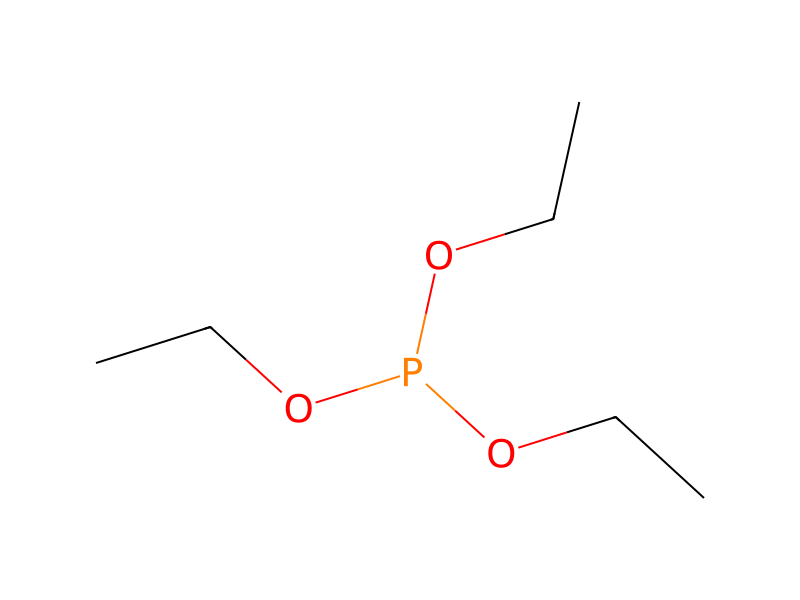


Procedure
In a round bottom flask equipped for distillation, 11.36 g (38.9 mmol) of 2-(3-bromopropyl)benzyl bromide and 6.46 (38.9 mmol) of freshly distilled triethylphosphite were heated with stirring at 100°-110° C. on an oil bath. When ethyl bromide ceased distilling off (about 2 h) the remaining volatile by-products and the triethylphosphite were removed from the mixture by distillation under vacuum. The remaining oil was chromatographed on a column of silica gel with hexame-ethyl acetate (1:1) as eluant. The combined fractions were concentrated under reduced pressure to yield 11.2 g (83%) of the product as a clear oil. IR(neat): 2985, 1496, 1450, 1391, 1252, 1162, 104, 967, 843, 802, 758 cm-1. 1H NMR(CDCl3) δ 1.2 (t, 6); 1.8-2.3 (m, 2H); 2.7-3.55 (m, 4H); 3.8-4.2 (m, 2H); 7.1-7.4 (m, 4H).
Workup
- temperaturewere heated
- distillationWhen ethyl bromide ceased distilling off (about 2 h) the remaining volatile by-products
- customthe triethylphosphite were removed from the mixture by distillation under vacuum
- customThe remaining oil was chromatographed on a column of silica gel with hexame-ethyl acetate (1:1) as eluant
- concentrationThe combined fractions were concentrated under reduced pressure
Sources & evidence
- ORD record
- ord-534c0d146add497797903aa8ddf66e08
- Source dataset
- uspto-grants-1987_04
- Patent number
- US04657899
Reaction notes
Loading…