Acetic Acid → HCID 13548123, compound
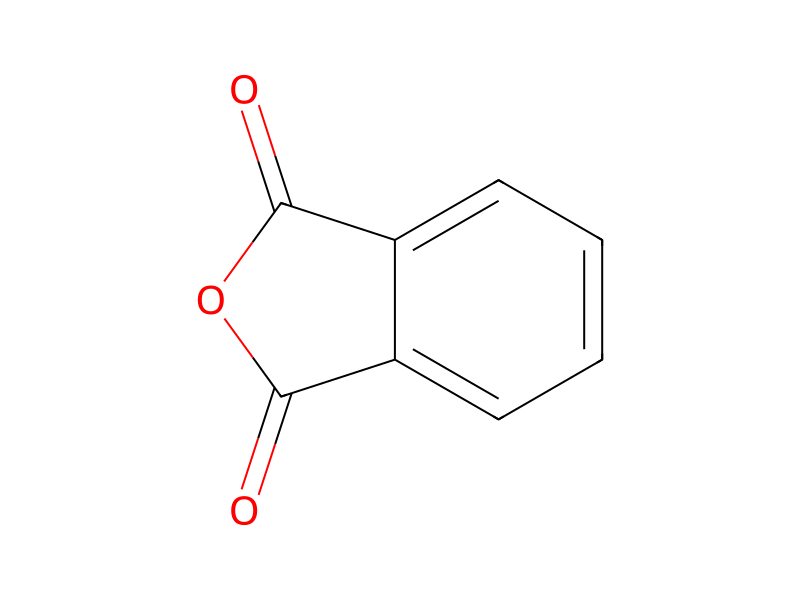
Reaction equation

C(O)(=O)C.[C:5]1(=[O:15])[O:10][C:8](=O)[C:7]2=[CH:11][CH:12]=[CH:13][CH:14]=[C:6]12.[F:16][C:17]([F:30])([F:29])[C:18]1[CH:19]=[C:20]([CH:22]=[C:23]([C:25]([F:28])([F:27])[F:26])[CH:24]=1)[NH2:21]>O.C1CCCCC1>[F:16][C:17]([F:29])([F:30])[C:18]1[CH:19]=[C:20]([N:21]2[C:5](=[O:15])[C:6]3=[CH:14][CH:13]=[CH:12][CH:11]=[C:7]3[C:8]2=[O:10])[CH:22]=[C:23]([C:25]([F:26])([F:28])[F:27])[CH:24]=1Participants
6
Reactant 3


Product 1

Reagents, catalysts & solvents 2


Conditions
- Temperature
- 55 °C
Procedure
800 ml of glacial acetic acid are initially introduced into a three-necked flask provided with a thermometer, stirrer and water separator, and are warmed to 55° C. A mixture of 44.4 g (0.3 mol) of phthalic anhydride and 68.7 g (0.3 mol) of distilled 3,5-bis-trifluoromethylaniline is then added and the components are stirred vigorously. On warming to 108° C., a clear solution is obtained. This is kept under reflux at 117° C. for 21/2 hours and is then cooled. 100 ml of cyclohexane are added to the reaction mixture and the mixture is kept under reflux at 93° C. for 5 hours, during which the water of reaction can be removed in the water separator.
Workup
- additionis then added
- temperatureOn warming to 108° C.
- customa clear solution is obtained
- temperatureunder reflux at 117° C. for 21/2 hours
- temperatureis then cooled
- temperatureunder reflux at 93° C. for 5 hours, during which
- customcan be removed in the water separator
Sources & evidence
- ORD record
- ord-ddce731182f24872b9d395118ca61737
- Source dataset
- uspto-grants-1987_04
- Patent number
- US04657955
Reaction notes
Loading…