Tributylstannane → 3-(4-Fluorophenyl)-3-methyl-1-tributylstannylbutanol
Reaction equation

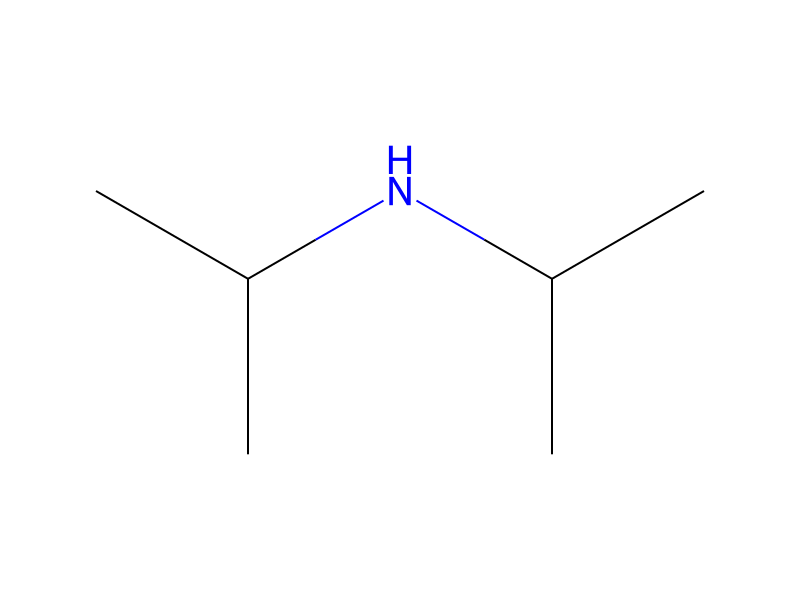
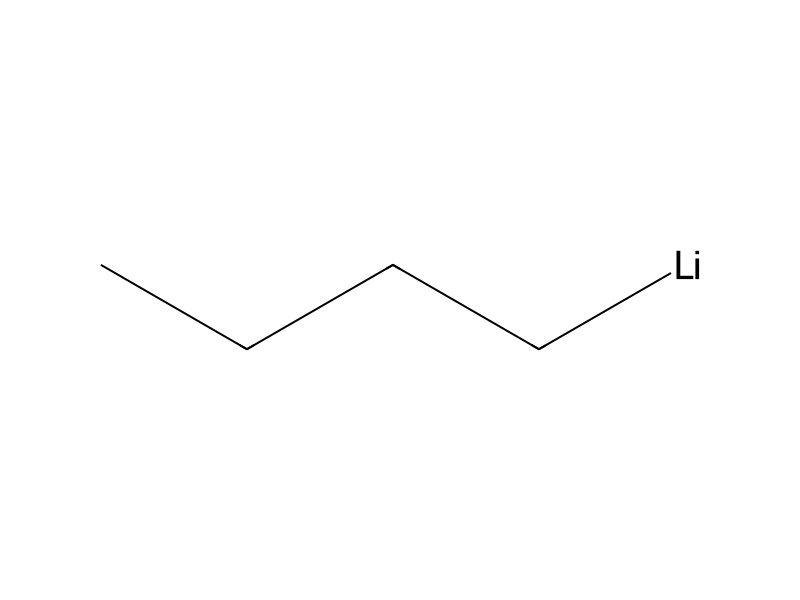
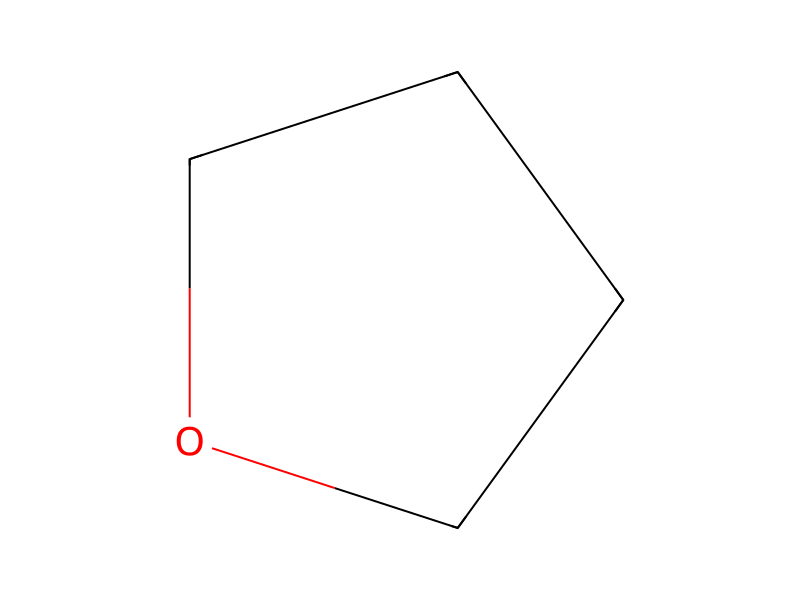
C(NC(C)C)(C)C.C([Li])CCC.[CH2:13]([SnH:17]([CH2:22][CH2:23][CH2:24][CH3:25])[CH2:18][CH2:19][CH2:20][CH3:21])[CH2:14][CH2:15][CH3:16].[F:26][C:27]1[CH:32]=[CH:31][C:30]([C:33]([CH3:38])([CH3:37])[CH2:34][CH:35]=[O:36])=[CH:29][CH:28]=1>O1CCCC1>[F:26][C:27]1[CH:28]=[CH:29][C:30]([C:33]([CH3:38])([CH3:37])[CH2:34][CH:35]([Sn:17]([CH2:18][CH2:19][CH2:20][CH3:21])([CH2:22][CH2:23][CH2:24][CH3:25])[CH2:13][CH2:14][CH2:15][CH3:16])[OH:36])=[CH:31][CH:32]=1Participants



Conditions
- Temperature
- 0 °C
Procedure
A stirring solution of 10.8 mL (0.077 mole) of diisopropylamine in 100 mL of tetrahydrofuran is cooled to 0° C., and 30.8 mL (0.077 mole) of n-butyllithium (2.5M in hexanes) is added dropwise. Upon completion of the addition, the reaction mixture is stirred for about 10 minutes, then 22.3 grams (0.077 mole) of tributyltin hydride is added dropwise at a rate to maintain the reaction mixture temperature at about 0° C. The reaction mixture is then stirred for about 15 minutes. After this time the reaction mixture is cooled to -78° C., and a solution of 13.8 grams (0.077 mole) of 3-(4-fluorophenyl)-3-methylbutyraldehyde in about 15 mL of tetrahydrofuran is added dropwise during a 30 minute period. Upon completion of addition, the reaction mixture is stirred at -78° C. for ten minutes. After this time the reaction mixture is quenched by the dropwise addition of 300 mL of aqueous 10% ammonium chloride. The mixture is then extracted with two 200 mL portions of diethyl ether. The combined extracts were dried with magnesium sulfate and filtered. The filtrate is concentrated under reduced pressure, at a temperature of less than 30° C., yielding 36.3 grams of 3-(4-fluorophenyl)-3-methyl-1-tributylstannylbutanol. The NMR spectrum is consistent with the proposed structure.
Workup
- additionUpon completion of the addition
- stirringThe reaction mixture is then stirred for about 15 minutes
- temperatureAfter this time the reaction mixture is cooled to -78° C.
- additionUpon completion of addition
- stirringthe reaction mixture is stirred at -78° C. for ten minutes
- customAfter this time the reaction mixture is quenched by the dropwise addition of 300 mL of aqueous 10% ammonium chloride
- extractionThe mixture is then extracted with two 200 mL portions of diethyl ether
- dry with materialThe combined extracts were dried with magnesium sulfate
- filtrationfiltered
- concentrationThe filtrate is concentrated under reduced pressure, at a temperature of less than 30° C.
Sources & evidence
- ORD record
- ord-04d00c5dfd2a4a10a5faf2d817ef1060
- Source dataset
- uspto-grants-1997_04
- Patent number
- US05622954
Reaction notes
Loading…