2,3-Dihydroxy-6,7-dichloroquinoxaline → Licostinel
Reaction equation

[Cl:1][C:2]1[CH:3]=[C:4]2[C:9](=[CH:10][C:11]=1[Cl:12])[NH:8][C:7](=[O:13])[C:6](=[O:14])[NH:5]2.[N+:15]([O-])([O-:17])=[O:16].[K+]>OS(O)(=O)=O>[Cl:12][C:11]1[C:10]([N+:15]([O-:17])=[O:16])=[C:9]2[C:4](=[CH:3][C:2]=1[Cl:1])[NH:5][C:6](=[O:14])[C:7](=[O:13])[NH:8]2Participants
4
Reactant 2

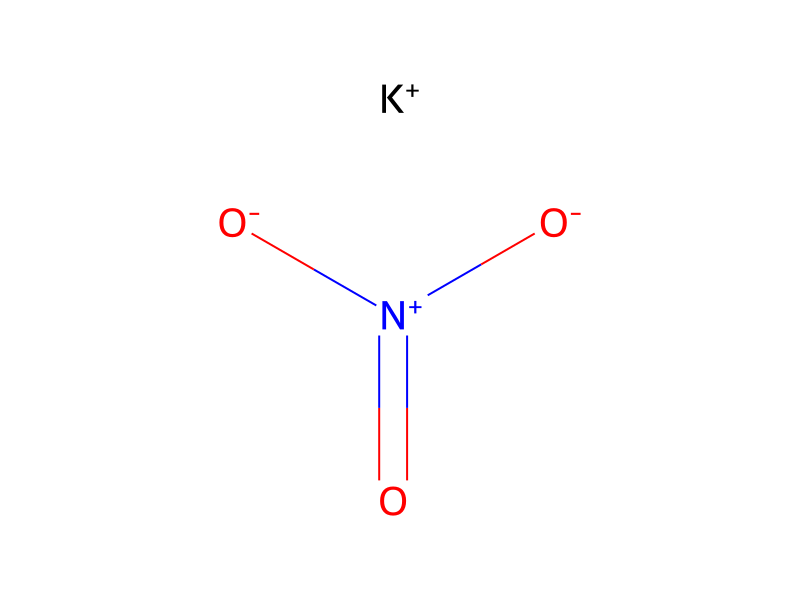
Product 1

Reagents, catalysts & solvents 1

Procedure
3.335 g (14.5 mmol) of 6,7-dichloro-1,4-dihydroquinoxaline-2,3-dione was dissolved in 65 mL of conc. H2SO4 with stirring and cooling in an ice-H2O bath, then 2.20 g (21.76 mmol) of KNO3 (Baker, used as received) was added in portions over 10 min. with stirring. The resulting mixture was stirred at 22° C. under N2 for 20 h. then was slowly poured into ice-H2O (400 mL) with stirring. The precipitate was collected on a sintered funnel by vacuum filtration, washed with H2O (5×10 mL), and dried at 60° C. under 0.1 mmHg for 12 h affording 3.39 g (85%) of the crude 6,7-dichloro-5-nitro-1,4-dihydroquinoxaline-2,3-dione as a grey-yellow powder. Purity: >98.5% based on HPLC analysis.
Workup
- temperaturecooling in an ice-H2O bath
- stirringwith stirring
- stirringThe resulting mixture was stirred at 22° C. under N2 for 20 h.
- stirringwith stirring
- filtrationThe precipitate was collected on a sintered funnel by vacuum filtration
- washwashed with H2O (5×10 mL)
- customdried at 60° C. under 0.1 mmHg for 12 h
Sources & evidence
- ORD record
- ord-be02e13ff15047c980fe977975bb9968
- Source dataset
- uspto-grants-1997_04
- Patent number
- US05622952
Reaction notes
Loading…