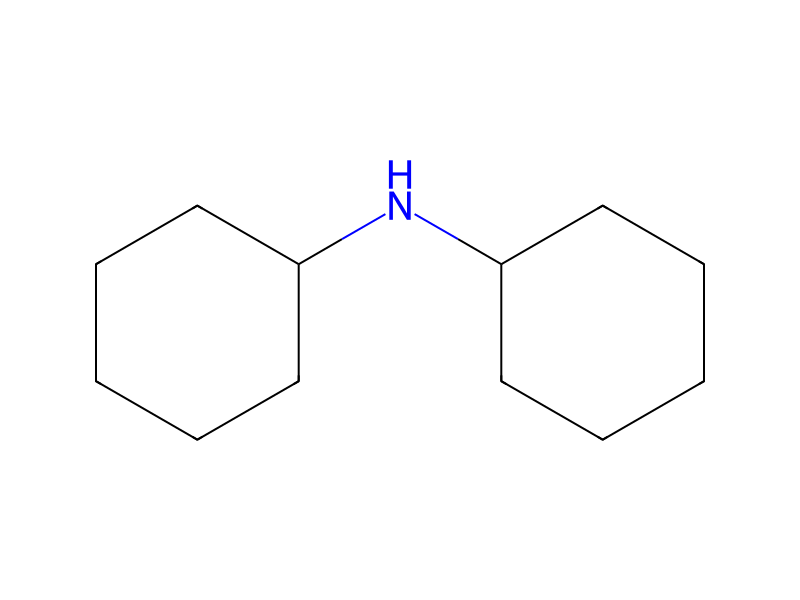
Dicyclohexylamine → N-benzyloxycarbonyl-(L)-pyroglutamic acid chloride
Reaction equation

C1(NC2CCCCC2)CCCCC1.[CH2:14]([O:21][C:22]([N:24]1[C:28](=[O:29])[CH2:27][CH2:26][C@H:25]1[C:30]([OH:32])=O)=[O:23])[C:15]1[CH:20]=[CH:19][CH:18]=[CH:17][CH:16]=1.S(Cl)([Cl:35])=O>C1(C)C=CC=CC=1>[CH2:14]([O:21][C:22]([N:24]1[C:28](=[O:29])[CH2:27][CH2:26][C@H:25]1[C:30]([Cl:35])=[O:32])=[O:23])[C:15]1[CH:20]=[CH:19][CH:18]=[CH:17][CH:16]=1Participants
5




Conditions
- Temperature
- 60 °C
Procedure
50 g (0.113 mol) of the previously obtained dicyclohexylamine salt of N-benzyloxycarbonyl-(L)-pyroglutamic acid are mixed to a paste with 1 liter of toluene, 110 ml of thionyl chloride are run in dropwise and the temperature is then raised to 60° C. for 2 hours. The mixture is cooled and filtered, the filtrate is evaporated and the residue is taken up several times with benzene. The acid chloride finally crystallizes from petroleum ether with a practically quantitative yield. Melting point=65°-70° C. (literature=71/72° C.).
Workup
- temperatureThe mixture is cooled
- filtrationfiltered
- customthe filtrate is evaporated
- customThe acid chloride finally crystallizes from petroleum ether with a practically quantitative yield
- customMelting point=65°-70° C. (literature=71/72° C.)
Sources & evidence
- ORD record
- ord-f7a66f9272004d0395ab3148a88301b4
- Source dataset
- uspto-grants-1987_04
- Patent number
- US04661512
Reaction notes
Loading…