4-Ethylaniline → HCID 13121221, compound
Reaction equation

Cl[C:2]1[C:7]([CH3:8])=[C:6]([CH3:9])[N:5]=[CH:4][N:3]=1.[CH2:10]([C:12]1[CH:18]=[CH:17][C:15]([NH2:16])=[CH:14][CH:13]=1)[CH3:11]>>[CH2:10]([C:12]1[CH:18]=[CH:17][C:15]([NH:16][C:2]2[C:7]([CH3:8])=[C:6]([CH3:9])[N:5]=[CH:4][N:3]=2)=[CH:14][CH:13]=1)[CH3:11]Participants
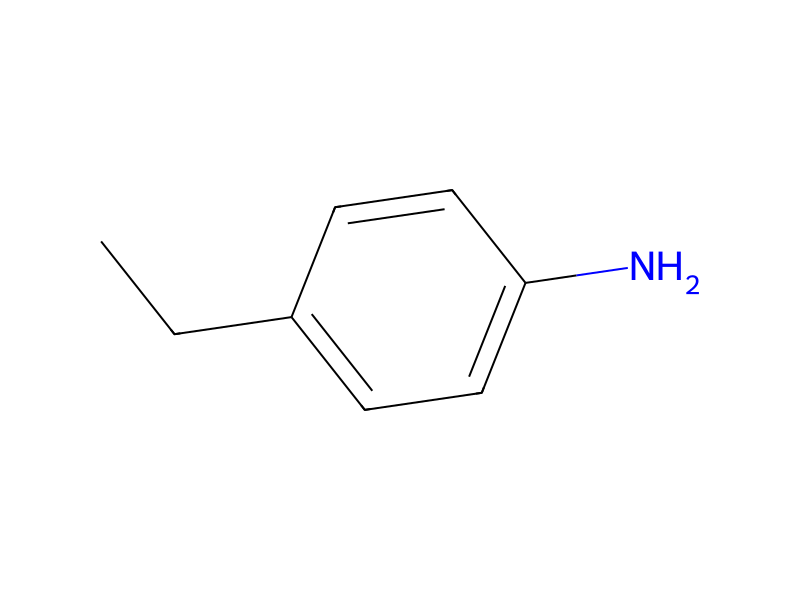


Conditions
- Temperature
- 150 °C
Procedure
To 4.3 g (0.03 mole) of 4-chloro-5,6-dimethylpyrimidine were added 3.6 g (0.03 mole) of p-ethylaniline; the mixture was then heated at 150° C. for about 3 minutes. The reaction mixture quickly became a solution which, on cooling, precipitated crystals. These crystals were separated and then made alkaline by the addition of 50 ml of a dilute aqueous solution of sodium hydroxide. The insolubles were extracted with about 100ml of ethyl acetate and the resulting extract was washed, in turn, with water and with a saturated aqueous solution of sodium chloride; it was then dried over anhydrous sodium sulphate. The ethyl acetate was distilledoff under reduced pressure to give crystals, which were recrystallised frombenzene, affording 4.8 g (yield 71%) of the desired Compound No. 46, in theform of colourless needles melting at 97°-98° C.
Workup
- temperatureon cooling
- customprecipitated crystals
- customThese crystals were separated
- additionby the addition of 50 ml of a dilute aqueous solution of sodium hydroxide
- extractionThe insolubles were extracted with about 100ml of ethyl acetate
- extractionthe resulting extract
- washwas washed, in turn, with water and with a saturated aqueous solution of sodium chloride
- dry with materialit was then dried over anhydrous sodium sulphate
- customto give crystals, which
- customwere recrystallised frombenzene,
Sources & evidence
- ORD record
- ord-a2457d24529e4e5f9307dcd7e305128a
- Source dataset
- uspto-grants-1984_05
- Patent number
- US04450162
Reaction notes
Loading…