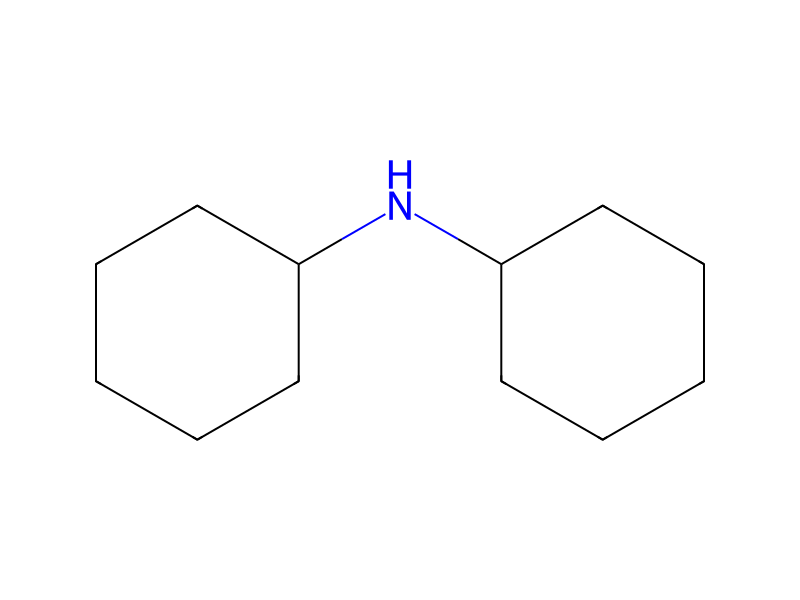
Ethanol → Dicyclohexylamine
Reaction equation

[Cl:1][C:2]1[CH:10]=[CH:9][C:5]([C:6]([OH:8])=[S:7])=[CH:4][C:3]=1[S:11](=[O:14])(=[O:13])[NH2:12].[CH3:15][C:16](=[CH2:27])[C:17]([N:19]1[CH2:26][CH2:25][CH2:24][C@H:20]1[C:21]([OH:23])=[O:22])=[O:18].[CH2:28](O)C>>[CH:26]1([NH:19][CH:2]2[CH2:3][CH2:4][CH2:5][CH2:9][CH2:10]2)[CH2:28][CH2:21][CH2:20][CH2:24][CH2:25]1.[Cl:1][C:2]1[CH:10]=[CH:9][C:5]([C:6]([S:7][CH2:15][C@@H:16]([CH3:27])[C:17]([N:19]2[CH2:26][CH2:25][CH2:24][C@H:20]2[C:21]([OH:23])=[O:22])=[O:18])=[O:8])=[CH:4][C:3]=1[S:11](=[O:14])(=[O:13])[NH2:12]Participants
5




Procedure
5 g of 4-chloro-3-sulfamoyl-thiobenzoic acid is added slowly to a stirred solution of 3.6 g of 1-(2-methyl-2-propenoyl)-L-proline in 50 ml of ethanol at room temperature. The resulting mixture is stirred overnight and then concentrated under reduced pressure. To the residue are added ethyl acetate and water. The organic layer is washed with water, dried over anhydrous magnesium sulfate and concentrated under reduced pressure. The residue is treated in an analogous manner of Example 4 to give dicyclohexylamine salt of 1-[3-(4-chloro-3-sulfamoylbenzoylthio)-2(S)-methylpropionyl]-L-proline as white crystalline powder, melting at 143°-146° C.
Workup
- concentrationconcentrated under reduced pressure
- additionTo the residue are added ethyl acetate and water
- washThe organic layer is washed with water
- dry with materialdried over anhydrous magnesium sulfate
- concentrationconcentrated under reduced pressure
- additionThe residue is treated in an analogous manner of Example 4
Sources & evidence
- ORD record
- ord-b3e3ffa3dd65435ba69b78383ce4d5b4
- Source dataset
- uspto-grants-1984_05
- Patent number
- US04450275
Reaction notes
Loading…