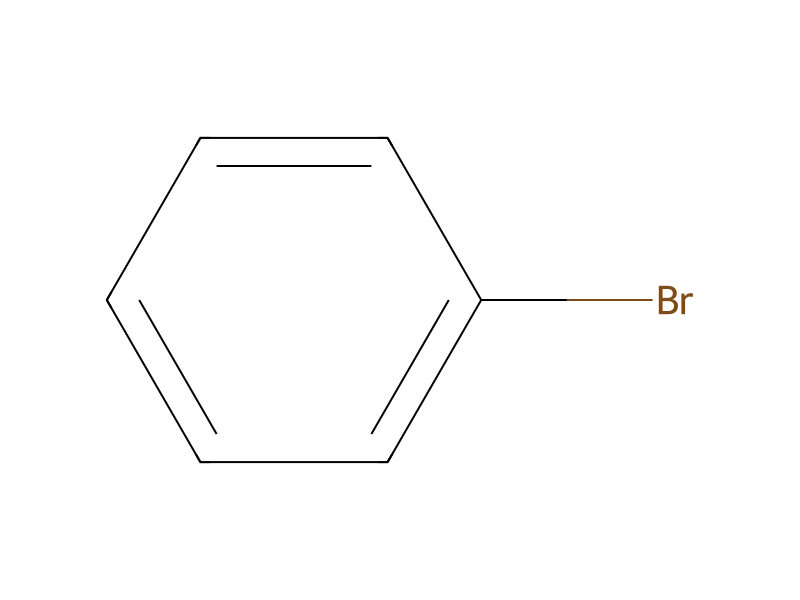
Bromobenzene → ethyl 6-hydroxy-2-methyl-4-oxo-1H-pyridine-3-carboxylate
Reaction equation

ClC1C=C(Cl)C=C(Cl)C=1[O:10][C:11](=O)[CH2:12][C:13](OC1C(Cl)=CC(Cl)=CC=1Cl)=[O:14].[CH2:26]([O:28][C:29](=[O:34])/[CH:30]=[C:31](\[NH2:33])/[CH3:32])[CH3:27].BrC1C=CC=CC=1>C(OCC)(=O)C>[CH2:26]([O:28][C:29](=[O:34])[C:30]1[C:11]([OH:10])=[CH:12][C:13]([OH:14])=[N:33][C:31]=1[CH3:32])[CH3:27]Participants


Procedure
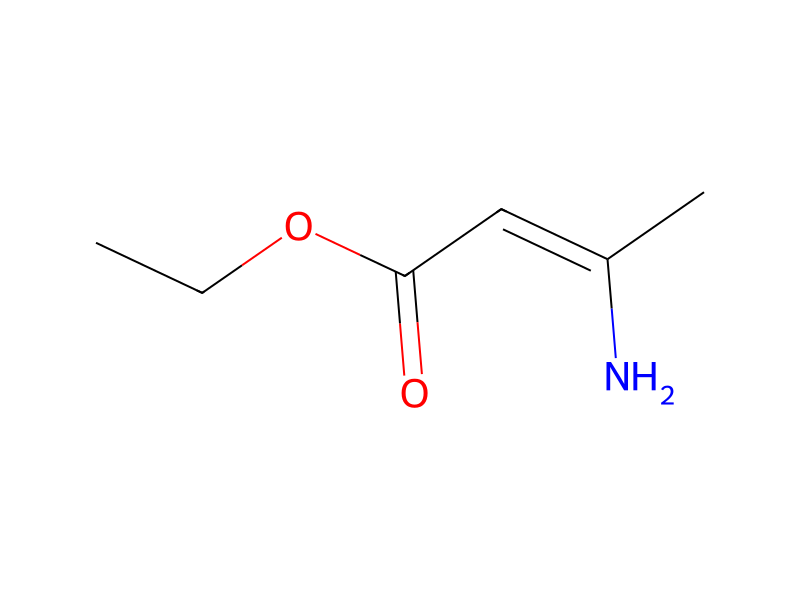
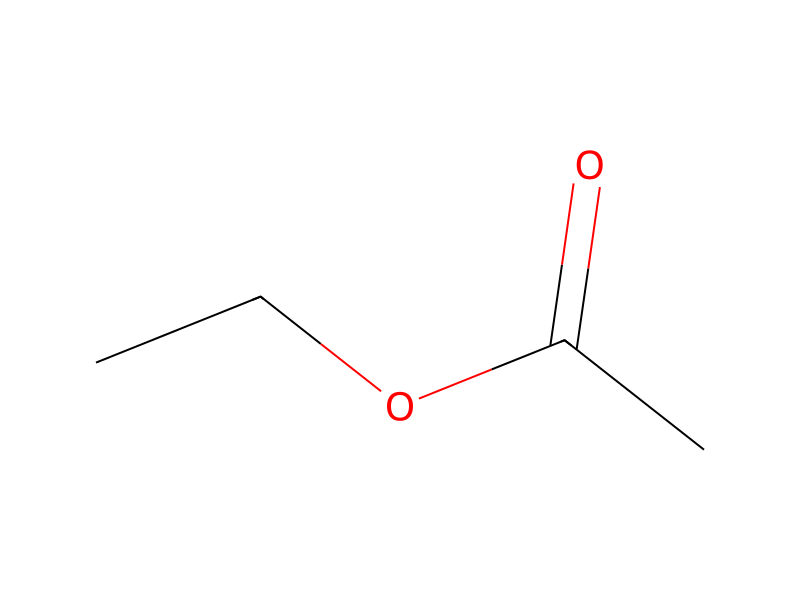
Malonic acid (5.27 g, 51 mmol), 2,4,6-trichlorophenol (20 g, 100 mmol) and phosphorus oxychloride (17.17 g, 112 mmol) were stirred under nitrogen atmosphere at reflux for 12 h. The reaction mixture was cooled to 70° C. and poured into ice water. The formed precipitate was collected, washed with water and dried under vacuum to provide the desired malonic acid bis-(2,4,6-trichloro-phenyl)ester as a white solid (23.37 g, quantitative yield). To a mixture of malonic acid bis-(2,4,6-trichloro-phenyl)ester (23.37 g, 50.5 mmol) and ethyl-3-aminocrotonate (6.38 mL, 50.5 mmol) under nitrogen atmosphere was added bromobenzene (5 mL). The reaction mixture was heated under reflux for 2.5 h then cooled to room temperature and diluted with ethyl acetate. The formed precipitate was filtered off, washed several times with ethyl acetate and dried under vacuum to afford the desired 4,6-dihydroxy-2-methyl-nicotinic acid ethyl ester as a yellow solid (13.04 g, quantitative yield). To a mixture of 4,6-dihydroxy-2-methyl-nicotinic acid ethyl ester (12.93 g, 65.57 mmol) in N,N-dimethylformamide (550 mL) and potassium carbonate (27.18 g, 196.71 mmol) under nitrogen atmosphere was added dropwise isopropyl iodide (19.65 mL, 196.71 mmol). The resulting slurry was vigorously stirred at room temperature overnight and then filtered to remove insoluble salts. The filtrate was diluted with water (300 mL) and extracted with ethyl acetate (4×400 mL). The combined organic layers were washed with brine, dried over sodium sulfate and evaporated to afford the desired 4,6-diisopropoxy-2-methyl-nicotinic acid ethyl ester as an oil which solidified on standing (15.24 g, 82.6%). To a solution of 4,6-diisopropoxy-2-methyl-nicotinic acid ethyl ester (15.24 g, 54.2 mmol) in methanol (70 mL) was added sodium hydroxide in water (70 mL). The reaction mixture was heated under reflux for 48 h. The solvent was removed under reduced pressure and concentrated hydrochloric acid was added (20 mL). The solvent was evaporated to provide the desired 4,6-diisopropoxy-2-methyl-nicotinic acid as a white salt (26.91 g, theoretical mass: 13.73 g). To a solution of 4,6-diisopropoxy-2-methyl-nicotinic acid salt (13.73 g, 54.2 mmol) in methylene chloride (160 mL) under nitrogen atmosphere was added oxalyl chloride (9.46 mL, 108.4 mmol) followed by N,N-dimethylformamide (1 mL). The reaction mixture was stirred overnight then the solvent was evaporated to obtain the desired crude acid chloride, which was used for the next step without further purification. To 50% v/v ammonia hydroxide (500 mL) at room temperature was added dropwise a solution of the crude 4,6-diisopropoxy-2-methyl-nicotinoyl chloride in methylene chloride (400 mL). The reaction mixture was stirred for 3.5 h. The solution was separated and the aqueous layer was extracted with methylene chloride (100 mL×8). The combined organic layers were dried over sodium sulfate and evaporated to afford a crude solid (6.94 g). The crude was purified by flash column chromatography to provide pure 4,6-diisopropoxy-2-methyl-nicotinamide as an orange solid (3.0 g, 21.9%). To a solution of 4,6-diisopropoxy-2-methyl-nicotinamide (0.3 g, 1.18 mmol) in THF (5 mL) under nitrogen was added 1.6 M n-BuLi solution in hexanes (3 mL, 4.75 mmol) at −20° C. The reaction mixture was allowed to warm-up to room temperature and left to stir for 2 h. The reaction was then cooled to −20° C. and a solution of 4-benzyloxy-3,5-dimethyl-benzonitrile in THF (5 mL) was added dropwise. The reaction mixture was allowed to warm to room temperature and was left to stir for 20 h. Water and acetic acid were added until pH ˜5. The solution was heated to 55° C. for 3 h then cooled to room temperature, diluted with ethyl acetate, separated and the aqueous layer was extracted with ethyl acetate. The combined organic layers were washed with brine, dried over sodium sulfate and evaporated under reduced pressure to provide crude orange oil (1.02 g). The crude was purified by flash column chromatography to provide pure 7-(4-benzyloxy-3,5-dimethyl-phenyl)-2,4-diisopropoxy-6H-[1,6]naphthyridin-5-one as a yellow solid (0.10 g, 17.9%). To a solution of 7-(4-benzyloxy-3,5-dimethylphenyl)-2,4-diisopropoxy-[1,6]naphthyridin-5-ylamine (0.10 g, 0.21 mmol) in methanol (4 mL) was added palladium on charcoal catalyst (0.06 g, 0.54 mmol). The reaction mixture was stirred under 1 atmosphere pressure of hydrogen for 20 h and diluted with methanol and filtered through a Celite pad. The solvent was evaporated under reduced pressure to provide a crude solid (0.077 g) which was triturated with ether followed by methanol to afford the desired compound 7-(4-hydroxy-3,5-dimethylphenyl)-2,4-diisopropoxy-1,6-naphthyridin-5(6H)-one (35 mg, 43.2%). Selected data: MS (ES) m/z: 383.08; MP 206-208° C.
Workup
- temperatureThe reaction mixture was heated
- temperatureunder reflux for 2.5 h
- filtrationThe formed precipitate was filtered off
- washwashed several times with ethyl acetate
- customdried under vacuum
Sources & evidence
- ORD record
- ord-910b62889f524f9eb472635d9126e8e6
- Source dataset
- uspto-grants-2011_11
- Patent number
- US08053440B2
Reaction notes
Loading…