Naphthalen-1-ethanol → tert-Butyl 3-[2-(1-naphthyl)ethoxy]propanoate
Reaction equation

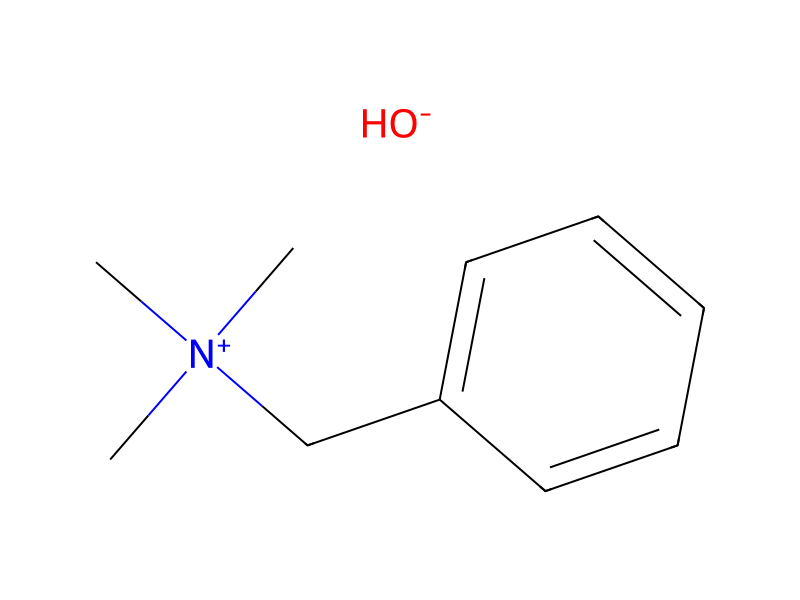
[C:1]1([CH2:11][CH2:12][OH:13])[C:10]2[C:5](=[CH:6][CH:7]=[CH:8][CH:9]=2)[CH:4]=[CH:3][CH:2]=1.[OH-].C([N+](C)(C)C)C1C=CC=CC=1.[C:26]([O:30][C:31]([CH3:34])([CH3:33])[CH3:32])(=[O:29])[CH:27]=[CH2:28]>CO>[C:1]1([CH2:11][CH2:12][O:13][CH2:28][CH2:27][C:26]([O:30][C:31]([CH3:34])([CH3:33])[CH3:32])=[O:29])[C:10]2[C:5](=[CH:6][CH:7]=[CH:8][CH:9]=2)[CH:4]=[CH:3][CH:2]=1Participants
5
Reactant 3


Product 1

Reagents, catalysts & solvents 1

Conditions
- Temperature
- 0 °C
Procedure
1-Naphthalene ethanol (10 g) was treated with benzyltrimethylammonium hydroxide (Triton B®; 0.9 mL of a 40% solution in methanol) and the resulting mixture stirred in vacuo for 30 minutes. The mixture was then cooled to 0° C. and treated with tert-butyl acrylate (8.19 g). The resulting mixture was slowly warmed to room temperature and stirred overnight. The crude mixture was subsequently absorbed onto aluminium oxide (30 g) and eluted with diethylether (200 mL). The organics were concentrated to give a crude material (16.6 g) which was purified by flash silica chromatography eluting with 1:8, diethylether:hexane to give the subtitled compound (12.83 g).
Workup
- temperatureThe resulting mixture was slowly warmed to room temperature
- customThe crude mixture was subsequently absorbed onto aluminium oxide (30 g)
- washeluted with diethylether (200 mL)
- concentrationThe organics were concentrated
- customto give a crude material (16.6 g) which
- customwas purified by flash silica chromatography
- washeluting with 1:8, diethylether
Sources & evidence
- ORD record
- ord-4c2c58491787410dbe97c1f686ab0b6c
- Source dataset
- uspto-grants-2011_11
- Patent number
- US08058294B2
Reaction notes
Loading…