Chloroform → Benzeneacetyl chloride, 4-bromo-
Reaction equation

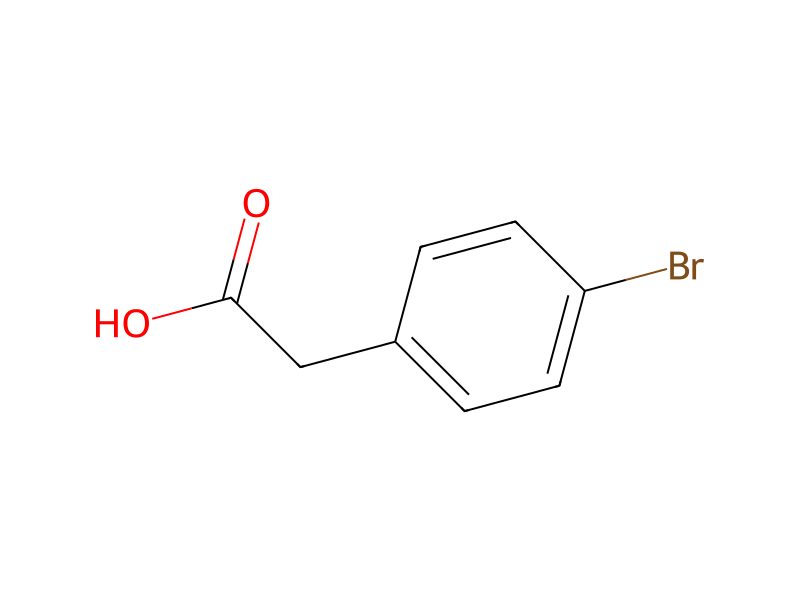
[Br:1][C:2]1[CH:7]=[CH:6][C:5]([CH2:8][C:9]([OH:11])=O)=[CH:4][CH:3]=1.C(Cl)(Cl)[Cl:13]>>[Br:1][C:2]1[CH:7]=[CH:6][C:5]([CH2:8][C:9]([Cl:13])=[O:11])=[CH:4][CH:3]=1Participants


Procedure
4-Bromophenylacetyl chloride is prepared according to the method described in Example 8 using 4-bromophenylacetic acid (2.75 g, 12.8 mmol) to give an oil which is dissolved in chloroform (10 mL). This solution is refluxed for 19 hours with a solution of (±)-trans-[2-(4-morpholinyl)]cyclohexanol (2.25 g, 12.2 mmol) in chloroform (10 mL) under nitrogen. The solvent is removed in vacuo, and the residue is treated as in Example 13 to give the crude free ester, which is then dissolved in 1M hydrochloric acid (70 mL). Sodium chloride (14 g) is added to the solution which is then extracted with chloroform (60 mL then 2×40 mL). The combined extracts are dried over sodium sulfate and the solvent removed in vacuo. The residue is recrystallised from hot ethyl acetate/methanol to give the title compound.
Workup
- customto give an oil which
- customThe solvent is removed in vacuo
- additionthe residue is treated as in Example 13
- customto give the crude free ester, which
Sources & evidence
- ORD record
- ord-cea27f5f4d7c43fcac2990bf27de73e1
- Source dataset
- uspto-grants-2001_01
- Patent number
- US06174879B1
Reaction notes
Loading…