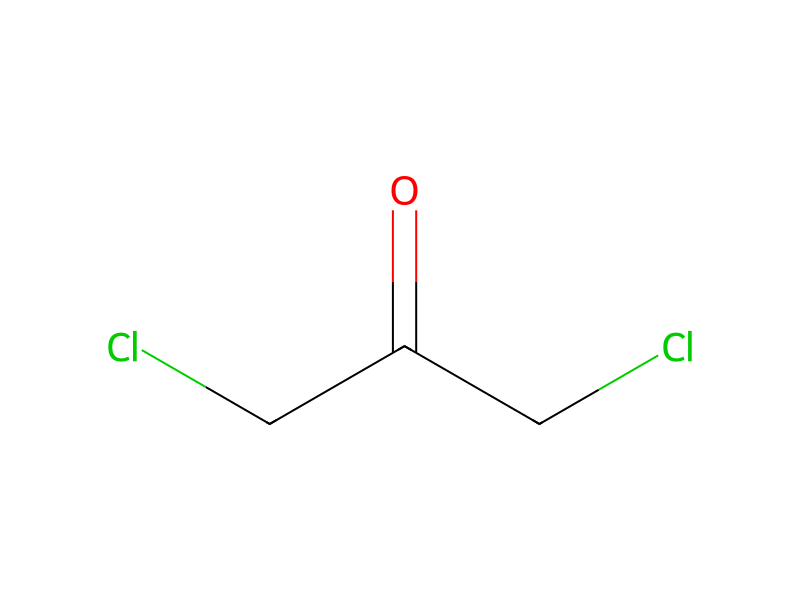
1,3-Dichloroacetone → 8-chloro-6-phenyl-4H-imidazo[1,2-a][1,4]benzodiazepine-2-methanol
Reaction equation

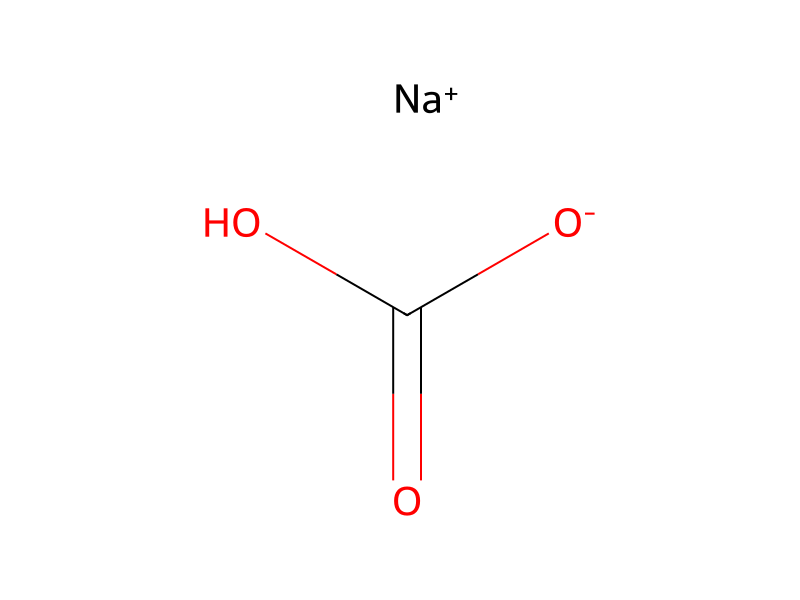
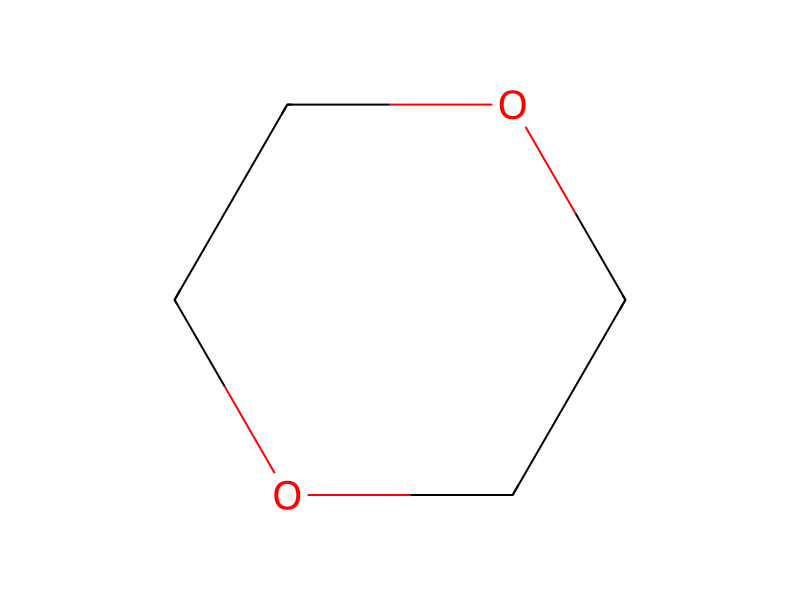
[NH2:1][C:2]1[CH2:8][N:7]=[C:6]([C:9]2[CH:14]=[CH:13][CH:12]=[CH:11][CH:10]=2)[C:5]2[CH:15]=[C:16]([Cl:19])[CH:17]=[CH:18][C:4]=2[N:3]=1.Cl[CH2:21][C:22]([CH2:24]Cl)=O.C(=O)([O-])[OH:27].[Na+]>O1CCOCC1>[Cl:19][C:16]1[CH:17]=[CH:18][C:4]2[N:3]3[CH:24]=[C:22]([CH2:21][OH:27])[N:1]=[C:2]3[CH2:8][N:7]=[C:6]([C:9]3[CH:14]=[CH:13][CH:12]=[CH:11][CH:10]=3)[C:5]=2[CH:15]=1Participants


Conditions
- Temperature
- 98 °C
Procedure
A solution of 10.9 g of 2-amino-7-chloro-5-phenyl-3H-1,4-benzodiazepine (K. Meguro, H. Tawada & Y. Kuwada, Yakugaku Zasshi, 1973, 93, 1253-1262) and 5.2 g of 1,3-dichloroacetone in 200 ml of dioxan was treated with 3.13 g of anhydrous sodium hydrogen carbonate and stirred at 98° C. for 22 h. After cooling the inorganic salts were filtered off, the filtrate was treated with 0.93 g of p-toluenesulphonic acid and stirred at 98° C. for 1.5 h. 74.5 ml of 1N aqueous sodium hydroxide solution and 2.5 g of active charcoal were added to this solution and the mixture was stirred at 80° C. for 2 h. After cooling the mixture was filtered over Dicalite and the filtrate was concentrated in a vacuum. The residue was taken up in dichloromethane and water and the aqueous phase was extracted four times with chloroform. The chloroform was evaporated in a vacuum. The residue (about 8 g) was crystallized from ethyl acetate. The crystals (7.3 g) were filtered off, dissolved in dichloromethane and chromatographed over 180 g of silica gel. The desired product was eluted with dichloromethane containing 2 to 4% ethanol and was recrystallized from ethyl acetate/ethanol 2:1. There were obtained 3.4 g of 8-chloro-6-phenyl-4H-imidazo[1,2-a][1,4]benzodiazepine-2-methanol of m.p. 203-204° C., which was converted into the hydrochloride, m.p. 252-254° C.
Workup
- temperatureAfter cooling the inorganic salts
- filtrationwere filtered off
- additionthe filtrate was treated with 0.93 g of p-toluenesulphonic acid
- stirringstirred at 98° C. for 1.5 h
- addition74.5 ml of 1N aqueous sodium hydroxide solution and 2.5 g of active charcoal were added to this solution
- stirringthe mixture was stirred at 80° C. for 2 h
- temperatureAfter cooling the mixture
- filtrationwas filtered over Dicalite
- concentrationthe filtrate was concentrated in a vacuum
- extractionwater and the aqueous phase was extracted four times with chloroform
- customThe chloroform was evaporated in a vacuum
- customThe residue (about 8 g) was crystallized from ethyl acetate
- filtrationThe crystals (7.3 g) were filtered off
- dissolutiondissolved in dichloromethane
- customchromatographed over 180 g of silica gel
- washThe desired product was eluted with dichloromethane containing 2 to 4% ethanol
- customwas recrystallized from ethyl acetate/ethanol 2:1
Sources & evidence
- ORD record
- ord-fd01a11ba3f44fd4bd75d9145f17f41b
- Source dataset
- uspto-grants-2001_01
- Patent number
- US06174881B1
Reaction notes
Loading…