Ammonia → 6-aminocarbonyl-4-(3-chloroanilino)-7H-pyrrolo[2,3-d]pyrimidine
Reaction equation

[C:1]([C:4]1[NH:20][C:7]2[N:8]=[CH:9][N:10]=[C:11]([NH:12][C:13]3[CH:18]=[CH:17][CH:16]=[C:15]([Cl:19])[CH:14]=3)[C:6]=2[CH:5]=1)(O)=[O:2].C[N:22]1CCOCC1.ClC(OCC(C)C)=O.N>C1COCC1.CN1C(=O)N(C)CCC1.O1CCOCC1>[NH2:22][C:1]([C:4]1[NH:20][C:7]2[N:8]=[CH:9][N:10]=[C:11]([NH:12][C:13]3[CH:18]=[CH:17][CH:16]=[C:15]([Cl:19])[CH:14]=3)[C:6]=2[CH:5]=1)=[O:2]Participants
Reactant 4




Product 1

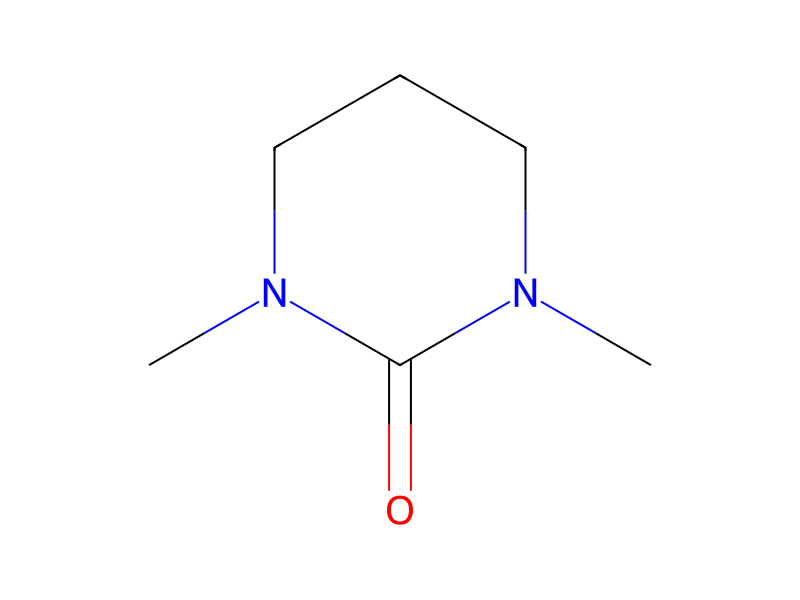
Reagents, catalysts & solvents 3


Conditions
- Temperature
- 0 °C
Procedure
Alternative stage 10.1: A mixture of 2.165 g (7.5 mmol) of 6-carboxy-4-(3-chloroanilino)-7H-pyrrolo[2,3-d]pyrimidine in 60 ml of THF and 10 ml of DMPU is heated under reflux for 30 min and then cooled to 0° C., whereupon a fine suspension is obtained. 824 μl (7.5 mmol) of N-methylmorpholine followed by 981 μl (7.5 mmol of isobutyl chloroformate in 10 ml of THF and, after 1 h at 0° C., 824 μl (7.5 mmol) of N-methylmorpholine followed by 981 μl (7.5 mmol) of isobutyl chloroformate again are added dropwise. The mixture is stirred for 1 h and then added dropwise to 70 ml of a saturated solution of ammonia in dioxane. After 3 h, the mixture is concentrated in vacuo. The residue is poured into water, and the precipitate is filtered off and washed with water and boiling isopropanol, whereupon 6-aminocarbonyl-4-(3-chloroanilino)-7H-pyrrolo[2,3-d]pyrimidine is obtained. Further product is obtained from the isopropanol filtrate.
Workup
- temperatureis heated
- temperatureunder reflux for 30 min
- customis obtained
- additionagain are added dropwise
- waitAfter 3 h
- concentrationthe mixture is concentrated in vacuo
- additionThe residue is poured into water
- filtrationthe precipitate is filtered off
- washwashed with water
Sources & evidence
- ORD record
- ord-881df644cf3a42fc92752395e77e9f7b
- Source dataset
- uspto-grants-2001_01
- Patent number
- US06180636B2
Reaction notes
Loading…