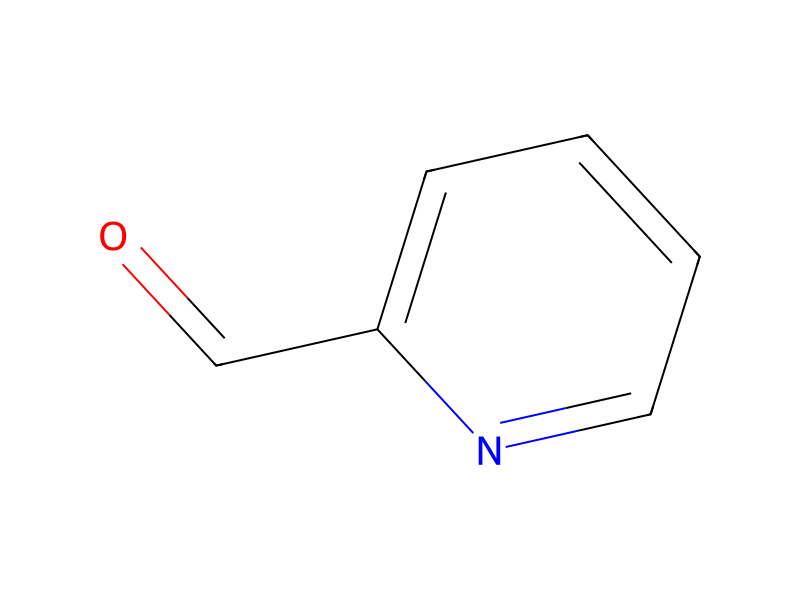
2-Pyridinecarboxaldehyde → 3-(1H-Pyrrolo[2,3-b]pyridin-4-ylamino)-thiophene-2-carboxylic acid {2-[(pyridin-2-ylmethyl)-amino]-ethyl}-amide
Reaction equation

CO[C:3]1[CH:30]=C[C:6]([CH2:7][NH:8][CH2:9][CH2:10][NH:11][C:12]([C:14]2[S:15][CH:16]=[CH:17][C:18]=2[NH:19][C:20]2[CH:25]=[CH:24][N:23]=[C:22]3[NH:26][CH:27]=[CH:28][C:21]=23)=[O:13])=[CH:5][CH:4]=1.[N:31]1C=CC=CC=1C=O>>[N:31]1[CH:30]=[CH:3][CH:4]=[CH:5][C:6]=1[CH2:7][NH:8][CH2:9][CH2:10][NH:11][C:12]([C:14]1[S:15][CH:16]=[CH:17][C:18]=1[NH:19][C:20]1[CH:25]=[CH:24][N:23]=[C:22]2[NH:26][CH:27]=[CH:28][C:21]=12)=[O:13]Participants
3


Procedure
This compound was prepared in an analogous manner as 3-(1H-Pyrrolo[2,3-b]pyridin-4-ylamino)-thiophene-2-carboxylic acid [2-(4-methoxy-benzylamino)-ethyl]amide using 2-pyridinecarboxaldehyde instead of 4-methoxy benzaldehyde. LCMS (ESI) 393 (M+H) 1H NMR (400 MHz, DMSO-d6) δ ppm 11.51 (1H, br. s.) 10.27 (1H, s) 8.46 (1H, ddd, J=4.81, 1.66, 0.76 Hz) 8.07 (1H, t, J=5.61 Hz) 8.01 (1H, d, J=5.37 Hz) 7.77 (1H, d, J=5.47 Hz) 7.68 (1H, td, J=7.68, 1.73 Hz) 7.47 (1H, d, J=5.42 Hz) 7.39 (1H, d, J=7.71 Hz) 7.29 (1H, d, J=2.64 Hz) 7.20 (1H, ddd, J=7.47, 4.91, 0.90 Hz) 6.80 (1H, d, J=5.47 Hz) 6.42 (1H, dd, J=3.49, 1.98 Hz) 3.78 (2H, s) 3.36 (2H, q, J=6.12 Hz) 2.68 (2H, t, J=6.83 Hz)
Sources & evidence
- ORD record
- ord-7268e1c57cd64f09b98ab5cfca4377fe
- Source dataset
- uspto-grants-2015_05
- Patent number
- US09023847B2
Reaction notes
Loading…