Sodium Hydroxide → 4-Cyano-3-(2,4-dichlorophenyl)-5-morpholin-4-ylthiophene-2-carboxylic acid
Reaction equation

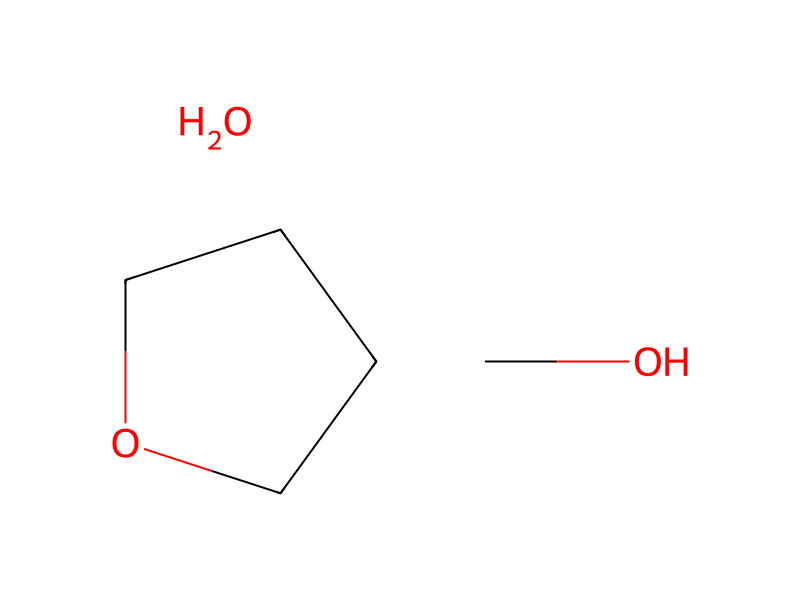
[C:1]([C:3]1[C:4]([C:19]2[CH:24]=[CH:23][C:22]([Cl:25])=[CH:21][C:20]=2[Cl:26])=[C:5]([C:14]([O:16]CC)=[O:15])[S:6][C:7]=1[N:8]1[CH2:13][CH2:12][O:11][CH2:10][CH2:9]1)#[N:2].[OH-].[Na+]>C1COCC1.CO.O>[C:1]([C:3]1[C:4]([C:19]2[CH:24]=[CH:23][C:22]([Cl:25])=[CH:21][C:20]=2[Cl:26])=[C:5]([C:14]([OH:16])=[O:15])[S:6][C:7]=1[N:8]1[CH2:9][CH2:10][O:11][CH2:12][CH2:13]1)#[N:2]Participants
4
Reactant 2


Product 1

Reagents, catalysts & solvents 1
Procedure
To a solution of ethyl 4-cyano-3-(2,4-dichlorophenyl)-5-morpholin-4-ylthiophene-2-carboxylate (0.060 g, 0.15 mmol) in THF/MeOH/water (2:1:2) (5 mL) was added sodium hydroxide (0.061 g, 1.5 mmol). The reaction mixture was allowed to stir at rt for 20 h and was concentrated. The residue was acidified with 1N HCl and was extracted with EtOAc. The organic solutions were combined, washed with brine, dried over MgSO4, filtered and concentrated to give 4-cyano-3-(2,4-dichlorophenyl)-5-morpholin-4-ylthiophene-2-carboxylic acid (62) (0.034 g, 62%). LCMS: (FA) ES+ 382.9. 1H NMR (400 MHz, d6-DMSO) δ: 7.75 (d, 1H), 7.50 (dd, 1H), 7.39 (d, 1H), 3.74-79 (m, 4H) and 3.55-61 (m, 4H).
Workup
- concentrationwas concentrated
- extractionwas extracted with EtOAc
- washwashed with brine
- dry with materialdried over MgSO4
- filtrationfiltered
- concentrationconcentrated
Sources & evidence
- ORD record
- ord-c69eb245e17544c3af8a76863dc3c2ad
- Source dataset
- uspto-grants-2015_05
- Patent number
- US09029411B2
Reaction notes
Loading…