Sodium Hydroxide → 4-Cyano-5-morpholin-4-ylthiophene-2-carboxylic acid
Reaction equation

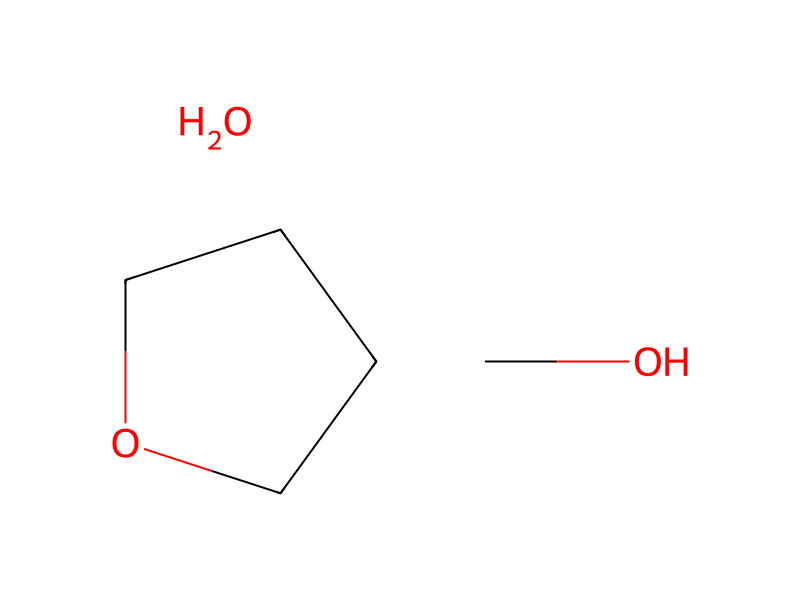
[C:1]([C:3]1[CH:4]=[C:5]([C:14]([O:16]CC)=[O:15])[S:6][C:7]=1[N:8]1[CH2:13][CH2:12][O:11][CH2:10][CH2:9]1)#[N:2].[OH-].[Na+]>C1COCC1.CO.O>[C:1]([C:3]1[CH:4]=[C:5]([C:14]([OH:16])=[O:15])[S:6][C:7]=1[N:8]1[CH2:13][CH2:12][O:11][CH2:10][CH2:9]1)#[N:2]Participants
4



Procedure
To a solution of ethyl 4-cyano-5-morpholin-4-ylthiophene-2-carboxylate (0.06 g, 0.23 mmol) in THF/MeOH/water (3:1:1) (5 mL) was added sodium hydroxide (0.095 g, 2.3 mmol). The reaction mixture was allowed to stir at rt for 20 h and was concentrated. The residue was acidified to pH 1-2 with 1N HCl and was extracted with EtOAc. The organic solutions were combined, washed with brine, dried over MgSO4, filtered and concentrated to give 4-cyano-5-morpholin-4-ylthiophene-2-carboxylic acid (0.048 g, 88%). LCMS: (FA) ES+ 239.1. 1H NMR (400 MHz, d6-DMSO) δ:7.67 s, 1H), 3.72-3.75 (m, 4H) and 3.52-3.55 (m, 4H).
Workup
- concentrationwas concentrated
- extractionwas extracted with EtOAc
- washwashed with brine
- dry with materialdried over MgSO4
- filtrationfiltered
- concentrationconcentrated
Sources & evidence
- ORD record
- ord-590459d949e14a7e821999a86fb87999
- Source dataset
- uspto-grants-2015_05
- Patent number
- US09029411B2
Reaction notes
Loading…