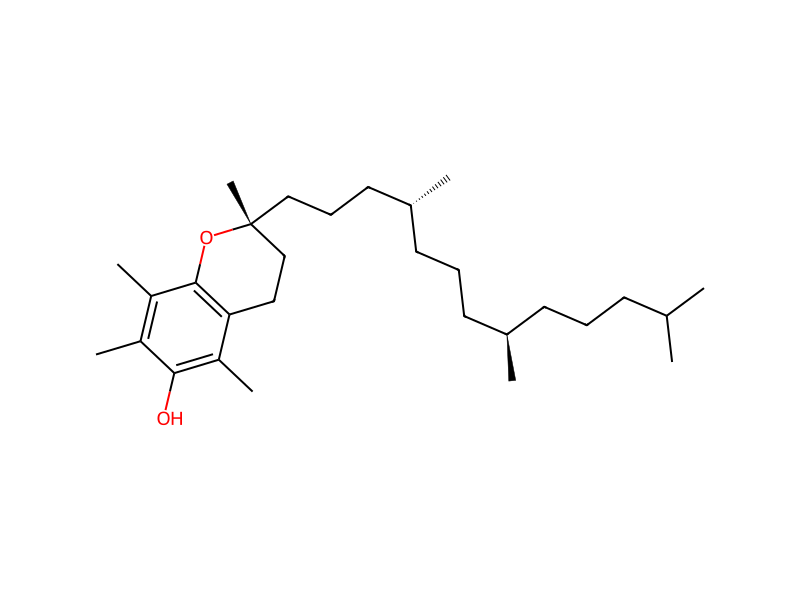
Cholesterol → Tocotrienol
Reaction equation

CC(CCC[C@H]([C@@H]1[C@]2(C)[C@H]([C@H]3[C@H](CC2)[C@:22]2(C)[C:16]([CH2:17][C@H:18]([CH2:20][CH2:21]2)[OH:19])=[CH:15][CH2:14]3)CC1)C)C.CCCCC[C@H](O)/C=C/[C@H]1OC(O)C[C@H](O)[C@@H]1C/C=C\CCCC(O)=O.[CH3:55][C@@H:56]([C@@H:63]1[C@@:67]2(C)[CH2:68][CH2:69][C@@:70]34C[C@:75]53[CH2:77][CH2:78][C@H:79]([O:83]C(/C=C/C3C=CC(O)=C(OC)C=3)=O)[C:80](C)(C)[C@@H]5CC[C@H:71]4[C@:66]2([CH3:98])[CH2:65][CH2:64]1)[CH2:57]CC=C(C)C.CC[C@@H](C(C)C)CC[C@H]([C@@H]1[C@@]2(C)CC[C@@H]3[C@@]4(C)CC[C@H](O)CC4=CC[C@H]3[C@@H]2CC1)C.CC[C@@H](C(C)C)CC[C@H]([C@@H]1[C@@]2(C)CC[C@@H]3[C@@]4(C)CC[C@H](O[C@@H]5O[C@H](CO)[C@@H](O)[C@H](O)[C@H]5O)CC4=CC[C@H]3[C@@H]2CC1)C.CC1C(O)=C(C)C2CC[C@](CCC[C@@H](CCC[C@@H](CCCC(C)C)C)C)(C)OC=2C=1C>>[CH3:55][C:56]([CH3:57])=[CH:63][CH2:64][CH2:65]/[C:66](/[CH3:98])=[CH:67]/[CH2:68][CH2:69]/[C:70](/[CH3:71])=[CH:75]/[CH2:77][CH2:78][C:79]1([CH3:80])[O:83][C:22]2[CH:21]=[CH:20][C:18]([OH:19])=[CH:17][C:16]=2[CH2:15][CH2:14]1Participants



Procedure
Also incorporated by reference are the following: Nicolosi R. J., Ausman L. M., and Hegstead M. (1991) “Rice bran oil lowers serum and LDL lipoprotein cholesterol and apo-B levels in non-human primates” Atherosclerosis. 88(2-3) 133-142; Rukmini C., and Raghuram T. C., (1991) “Nutritional and biochemical aspects of the hypolipidemic action of rice bran oil: A review” J. Amer. Coll. Nutrition. 10: 366-375; Sugano M., and Tsuji E., (1997) “Rice bran oil and cholesterol metabolism”. J. of. Nutrition, 127(3): 521S-524S; Qureshi A. A., Qureshi N., Hasler-Rapacz J. O., (1991) “Dietary tocotrienols reduce concentrations of plasma cholesterol, apolipoprotein B, thromboxane B2 and platelet factor 4 in pigs with inherited hyperlipidemias.” Am. J. Clin. Nutr. 53:1021S; Qureshi A. A., Bradlow B. A., Salser W. A., Brace L. D., (1997), “Novel tocotrienols of rice bran modulate cardiovascular disease risk parameters of hypercholesterolemic humans,” J. Nutr. Biochem 8: 1-9; Nesaratnam K., Stephen R., Dils R., Darbre P., (1998) “Tocotrienols inhibit the growth of breast cancer cells irrespective of estrogen receptor status.” Lipids, 33(5): 461-469; Tomeo A. C., Geller M., Watkins T. R., (1995) “Antioxidant effects of tocotrienols in patients with hyperlipidemia and carotid stress.” Lipids, 30:1179; Xu Z, Hua N., Godber J. S., (2001), “Antioxidant activity of tocopherols, tocotrienols, and gamma oryzanol components from rice bran against cholesterol oxidation accelerated by 2,21-azobis(2-methylpropionamideine)dihydrochloride.” J. Agric. Food. Chem, 49(4): 2077-81.; Ando Y., Pharcos I., (1984) “Effect of gamma oryzanol as sunscreen agent”, Jpn. J. Cosmetic Sci. Soc, (1) 41; Akihisa T., Yasukawa K., Yamaura M., Ukiya M., Kimura Y., Shimizu N., and Arai K., (2000) “Triterpene alcohol and sterol ferulates from rice bran and their antiinflammatory effects”, J. Agri. Food. Chem, 48:2313-2319; Ieiri T., Kase N., Hashigami Y., Nakumura T., Shimoda S., (1982) “Effect of gamma oryzanol on the hypothalamo-pituitary axis in the rat”, Nippon Naibunpi Gokkai Zasshi 58(10): 1350-6; Bouic P. J. D., Etsbeth S., Liebenberg R. W., Albrecht C. F, Pegel G., Van Jaarsveld P. P., (1996) “Beta-sitosterol and beta-sitosterol glucoside stimulate human peripheral blood lymphocyte proliferation: Implication for their use as an immunomodulatory vitamin combination”, International. J. Immunopharmacology, 18(12): 693-700; Ann Hudson, Dinh P. A., Kokubun T., Simmonds S. J., and Gescher A., (2000) “Characterization of potentially chemopreventive phenols in extracts of brown rice that inhibit the growth of human breast and colon cancer cells”. Cancer Epidemiology, Biomarkers & Prevention. 9: 1163-1170; Sunita T. Manorama R., and Rukmini C. (1996) “Lipid profile on blended oils with rice bran oil—A study in human subjects”. Report to Dabur India Ltd. Asia Pacific Journal of Clinical Nutrition; Sunita T., Manorama R. and Rukmini, C. (1997) “Lipid profile of rats fed a blend of rice bran oil in combination of safflower/sunflower oil.” Plant Foods for Human Nutrition 51: 219-230; Reddy Sastry C. V., Rukmini C., Ike Lynch, and McPeak D., (1999) “Process for obtaining micronutrient enriched rice bran oil.” U.S. Pat. No. 5,985,344; Rukmini C., (2000) In “Phytochemicals as Bioactive Agents.” Bidlack, W. R., Omaye, S. T., Meskin, M. S., Topham, D. K. W (Ed), Chapter 13 “Bioactives in Rice Bran and Rice Bran Oil.” 213-239; Rukmini C., Reddy Sastry C., McPeak P., and Lynch I. (2000) “Method for treating hypercholesterolemia, hyperlipidemia, and atherosclerosis.” U.S. Pat. No. 6,126,943; Patricia McPeak, Rukmini C., Reddy Sastry Cherukuri (2001), “Supportive therapy for Diabetes, Hyperglycemia and Hypoglycemia” U.S. Pat. No. 6,303,586; Rukmini C., Reddy Sastry C. V., McPeak P., and Lynch I. (2002) “Method for treating hypercholesterolemia, hyperlipidemia, and atherosclerosis.” U.S. Pat. No. 6,350,473; Rukmini C. (2003) Phytochemical Products: rice bran; Chapter 17, Pg 347-376; in “Phytochemical Functional Foods” (Ed) Ian Johnson and Gary Williamson (CRC) Woodhead Publishing Ltd. (Great Briton); Rukmini C., Patricia McPeak, Reddy Sastry V. Cherukuri, Ike Lynch and Qureshi A. (2003) “Method for treating hypercholesterolemia, hyperlipidemia, and atherosclerosis.” U.S. Pat. No. 6,558,714; Rukmini C., Patricia McPeak, Reddy Sastry Cherukuri, Ike Lynch and Qureshi A., (2004) “Method for treating hypercholesterolemia, hyperlipidemia, and atherosclerosis.” U.S. Pat. No. 6,733,799; Watkins T. R., Geller M., Kooenga D. K. and Bierenbaum M. L. (1999) “Hypocholesterolemic and antioxidant effect of rice bran oil unsaponifiables in hypercholesterolemic subjects” Environmental and Nutritional Interactions, 3(2) 115-22; Lee, J., Lee, S., Kim, M., Rhee, C., Kim, I., and Lee, K (2005) “Beneficial effect of the unsaponifiable matter from rice bran on oxidative stress in vitro compared t with alpha tocopherol.” J. Sci. Food. Agri 85: 493-498.; Ha, T., Han, S., Kim, S., Kim, I., Lee, H., and Kim, H., (2005) “Bioactive components in rice bran oil improve lipid profile in rats fed a high-cholesterol diet” Nutrition Research 25: 597-606; Cicero, A. F., and Gaddi, A., (2001) “Rice bran oil and gamma oryzanol in the treatment Hyperlipoprotenaemias and other conditions” Phytotherapy. Res, 15-277-289; Raghuram, T. C., Brahmaji Rao, U., and Rukmini, C., (1989), “Studies on the Hypolipidemic Effects of Dietary Rice Bran Oil in Human Subjects”. Nutrition Reports. International 39:889-895; Hegsted, M., Kousik, C. S., (1994) “Rice Bran and Rice Bran Oil may lower heart disease risk by decreasing cholesterol synthesis in the body. Louisiana Agriculture. 37(2): 16-17; Cicero, A. F., and Gaddi, A., (2001) “Rice bran oil and gamma oryzanol in the treatment Hyperlipoprotenaemias and other conditions” Phytotherapy. Res, 15-277-289; Rong, N., Ausman, L. M., Nicolosi, R. J., (1997) “Gamma-oryzanol decreases cholesterol absorption and aortic streaks in hamsters.” Lipids 32(3): 303-309; Seetharamiah, G., and Chandrasekhara, N., (1989) “Studies on Hypocholesterolemic Activity of Rice Bran Oil” Atherosclerosis. 78: 219-223; Sarma, R. D., & Rukmini, C., (1986) “Rice bran oil and hypocholesterolemia in rats” Lipids, 21:715-717; Sarma, R. D, Rukmini, C., (1987), “Hypocholesterolemic activity of the unsaponifiable matter of rice bran oil”., Ind J. Med. Res., 85: 278-81; Rukmini, C.,(1988) “Chemical, Nutritional and Toxicological studies of rice bran oil.” Food Chemistry., 30: 257-268.; Sierra, S., Lara-Villoslada, F., Olivares, M., Jimenez, J., Boza, J., and Xaus, J. (2005) “Increased immune response in mice consuming rice bran oil” Eur. J. Nutr. 554: 1-8; Minhajuddin, M., Beg, Z. H. and Iqbal, J. (2005) “Hypolipidemic and antioxidant properties of tocotrienol rich fraction isolated from rice bran oil in experimentally induced hyperlipidemic rats.” Food and Chemical Toxicology 43: 747-753.
Workup
- custom, (1999) “Process for obtaining micronutrient
- addition(2000) “Method for treating hypercholesterolemia, hyperlipidemia, and atherosclerosis
- addition(2002) “Method for treating hypercholesterolemia, hyperlipidemia, and atherosclerosis
- addition(2003) “Method for treating hypercholesterolemia, hyperlipidemia, and atherosclerosis
- addition, (2004) “Method for treating hypercholesterolemia, hyperlipidemia, and atherosclerosis
- customcholesterol absorption and aortic streaks in hamsters
- temperature(2005) “Increased immune response in mice
- customconsuming rice bran oil” Eur
Sources & evidence
- ORD record
- ord-3ff71d286d7b43b6a956bf2fceced3ef
- Source dataset
- uspto-grants-2015_05
- Patent number
- US09034919B2
Reaction notes
Loading…