Formaldehyde → 4-Fluoro-2-hydroxybenzaldehyde
Reaction equation

[F:1][C:2]1[CH:3]=[C:4]([OH:8])[CH:5]=[CH:6][CH:7]=1.[Mg+2].[Cl-].[Cl-].[CH2:12]=[O:13]>CC#N>[F:1][C:2]1[CH:7]=[CH:6][C:5]([CH:12]=[O:13])=[C:4]([OH:8])[CH:3]=1Participants
5
Reactant 3

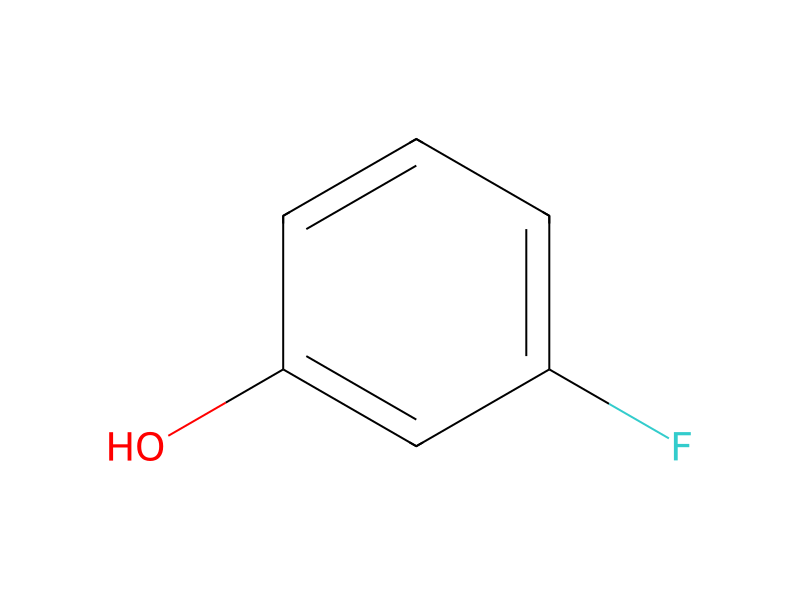

Product 1

Reagents, catalysts & solvents 1

Conditions
- Temperature
- 2.5 °C
Procedure
Into a 20-L 4-necked round-bottom flask purged and maintained with an inert atmosphere of nitrogen was placed a solution of 3-fluorophenol (400 g, 3.57 mol, 1.00 equiv) in CH3CN (5 L), followed by the addition of MgCl2 (1018 g, 3.00 equiv) in several batches at 0° C. To this was added TEA (1443 g, 14.26 mol, 4.00 equiv) dropwise with stirring at 0-5° C., followed by paraformaldehyde (640 g, 6.00 equiv). The resulting solution was stirred at 80° C. for 3 h, cooled to 20° C., quenched by the addition of 5 L of 2N HCl and extracted with 3×3 L of ethyl acetate. The organic layers were combined, dried over anhydrous sodium sulfate and concentrated under vacuum to afford 545 g (crude) of 4-fluoro-2-hydroxybenzaldehyde as a yellow solid.
Workup
- customInto a 20-L 4-necked round-bottom flask purged
- temperaturemaintained with an inert atmosphere of nitrogen
- stirringThe resulting solution was stirred at 80° C. for 3 h
- temperaturecooled to 20° C.
- customquenched by the addition of 5 L of 2N HCl
- extractionextracted with 3×3 L of ethyl acetate
- dry with materialdried over anhydrous sodium sulfate
- concentrationconcentrated under vacuum
Sources & evidence
- ORD record
- ord-7cfac611897b4c53b14412e463557d73
- Source dataset
- uspto-grants-2015_05
- Patent number
- US09034866B2
Reaction notes
Loading…