Hexamethylenediamine → Butyl ethyl(3-aminopropyl)phosphinate
Reaction equation

NCCCCCCN.[CH2:9]([P:11]([CH2:18][CH2:19][C:20]#[N:21])(=[O:17])[O:12][CH2:13][CH2:14][CH2:15][CH3:16])[CH3:10].[H][H]>[Ni].[OH-].[K+].O>[CH2:9]([P:11]([CH2:18][CH2:19][CH2:20][NH2:21])(=[O:17])[O:12][CH2:13][CH2:14][CH2:15][CH3:16])[CH3:10]Participants
7
Reactant 3
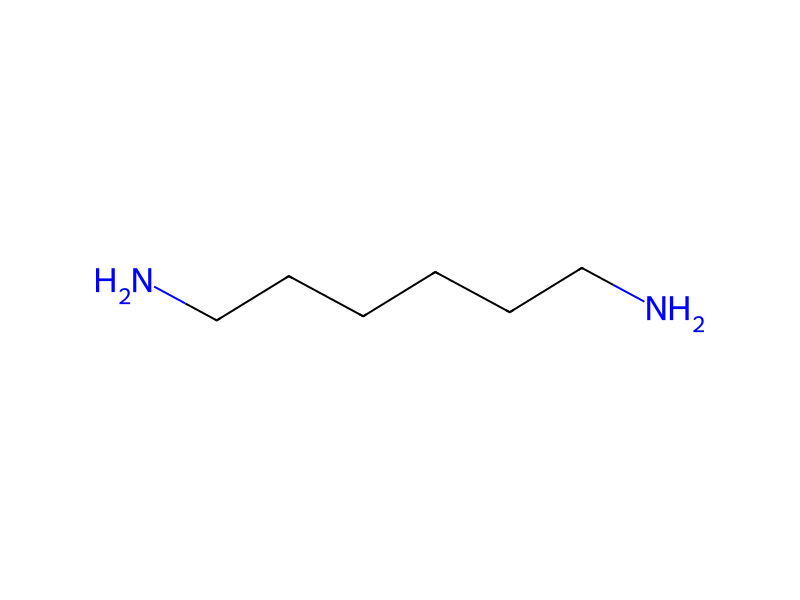


Product 1

Reagents, catalysts & solvents 3



Procedure
In a glass autoclave, 240 g of hexamethylenediamine, 52 g of water, 6.4 g of Raney® nickel (doped with 1.5% by weight of chromium), 0.18 g (4 mmol) of potassium hydroxide, 75.1 g (0.37 mol) of butyl ethyl(2-cyanoethyl)phosphinate (produced as in Example 8) are reacted at 50° C. with hydrogen at 25 bar. After 8 hours, the autoclave is let down. For purification, the reaction solution is filtered, passed through a column charged with Deloxan® THP II and concentrated in vacuo. The product is purified by chromatography to obtain 62.0 g (81% of theory) of butyl ethyl(3-aminopropyl)phosphinate as colorless oil.
Workup
- customFor purification
- filtrationthe reaction solution is filtered
- additioncharged with Deloxan® THP II
- concentrationconcentrated in vacuo
- customThe product is purified by chromatography
Sources & evidence
- ORD record
- ord-98a05381542c4d82804e8f883736600e
- Source dataset
- uspto-grants-2015_05
- Patent number
- US09035088B2
Reaction notes
Loading…