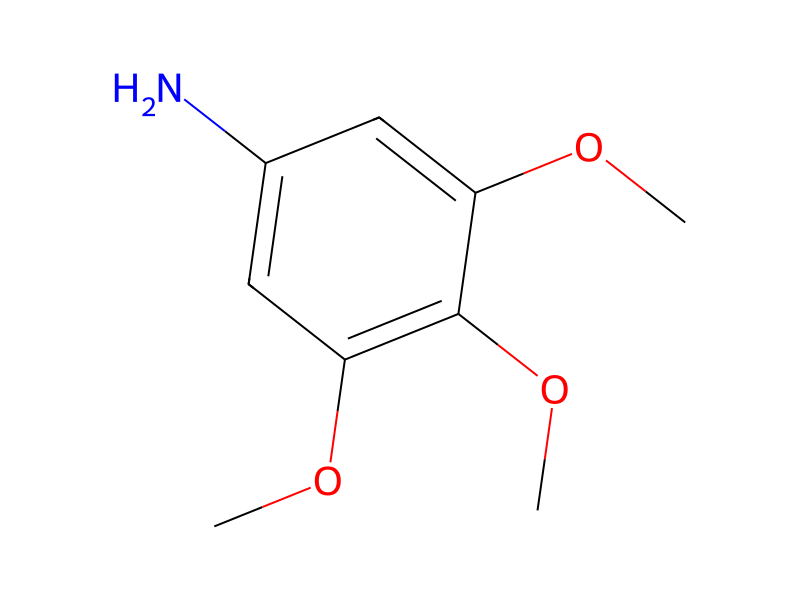
3,4,5-Trimethoxyaniline → N-(3-(2-(3,4,5-trimethoxyphenylamino)pyrimidin-4-ylthio)phenyl)acrylamide
Reaction equation

Cl[C:2]1[N:7]=[C:6]([S:8][C:9]2[CH:10]=[C:11]([NH:15][C:16](=[O:19])[CH:17]=[CH2:18])[CH:12]=[CH:13][CH:14]=2)[CH:5]=[CH:4][N:3]=1.[CH3:20][O:21][C:22]1[CH:23]=[C:24]([CH:26]=[C:27]([O:31][CH3:32])[C:28]=1[O:29][CH3:30])[NH2:25]>>[CH3:32][O:31][C:27]1[CH:26]=[C:24]([NH:25][C:2]2[N:7]=[C:6]([S:8][C:9]3[CH:10]=[C:11]([NH:15][C:16](=[O:19])[CH:17]=[CH2:18])[CH:12]=[CH:13][CH:14]=3)[CH:5]=[CH:4][N:3]=2)[CH:23]=[C:22]([O:21][CH3:20])[C:28]=1[O:29][CH3:30]Participants
3


Procedure
In a procedure analogous to Example 8, reaction of N-(3-(2-chloropyrimidin-4-ylthio)phenyl)acrylamide (100 mg, 0.34 mmol) and 3,4,5-trimethoxyaniline (75 mg, 0.41 mmol) furnished the product (20 mg, 14%).
Sources & evidence
- ORD record
- ord-4ff89e2c488348e18a1079dc808dd413
- Source dataset
- uspto-grants-2015_05
- Patent number
- US09040549B2
Reaction notes
Loading…