HCID 14232972, compound → HCID 14232974, compound
Reaction equation

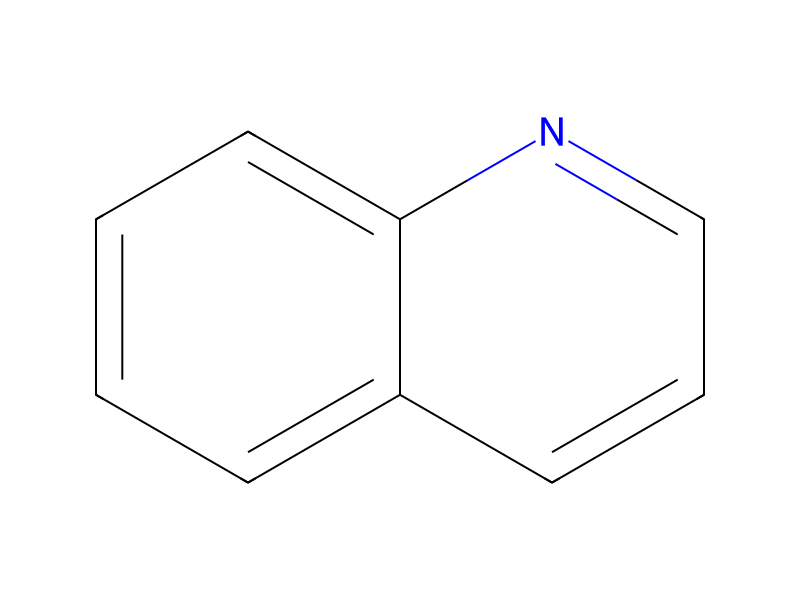
[CH2:1]([C:5]1([CH:36]2[CH2:40][CH2:39][CH2:38][CH2:37]2)[CH2:13][C:12]2[C:7](=[C:8]([Cl:34])[C:9]([Cl:33])=[C:10]([C:14](C(OCC)=O)([CH2:20][CH2:21][CH2:22][C:23]([O:25]CC)=[O:24])C(OCC)=O)[CH:11]=2)[C:6]1=[O:35])[CH2:2][CH2:3][CH3:4]>N1C2C(=CC=CC=2)C=CC=1.[Cu]>[CH2:1]([C:5]1([CH:36]2[CH2:37][CH2:38][CH2:39][CH2:40]2)[CH2:13][C:12]2[C:7](=[C:8]([Cl:34])[C:9]([Cl:33])=[C:10]([CH2:14][CH2:20][CH2:21][CH2:22][C:23]([OH:25])=[O:24])[CH:11]=2)[C:6]1=[O:35])[CH2:2][CH2:3][CH3:4]Participants
Reactant 1

Product 1

Reagents, catalysts & solvents 2

Procedure
The starting material, 2-butyl-6,7-dichloro-2-cyclopentyl-2,3-dihydro-5-hydroxy-1H-inden-1-one, dissolved in dimethylformamide was treated with potassium carbonate and trifluoromethanesulfonyl chloride to form (2-butyl-6,7-dichloro-2-cyclopentyl-2,3-dihydro-1-oxo-1H-inden-5-yl)trifluoromethanesulfonate (Step 1). This material was subjected to triflate displacement by reaction with diethyl malonate to form diethyl-5-(2-butyl-6,7-dichloro-2-cyclopentyl-2,3-dihydro-1-oxo-1H-inden-5-yl)malonate (Step 2). The malonate of Step 2 was then alkylated with ethyl 4-bromobutyrate to form diethyl 2-(2-butyl-6,7-dichloro-2-cyclopentyl-2,3-dihydro-1-oxo-1H-inden-5-yl)-2-(ethoxycarbonyl)-1,6-hexanedioate (Step 3). Upon hydrolysis the hexanedioic acid is formed (Step 4) which undergoes monodecarboxylation by treatment with copper in quinoline to form a compound of the present invention such as 5-(2-butyl-6,7-dichloro-2-cyclopentyl-2,3-dihydro-1-oxo-1H-inden-5-yl)pentanoic acid (Step 5). The starting materials used in these examples is obtained as shown in the Journal of Medicinal Chemistry, 20, 1400 (1977); and 21, 437 (1978). This synthetic route is illustrated below: ##STR3##
Workup
- customis formed (Step 4) which
Sources & evidence
- ORD record
- ord-4168a2192b5b47238cd2c299e142be48
- Source dataset
- uspto-grants-1988_06
- Patent number
- US04754061
Reaction notes
Loading…