Tetraethoxysilane → HCID 87198141, compound
Reaction equation

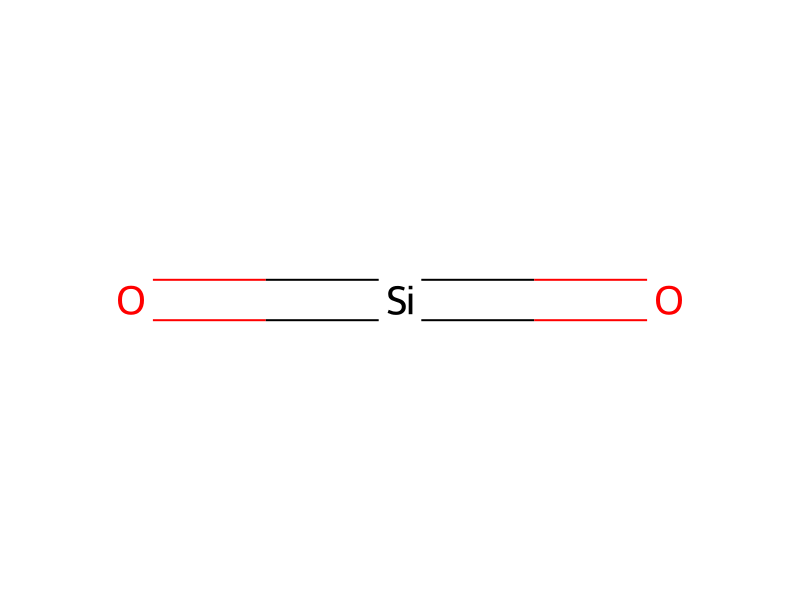
[Si](=O)=O.[CH3:4][CH2:5][O:6][Si:7]([O:14][CH2:15][CH3:16])([O:11][CH2:12][CH3:13])[O:8][CH2:9][CH3:10].[O:17]=[O+:18][O-:19]>>[O:17]=[O+:18][O-:19].[CH3:10][CH2:9][O:8][Si:7]([O:6][CH2:5][CH3:4])([O:11][CH2:12][CH3:13])[O:14][CH2:15][CH3:16]Participants



Procedure
Turning next to FIG. 7, an ozone-TEOS oxide layer 12 is refilled into the trench 10 and formed on the PE-TEOS oxide layer 8 for isolation. The ozone-TEOS oxide layer 12 indicates that a silicon dioxide is formed by CVD using source gases including TEOS and ozone. The ozone-TEOS is preferably formed by using sub-atmospheric chemical vapor deposition (SACVD). The ozone-TEOS layer is formed at a temperature in the range of about 400 to 480° C. The quality of the SACVD ozone-TEOS oxide 12 that is formed on the silicon is good. Conversely, while the SACVD ozone-TEOS oxide 12 is formed on the PE-TEOS oxide layer 8, the quality of the SACVD ozone-TEOS oxide 12 is poor. The reason of forming the PE-TEOS oxide layer 8 is to make sure the ozone-TEOS layer formed over the trench 10 with better quality than the neighboring ozone-TEOS oxide 12 on the PE-TEOS oxide layer 8. In addition, the wet etching rate of the ozone-TEOS oxide 12 formed on the PE-TEOS oxide layer 8 is about 2000 to 2200 angstroms/minutes, while the one of the ozone-TEOS oxide 12 on the silicon oxide layer 6 is about 300 to 360 angstroms/minutes. The ozone-TEOS oxide 12 formed on the silicon 2 having wet etching rate is about 300 to 320 angstroms/minutes. Thus, the ozone-TEOS oxide 12 formed on the PE-TEOS oxide layer 8 will be removed faster than the one formed on the silicon substrate 2.
Workup
- customis formed by CVD
Sources & evidence
- ORD record
- ord-87d752b78bee425b999efa8dcd9f6bd3
- Source dataset
- uspto-grants-1999_07
- Patent number
- US05926722
Reaction notes
Loading…