Pyridine → HCID 17762557, compound
Reaction equation

[CH2:1]([SH:19])[CH2:2][CH2:3][CH2:4][CH2:5][CH2:6][CH2:7][CH2:8][CH2:9][CH2:10][CH2:11][CH2:12][CH2:13][CH2:14][CH2:15][CH2:16][CH2:17][CH3:18].[N+:20]([C:23]1[CH:28]=[CH:27][C:26]([N:29]=[C:30]=[O:31])=[CH:25][CH:24]=1)([O-:22])=[O:21].N1C=CC=CC=1>C(#N)C>[N+:20]([C:23]1[CH:24]=[CH:25][C:26]([NH:29][C:30](=[O:31])[S:19][CH2:1][CH2:2][CH2:3][CH2:4][CH2:5][CH2:6][CH2:7][CH2:8][CH2:9][CH2:10][CH2:11][CH2:12][CH2:13][CH2:14][CH2:15][CH2:16][CH2:17][CH3:18])=[CH:27][CH:28]=1)([O-:22])=[O:21]Participants
5
Reactant 3


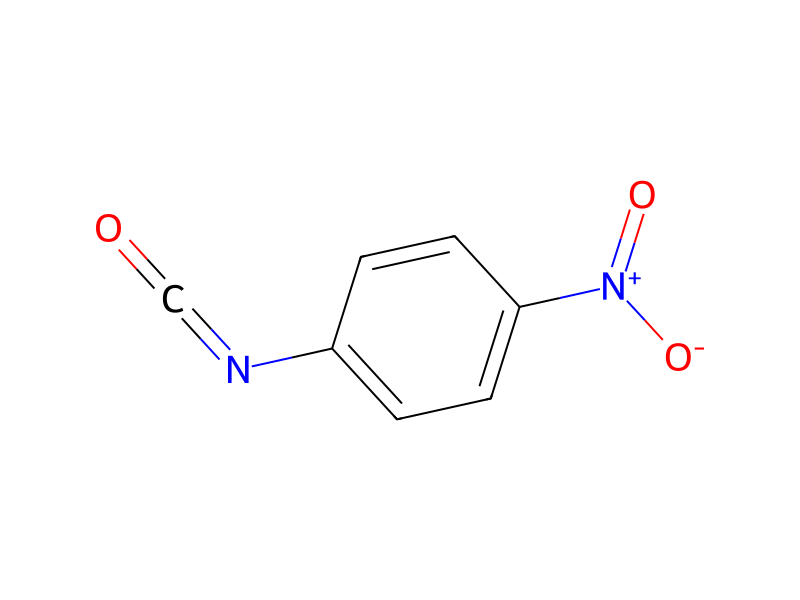
Product 1

Reagents, catalysts & solvents 1

Procedure
In a three necked flask equipped with a dropping funnel, a thermometer and reflux condenser, n-octadecanethiol (183 g) was dissolved in acetonitrile (1000 ml) in a nitrogen atmosphere. To the solution, p-nitrophenyl isocyanate (100 g) was gradually added and then pyridine (4 ml) was added dropwise, the mixture was stirred at room temperature for 10 minutes and then refluxed for 30 minutes. The reaction mixture was cooled to room temperature to allow crystals to precipitate. The crystals were collected by filtering and washed with acetonitrile, to obtain S-n-octadecyl p-nitrophenylthiocarbamate (272 g) at a yield of 99%.
Workup
- customIn a three necked flask equipped with a dropping funnel
- temperaturea thermometer and reflux condenser
- temperaturerefluxed for 30 minutes
- temperatureThe reaction mixture was cooled to room temperature
- customto precipitate
- customThe crystals were collected
- filtrationby filtering
- washwashed with acetonitrile
Sources & evidence
- ORD record
- ord-d4af048ef303444eace48e23a666bddd
- Source dataset
- uspto-grants-1999_07
- Patent number
- US05928988
Reaction notes
Loading…