Pyridine → HCID 17762557, compound
Reaction equation

[CH2:1]([SH:19])[CH2:2][CH2:3][CH2:4][CH2:5][CH2:6][CH2:7][CH2:8][CH2:9][CH2:10][CH2:11][CH2:12][CH2:13][CH2:14][CH2:15][CH2:16][CH2:17][CH3:18].[N+:20]([C:23]1[CH:28]=[CH:27][C:26]([N:29]=[C:30]=[O:31])=[CH:25][CH:24]=1)([O-:22])=[O:21].N1C=CC=CC=1>C(#N)C>[N+:20]([C:23]1[CH:24]=[CH:25][C:26]([NH:29][C:30](=[O:31])[S:19][CH2:1][CH2:2][CH2:3][CH2:4][CH2:5][CH2:6][CH2:7][CH2:8][CH2:9][CH2:10][CH2:11][CH2:12][CH2:13][CH2:14][CH2:15][CH2:16][CH2:17][CH3:18])=[CH:27][CH:28]=1)([O-:22])=[O:21]Participants
5
Reactant 3


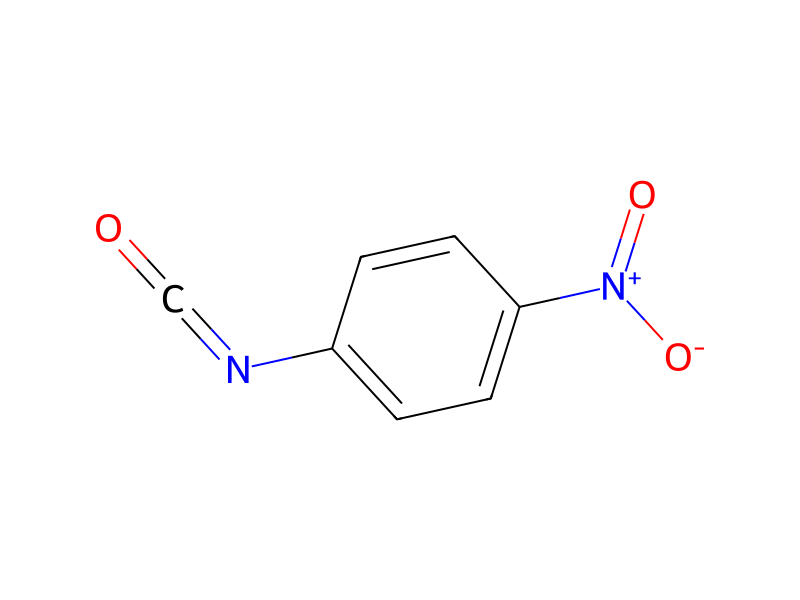
Product 1

Reagents, catalysts & solvents 1

Procedure
In a three necked flask equipped with a dropping funnel, a thermometer and a reflux condenser, n-octadecanethiol (183 g) was dissolved in acetonitrile (1000 ml) in a nitrogen atmosphere. To the solution, p-nitrophenyl isocyanate (100 g) was gradually added, and then pyridine (4 ml) was added dropwise, the mixture was stirred at room temperature for 10 minutes and then heat-refluxed for 30 minutes. When the reaction mixture was cooled to room temperature, crystals precipitated. The crystals were collected by filtering and washed with acetonitrile. S-n-octadecyl p-nitrophenylthiocarbamate (272 g) was obtained at a yield of 99%.
Workup
- customIn a three necked flask equipped with a dropping funnel
- temperatureheat-refluxed for 30 minutes
- temperatureWhen the reaction mixture was cooled to room temperature
- customcrystals precipitated
- customThe crystals were collected
- filtrationby filtering
- washwashed with acetonitrile
Sources & evidence
- ORD record
- ord-b0ed7f3c4fbe457091cc4d0c0446172b
- Source dataset
- uspto-grants-1999_07
- Patent number
- US05928988
Reaction notes
Loading…