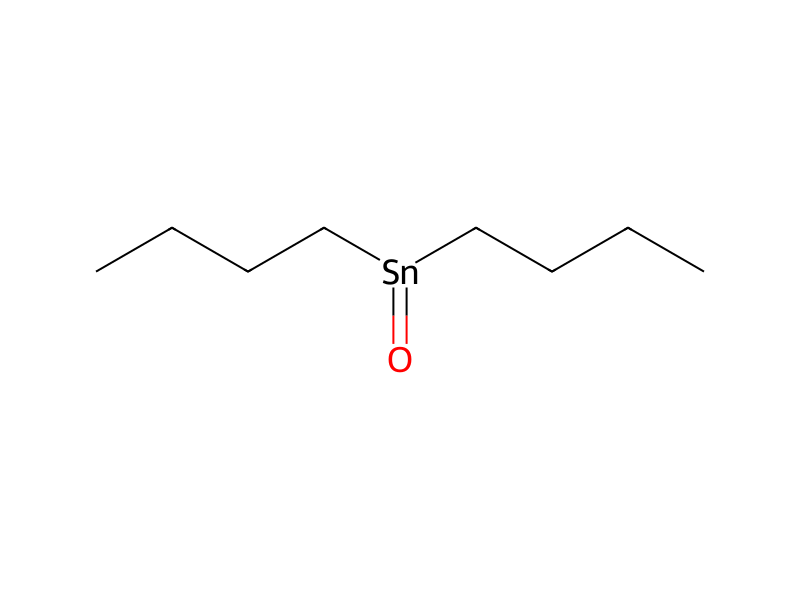
Dibutyltin oxide → HCID 10292839, compound
Reaction equation

[F:1][C:2]1[CH:7]=[CH:6][C:5]([C:8]2[N:12]3[N:13]=[CH:14][C:15]([C:17]([OH:20])([CH3:19])[CH3:18])=[N:16][C:11]3=[N:10][CH:9]=2)=[CH:4][C:3]=1[C:21]1[C:26]([C:27]([NH2:29])=O)=[CH:25][N:24]=[CH:23][N:22]=1.C([Sn](=O)CCCC)CCC>C1(C)C=CC=CC=1>[F:1][C:2]1[CH:7]=[CH:6][C:5]([C:8]2[N:12]3[N:13]=[CH:14][C:15]([C:17]([OH:20])([CH3:19])[CH3:18])=[N:16][C:11]3=[N:10][CH:9]=2)=[CH:4][C:3]=1[C:21]1[C:26]([C:27]#[N:29])=[CH:25][N:24]=[CH:23][N:22]=1Participants
4
Reactant 2

Product 1

Reagents, catalysts & solvents 1

Procedure
A suspension of 4-{2-fluoro-5-[3-(1-hydroxy-1-methylethyl)-imidazo[1,2-b][1,2,4]triazin-7-yl]phenyl}pyrimidine-5-carboxylic acid amide (50 mg, 0.13 mmol) was formed in dry toluene (50 ml). Dibutyltin oxide (6 mg, 0.03 mmol) was added and the mixture heated at reflux for 18 h. The solvent was removed under reduced pressure then purification by chromatography (silica gel, 3% MeOH/CH2Cl2) gave the title compound as a yellow solid: 1H NMR (400 MHz, CDCl3) δ 1.72 (6H, s), 3.23 (1H, s), 7.45 (1H, dd, J 9, 1 Hz), 8.24-8.29 (1H, m), 8.30 (1H, s), 8.42 (1H, dd, J 7, 2 Hz), 8.81 (1H, s), 9.14 (1H, s), 9.51 (1H, s); MS (ES+) m/z 376 [M+H]+.
Workup
- temperaturethe mixture heated
- temperatureat reflux for 18 h
- customThe solvent was removed under reduced pressure
- custompurification by chromatography (silica gel, 3% MeOH/CH2Cl2)
Sources & evidence
- ORD record
- ord-249dd1e319a84df8bb9dd8614f586410
- Source dataset
- uspto-grants-2005_08
- Patent number
- US06936608B2
Reaction notes
Loading…