Glutaric Acid → HCID 22335829, compound
Reaction equation

[C:1]([OH:9])(=[O:8])[CH2:2][CH2:3][CH2:4][C:5]([OH:7])=[O:6].[CH2:10]([O:14][CH2:15][CH2:16][O:17][CH:18]=[CH2:19])[CH:11]1[O:13][CH2:12]1>>[CH2:10]([O:14][CH2:15][CH2:16][O:17][CH:18]([O:6][C:5](=[O:7])[CH2:4][CH2:3][CH2:2][C:1]([O:9][CH:18]([O:17][CH2:16][CH2:15][O:14][CH2:10][CH:11]1[O:13][CH2:12]1)[CH3:19])=[O:8])[CH3:19])[CH:11]1[O:13][CH2:12]1Participants
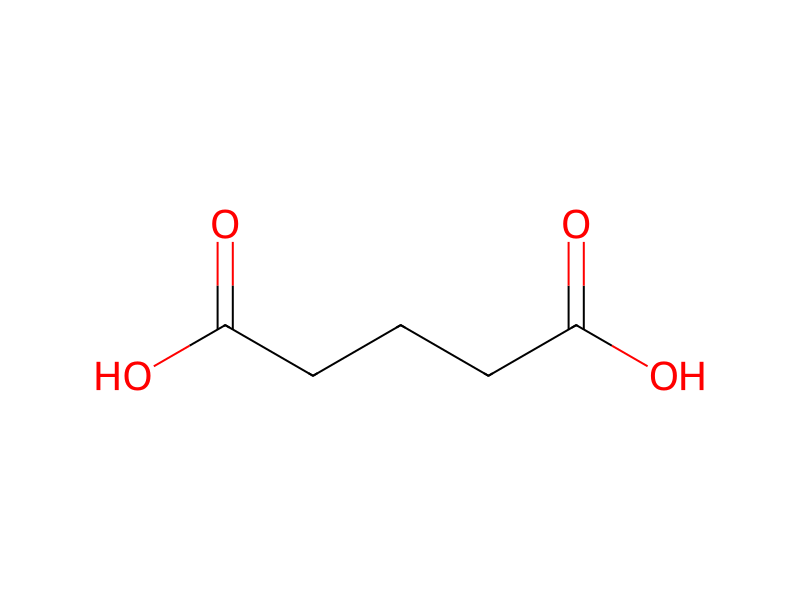


Procedure
Glutaric acid (1.32 g; 0.01 moles) was added slowly over about 20 minutes to a stirred reaction flask containing 2-vinyloxyethyl glycidyl ether (prepared as described by Sawamoto et. Al in J. Polym. Sci., Part A 1987, V. 25, 2717) at 80° C. After all the acid was added, heating and stirring was continued for a further 2 hours. On cooling, the product, bis-[α-(2-glycidoxyethoxy)ethyl]glutarate, was obtained in quantitative yield. The structure of the product was confirmed by 1H NMR and IR analysis. Previous synthesis of polyepoxides by addition of 2-vinyloxyethyl glycidyl ether to polycarboxylic acids has previously been reported to occur in the presence of acid catalysts by Tofimov et. al (Review Heteroatom Chem. 1993, V.9, 205). Such catalysts are undesirable as they tend to reduce the storage stability of the epoxide monomer and reduce the degradation temperature of the cured adhesive polymer.
Workup
- additionAfter all the acid was added
- temperatureheating
- temperatureOn cooling
Sources & evidence
- ORD record
- ord-969bc0d246f14f14877f93f784814c13
- Source dataset
- uspto-grants-2005_08
- Patent number
- US06936664B2
Reaction notes
Loading…