Benzyl Chloride → Dimethyl 4-(dibenzylamino)benzene-1,2-dicarboxylate
Reaction equation

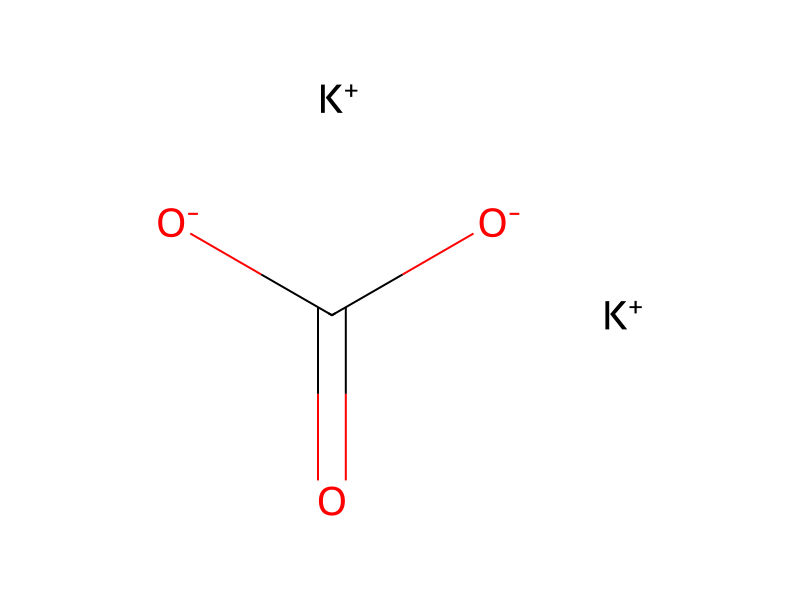
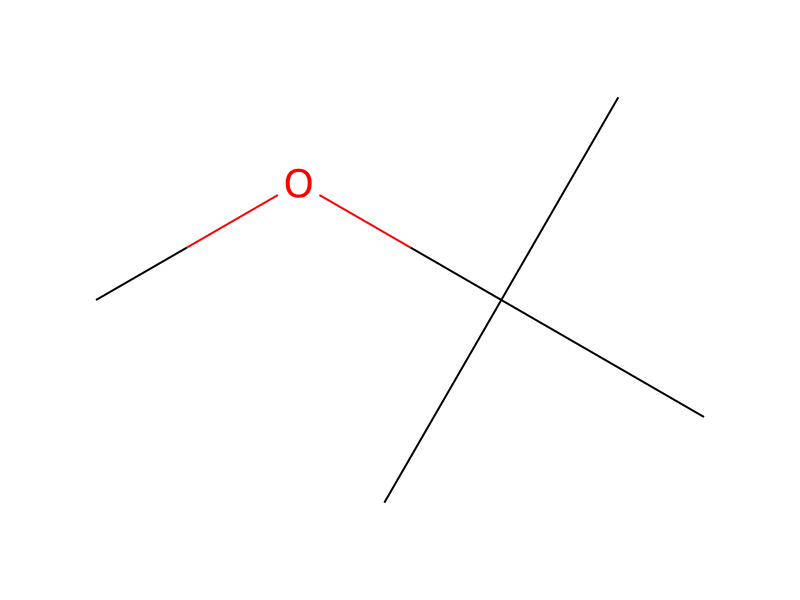
[NH2:1][C:2]1[CH:3]=[C:4]([C:12]([O:14][CH3:15])=[O:13])[C:5]([C:8]([O:10][CH3:11])=[O:9])=[CH:6][CH:7]=1.[C:16]([O-])([O-])=O.[K+].[K+].CN(C)[C:24](=O)[CH3:25].[CH2:28](Cl)[C:29]1[CH:34]=[CH:33][CH:32]=[CH:31][CH:30]=1.[C:36](OC)([CH3:39])([CH3:38])[CH3:37]>O>[CH2:28]([N:1]([CH2:37][C:36]1[CH:39]=[CH:25][CH:24]=[CH:16][CH:38]=1)[C:2]1[CH:3]=[C:4]([C:12]([O:14][CH3:15])=[O:13])[C:5]([C:8]([O:10][CH3:11])=[O:9])=[CH:6][CH:7]=1)[C:29]1[CH:34]=[CH:33][CH:32]=[CH:31][CH:30]=1Participants



Conditions
- Temperature
- 60 °C
Procedure
A 100-L, four-necked, round-bottomed flask was charged with the dimethyl 4-aminobenzene-1,2-dicarboxylate, K2CO3, KI (anhydrous), and 21.6 L of N,N-dimethylacetamide (DMAC, 200 ppm of water; however, the reaction can tolerate more water). Benzyl chloride (BnCl) was added in one portion, and the reaction mixture (brown slurry) was heated to 60° C. over 20 min using a steam bath. The steam bath was then shutoff, and the reaction temperature continued to increase to 76.8° C. over the next 30 min (exotherm). After cooling to 75° C., the reaction mixture was stirred at this temperature for 2 h and then stirred at 90° C. until <1.5% of the monobenzyl intermediate remained (ca. 8-12 h) (yellow/white slurry). [note, the reaction mixture gets very thick during the reaction]. The steam bath was turned off and the reaction mixture was allowed to cool to room temperature (18° C.), then diluted with 21.6 L (5 volumes) of methyl t-butyl ether (MTBE) and 43.2 L (10 volumes) of water. The resulting organic layer was separated, washed with water (2×28 L), and concentrated to ca. 18 L (ca. 3 volumes). The brown oil was then solvent-switched to THF (60 L) and concentrated to ca. 38 L (<1000 ppm water). The product mixture containing the title compound was used in the next step without further purification.
Workup
- customhowever, the reaction
- temperatureto increase to 76.8° C. over the next 30 min (exotherm)
- temperatureAfter cooling to 75° C.
- custom(ca. 8-12 h) (yellow/white slurry)
- custom[note, the reaction mixture gets very thick during the reaction]
- temperatureto cool to room temperature (18° C.)
- customThe resulting organic layer was separated
- washwashed with water (2×28 L)
- concentrationconcentrated to ca. 18 L (ca. 3 volumes)
- concentrationsolvent-switched to THF (60 L) and concentrated to ca. 38 L (<1000 ppm water)
- additionThe product mixture containing the title compound
- customwas used in the next step without further purification
Sources & evidence
- ORD record
- ord-ca5f0e7c853142438cf2afd8ed44633a
- Source dataset
- uspto-grants-2016_01
- Patent number
- US09227973B2
Reaction notes
Loading…