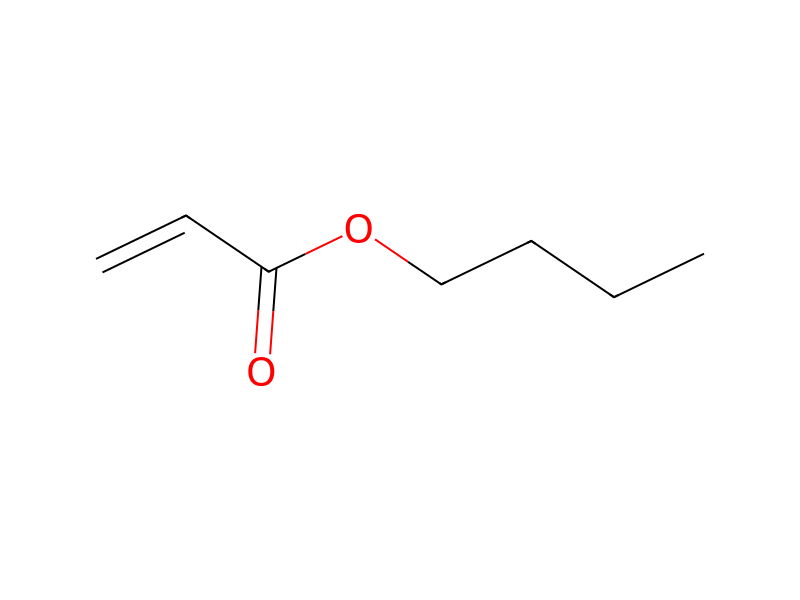
Acrylic Acid → Butyl prop-2-enoate;prop-2-enoic acid;styrene
Reaction equation

[C:1]([OH:5])(=[O:4])[CH:2]=[CH2:3].[C:6]([O:10][CH2:11][CH2:12][CH2:13][CH3:14])(=[O:9])[CH:7]=[CH2:8].[CH2:15]=[CH:16][C:17]1[CH:22]=[CH:21][CH:20]=[CH:19][CH:18]=1>>[C:1]([OH:5])(=[O:4])[CH:2]=[CH2:3].[C:6]([O:10][CH2:11][CH2:12][CH2:13][CH3:14])(=[O:9])[CH:7]=[CH2:8].[CH2:15]=[CH:16][C:17]1[CH:22]=[CH:21][CH:20]=[CH:19][CH:18]=1Participants
4



Procedure
An organic acid was prepared according to the same method as Synthesis Example 1-1 except that a mixture of 21.0 g of acrylic acid (made by Wako Junyaku Co.), 6.0 g of butyl acrylate (made by Wako Junyaku Co.), and 3.0 g of styrene (made by Wako Junyaku Co.) was used as monomers.
Workup
- customAn organic acid was prepared
Sources & evidence
- ORD record
- ord-defa62e438204906849feb3563fc4c4c
- Source dataset
- uspto-grants-2016_09
- Patent number
- US09437872B2
Reaction notes
Loading…