Water → 9H-Carbazole, 9-[4-(trifluoromethyl)phenyl]-
Reaction equation

Cl[C:2]1[CH:7]=[CH:6][C:5]([C:8]([F:11])([F:10])[F:9])=[CH:4][CH:3]=1.O.[Cl-].[NH4+:14].[C:15]1([CH3:21])[CH:20]=[CH:19][CH:18]=[CH:17][CH:16]=1>>[F:9][C:8]([F:11])([F:10])[C:5]1[CH:6]=[CH:7][C:2]([N:14]2[C:6]3[CH:7]=[CH:2][CH:3]=[CH:4][C:21]=3[C:15]3[C:20]2=[CH:19][CH:18]=[CH:17][CH:16]=3)=[CH:3][CH:4]=1Participants


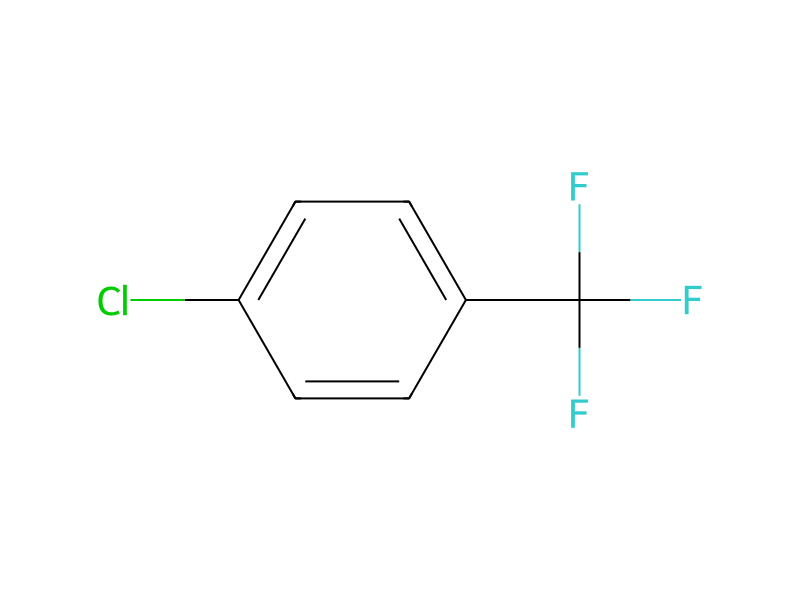


Procedure
The reaction was conducted for 15 minutes in the same experimental procedures as in Example 1 except for using 4-chlorobenzotrifluoride (8.4 mL, 63.1 mmol, 1.0 equivalent) as an aryl halide. After cooling the reaction mixture to room temperature, to the mixture were added water (25 mL) and ammonium chloride (1.7 g). The aqueous layer was separated off, and the organic layer was concentrated under reduced pressure to give solid residue. The residue was dissolved in toluene, and the solution was decolorized by silica gel (1 g) and filtered through a Celite pad. The filtrate was concentrated under reduced pressure to give the solid, which was recrystallized from toluene/methanol to afford 18.4 g of N-(4-trifluoromethylphenyl)carbazole as a white powder.
Workup
- customThe aqueous layer was separated off
- concentrationthe organic layer was concentrated under reduced pressure
- customto give solid residue
- filtrationfiltered through a Celite pad
- concentrationThe filtrate was concentrated under reduced pressure
- customto give the solid, which
- customwas recrystallized from toluene/methanol
Sources & evidence
- ORD record
- ord-1f88142ed87248f59537580a7467e146
- Source dataset
- uspto-grants-2016_01
- Patent number
- US09233922B2
Reaction notes
Loading…