1-Butanol → Butyl Acrylate
Reaction equation

C(O)(=O)C=C.[CH2:6]([OH:10])[CH2:7][CH2:8][CH3:9].[CH2:11]([O:15][C:16](=[O:19])[CH:17]=[CH2:18])[CH2:12][CH2:13][CH3:14]>O>[CH2:11]([O:15][C:16](=[O:19])[CH:17]=[CH2:18])[CH2:12][CH2:13][CH3:14].[CH2:6]([O:10][CH2:11][CH2:12][CH2:13][CH3:14])[CH2:7][CH2:8][CH3:9]Participants
6
Reactant 3


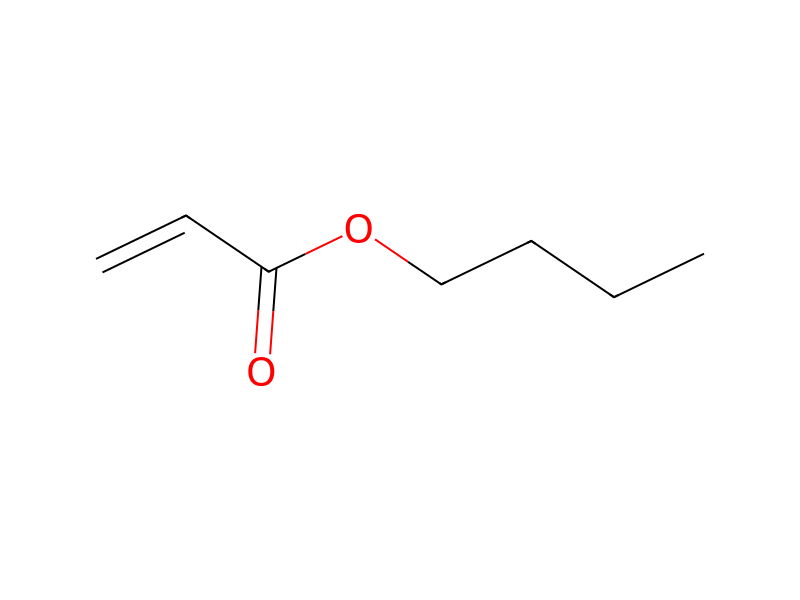
Product 2

Reagents, catalysts & solvents 1

Procedure
The conditions were the same as those described in Example 1, but acrylic acid and n-butanol were used in the molar ratio of 1:1. The reactor was supplied with 297 g/h of a mixture consisting of 138 g of acrylic acid, 142 g of n-butanol and 17 g of butylacrylate. An identical quantity of reaction product consisting of 173 g of butylacrylate, 46 g of acrylic acid, 50 g of butanol, 22 g of water and 6 g of residue was discharged. 66.7% of the acrylic acid underwent conversion. 154 g/h of pure butylacrylate free from dibutylether was obtained. This corresponded to a yield of 94.1%, based on the acrylic acid converted. The catalyst performance was 933 g of butylacrylate per kg of catalyst per hour.
Workup
- customAn identical quantity of reaction product
Sources & evidence
- ORD record
- ord-d63b2c42616d427cad434d775d05a90f
- Source dataset
- uspto-grants-1977_03
- Patent number
- US04012439
Reaction notes
Loading…