1-Butanol → HCID 22218522, compound
Reaction equation

C(O)(=O)C=C.[CH2:6]([OH:10])[CH2:7][CH2:8][CH3:9].[CH2:11]([O:15][C:16](=[O:19])[CH:17]=[CH2:18])[CH2:12][CH2:13][CH3:14].C(OCCCC)CCC>O>[CH2:6]([OH:10])[CH2:7][CH2:8][CH3:9].[CH2:11]([O:15][C:16](=[O:19])[CH:17]=[CH2:18])[CH2:12][CH2:13][CH3:14]Participants
Reactant 4


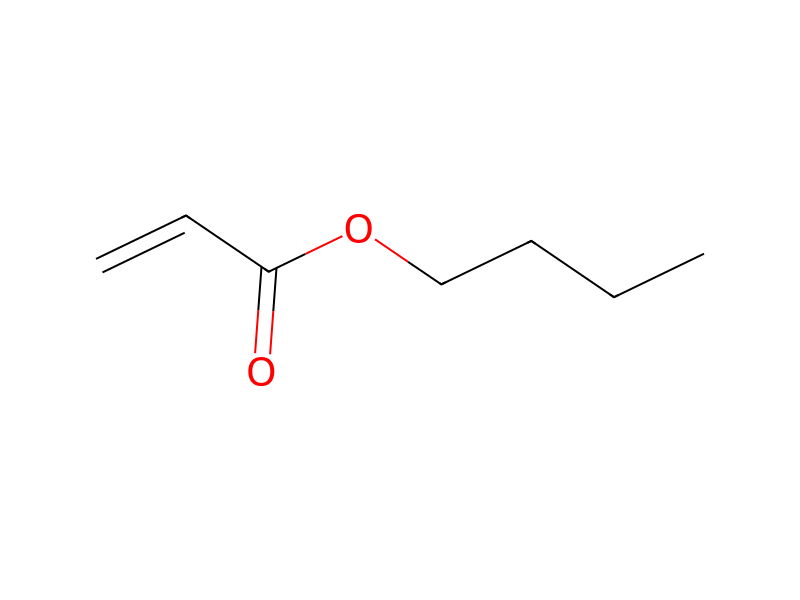

Product 1

Reagents, catalysts & solvents 1

Conditions
- Temperature
- 140 °C
Procedure
The reaction temperature was increased to 140° C and was accordingly outside the temperature range described herein. The molar ratio of acrylic acid to n-butanol of 1:1.7 and the working pressure of 7 atmospheres gauge used in Example 1 remained unchanged. 102 g of acrylic acid and 178 g of n-butanol were passed per hour through the reactor. The acrylic acid conversion rate was 85.1%. 280 g of reaction product containing 52.9 weight % of butylacrylate, 5.35 weight % of acrylic acid, 31.45 weight % of n-butanol, 7.85 weight % of water, 0.35 weight % of dibutylether and 2.1 weight % of residue was obtained. The butanol/butylacrylate-azeotrope obtained at the head of third distillation column 17 contained 0.5 weight % of dibutylether and was, therefore, not recycled to the reactor, 146 g/h, including the butylacrylate fraction contained in the azeotrope, of butylacrylate contaminated with 0.3 weight % of dibutylether was obtained. This corresponded to yield of 94.4%, based on the acrylic acid converted. The catalyst performance was 942 g of butylacrylate per kg of catalyst per hour.
Workup
- custom280 g of reaction product
- customwas obtained
Sources & evidence
- ORD record
- ord-c7b6aae7652d465fa078ffb8f34fe077
- Source dataset
- uspto-grants-1977_03
- Patent number
- US04012439
Reaction notes
Loading…