Sodium Chloride → 4-Dodecylbenzenesulfonyl chloride
Reaktionsgleichung

[CH2:1]([C:13]1[CH:18]=[CH:17][CH:16]=[CH:15][CH:14]=1)[CH2:2][CH2:3][CH2:4][CH2:5][CH2:6][CH2:7][CH2:8][CH2:9][CH2:10][CH2:11][CH3:12].[Cl:19][S:20](O)(=[O:22])=[O:21].C(Cl)(Cl)Cl.[Cl-].[Na+]>C(Cl)(Cl)(Cl)Cl>[CH2:1]([C:13]1[CH:14]=[CH:15][C:16]([S:20]([Cl:19])(=[O:22])=[O:21])=[CH:17][CH:18]=1)[CH2:2][CH2:3][CH2:4][CH2:5][CH2:6][CH2:7][CH2:8][CH2:9][CH2:10][CH2:11][CH3:12]Komponenten
Edukt 4


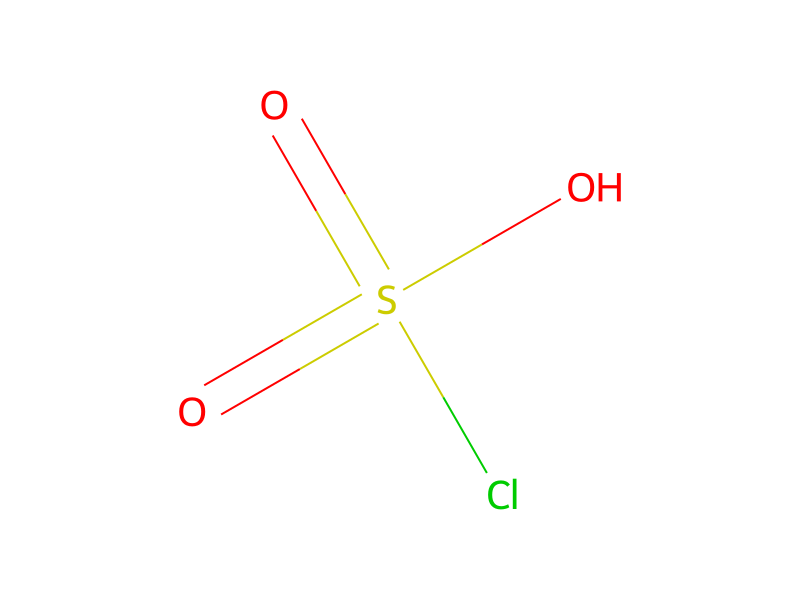

Produkt 1

Reagenzien, Katalysatoren, Lösungsmittel 1

Versuchsvorschrift
To a solution of 24.6 grams (0.1 mole) of n-dodecylbenzene in 150 ml of carbon tetrachloride was added with stirring 34.8 grams (0.3 mole) of chlorosulfonic acid over a 1-hour period. The reaction was exothermic with the temperature rising to 27° C. Stirring was continued for 4 hours after which the reaction mixture was carefully poured onto 1 liter of cracked ice with vigorous stirring. Chloroform (200 ml) was added and the aqueous layer was saturated with sodium chloride. The chloroform layer was separated, washed two times with 500 ml of saturated aqueous sodium chloride solution, dried over Molecular Sieves 4A and filtered. The solvent was removed in vacuo, and the resulting residue was recrystallized from 100 ml of hexane. The dried product weighed 22.6 grams and melted at 33°-35° C.
Aufarbeitung
- customrising to 27° C
- customThe chloroform layer was separated
- washwashed two times with 500 ml of saturated aqueous sodium chloride solution
- dry with materialdried over Molecular Sieves 4A
- filtrationfiltered
- customThe solvent was removed in vacuo
- customthe resulting residue was recrystallized from 100 ml of hexane
Quellen und Nachweise
- ORD-Eintrag
- ord-c3052749a39c47e69496587ab9b560af
- Quelldatensatz
- uspto-grants-1977_03
- Patentnummer
- US04013621
Notizen zur Reaktion
Wird geladen…