Ethyl orthopropionate → 1-(7-bromo-2-ethyl-1H-imidazo[4,5-c][1,5]naphthyridin-1-yl)-2-methylpropan-2-ol
Reaction equation

[C:1](OCC)(OCC)(OCC)[CH2:2][CH3:3].[NH2:13][C:14]1[CH:15]=[N:16][C:17]2[C:22]([C:23]=1[NH:24][CH2:25][C:26]([CH3:29])([OH:28])[CH3:27])=[N:21][CH:20]=[C:19]([Br:30])[CH:18]=2>C1(C)C=CC=CC=1.Cl.N1C=CC=CC=1>[Br:30][C:19]1[CH:20]=[N:21][C:22]2[C:23]3[N:24]([CH2:25][C:26]([CH3:27])([OH:28])[CH3:29])[C:1]([CH2:2][CH3:3])=[N:13][C:14]=3[CH:15]=[N:16][C:17]=2[CH:18]=1Participants
5
Reactant 2
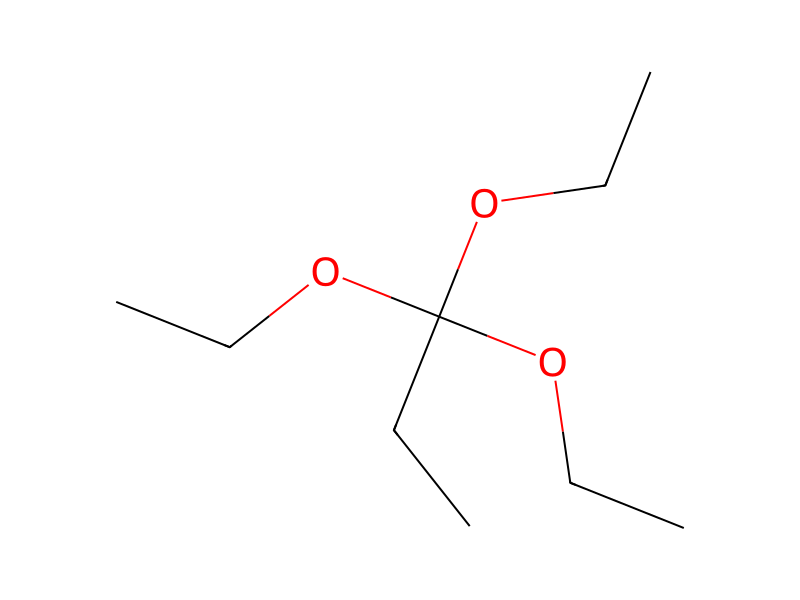

Product 1

Reagents, catalysts & solvents 2


Procedure
Pyridine hydrochloride (0.095 g, 0.82 mmol) and triethyl orthopropionate (6.36 g, 36.1 mmol) were sequentially added to a solution of 1-[(3-amino-7-bromo[1,5]naphthyridin-4-yl)amino]-2-methylpropan-2-ol (10.2 g, 32.8 mmol) in toluene (200 mL), and the resulting mixture was heated at reflux for three hours. Most of the solvent was removed under reduced pressure, and a solid was present. The solid was isolated by filtration and dried to provide 8.59 g of 1-(7-bromo-2-ethyl-1H-imidazo[4,5-c][1,5]naphthyridin-1-yl)-2-methylpropan-2-ol as a light yellow solid. A small portion of the solid was recrystallized from acetonitrile to provide an off-white solid, mp 207-208° C.
Workup
- temperaturethe resulting mixture was heated
- temperatureat reflux for three hours
- customMost of the solvent was removed under reduced pressure
- customThe solid was isolated by filtration
- customdried
Sources & evidence
- ORD record
- ord-fc0d6256ac6c45888fb4663d028aceb8
- Source dataset
- uspto-grants-2011_03
- Patent number
- US07897609B2
Reaction notes
Loading…